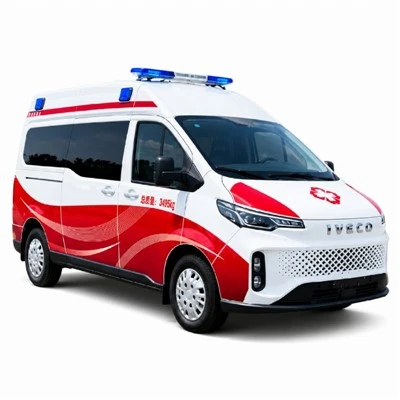


Electric ambulances are moving from small demonstration projects toward practical fleet use. For hospitals, emergency medical services, government buyers and vehicle distributors, however, choosing one is not as simple as comparing battery size or the range shown in a chassis brochure.
An ambulance carries more weight than an ordinary van, powers medical and communication equipment, keeps a patient compartment at a controlled temperature and may remain operational while parked for extended periods. All of these factors affect energy consumption, payload and vehicle availability.
The right procurement sequence is:
Medical mission → route and duty cycle → body and payload → medical equipment → auxiliary power → charging plan → climate → local compliance
Following this sequence helps buyers avoid ordering a vehicle that looks suitable on paper but cannot reliably complete its real operating schedule.
1. Define the Medical Mission First
Start by specifying what the vehicle will actually do. A patient transport ambulance, a double-crewed emergency ambulance, an ICU ambulance and a rapid response vehicle do not have the same body size, equipment load or operating pattern.
An urban patient transport vehicle may follow predictable routes and return regularly to a depot. An emergency ambulance may experience uncertain mileage, long hospital handovers and repeated use of warning systems, communications and climate control. An ICU ambulance may require more equipment, additional oxygen capacity and a larger medical workspace. These differences directly influence energy demand and payload.
Before requesting a quotation, define the patient category, crew size, typical mission distance, longest expected journey, daily number of missions and whether the vehicle must support treatment while stationary.
2. Calculate Real-World Operating Range
A chassis manufacturer's advertised range is a reference point, not an ambulance operating guarantee. Test conditions may differ from the final vehicle's weight, road speed, temperature and auxiliary loads.
For a realistic assessment, consider:
completed ambulance body and interior weight;
crew, patient, stretcher, oxygen and medical equipment;
use of air conditioning or heating;
warning lights, radios, lighting and data systems;
urban congestion, highway speeds, gradients and road condition;
time spent waiting outside hospitals;
battery reserve required for unexpected calls.
Ask the supplier to explain the assumptions behind any range figure. The most useful estimate is based on the completed vehicle at representative load, with the patient-compartment systems operating under conditions similar to the destination market.
Do not size the vehicle to finish a normal shift with almost no energy remaining. Emergency fleets need an operating reserve because routes change, hospitals may be congested and a vehicle may receive another call before returning to base.
3. Verify Payload After Conversion
Payload is one of the easiest specifications to overlook. A larger battery can increase available driving range, but it may also add weight. The ambulance conversion then adds cabinetry, insulation, flooring, HVAC components, electrical equipment, oxygen systems and loading equipment.
The payload calculation should include:
|
Load item |
What the buyer should confirm |
|
Ambulance body and interior |
Final conversion weight, not an early estimate |
|
Medical devices |
Actual equipment list and mounting system |
|
Oxygen system |
Cylinder quantity, capacity and secure storage |
|
People |
Driver, crew, patient and possible attendant |
|
Consumables |
Drugs, linens, rescue bags and disposable supplies |
|
Optional equipment |
Powered stretcher, ramp, lift or additional battery |
Request the estimated axle loads as well as total vehicle weight. A vehicle may remain within its gross weight limit while placing too much load on one axle. Final compliance must be checked against the destination country's registration rules and the approved chassis limits.

4. Match the Medical Power System to the Equipment
The supplier cannot design a reliable electrical system from a general instruction such as "install ICU equipment." Provide an equipment schedule listing the device name, voltage, rated power, possible starting load, quantity and expected operating time.
Important questions include:
Which devices operate while driving?
Which devices must continue operating while the vehicle is parked?
Is external shore power available at the hospital or depot?
What happens if the vehicle reaches a low state of charge?
Are isolated circuits or uninterrupted power required for specified equipment?
Which socket and plug standards apply in the destination country?
Medical power should be designed as a coordinated system, including energy source, conversion, distribution, circuit protection, monitoring and backup arrangements. To understand the relationship between the traction battery, auxiliary circuits and medical equipment, read our guide to how an electric ambulance works.
5. Plan the Charging System Before Ordering
Charging infrastructure is part of the vehicle project. Confirm the available site voltage, grid capacity, charger location, connector standard, number of vehicles and time available between shifts.
|
Operating pattern |
Procurement focus |
|
Predictable daytime routes |
Overnight depot charging may support the schedule |
|
High-frequency emergency response |
Vehicle rotation and shorter charging windows are critical |
|
Long intercity transfers |
Public or destination charging compatibility must be assessed |
|
Remote or unstable-grid operation |
Backup vehicles and alternative energy arrangements are needed |
|
Multi-vehicle fleet |
Simultaneous charging and site electrical capacity become major constraints |
Fast charging may improve vehicle availability, but it does not solve every operational problem. The vehicle must support the intended charging method, and the site must be able to supply it. Charger redundancy also matters: one failed charging point should not disable the operating plan.

6. Consider Climate, Roads and Traffic
Climate affects both vehicle propulsion and patient care. In hot regions, the patient-compartment air conditioner may operate for long periods. In cold regions, cabin heating and battery temperature management can increase energy use. Door openings during loading and unloading add further thermal load.
Road conditions influence suspension, ground clearance, tire selection, energy consumption and interior equipment retention. Buyers serving mountainous, rural or poorly surfaced routes should not select a vehicle using an urban duty cycle alone.
Ask how the range estimate changes under the expected temperature, load and route. Also confirm that the HVAC system can maintain an appropriate patient environment while stationary, subject to the applicable medical vehicle requirements.
7. Choose the Appropriate Powertrain Strategy
Battery-electric vehicles are not the only low-emission option. The appropriate solution depends on local infrastructure and operational risk.
|
Powertrain |
Potential fit |
Main questions |
|
Battery electric |
Predictable routes with reliable charging |
Is the real duty cycle within usable range? |
|
Plug-in hybrid |
Mixed routes or limited charging access |
How often will the vehicle operate electrically? |
|
Range-extended electric |
Longer or less predictable missions |
How is the auxiliary energy system supported locally? |
|
Fuel cell electric |
Selected projects with hydrogen supply |
Is safe, dependable fuel infrastructure available? |
The decision should consider total fleet availability, not only tailpipe emissions or the purchase price of one vehicle.
8. Confirm Compliance in the Destination Country
Ambulance requirements differ by market. Before production, the buyer and supplier should confirm vehicle type approval, ambulance classification, body and restraint requirements, warning lights and sirens, charging interface, electromagnetic compatibility, electrical safety, medical equipment registration, axle limits and required documentation.
Do not assume that a certificate or specification accepted in one country will automatically be accepted in another. Requirements should be verified with the relevant transport, health, standards and emergency-service authorities, as well as the tender documents.
9. Information to Include in an RFQ
A useful request for quotation should include:
1. Destination country and registration category
2. Left-hand or right-hand drive
3. Ambulance mission and patient category
4. Crew and patient capacity
5. Typical and maximum daily mileage
6. Longest single mission and expected reserve
7. Road, temperature and altitude conditions
8. Required medical equipment list
9. HVAC and stationary operating requirements
10. Charging connector and available site power
11. Required standards, certificates and inspection documents
12. Local after-sales and spare-parts expectations
This information allows suppliers to compare technically valid configurations rather than sending quotations based on different assumptions.
FAQ
How much range does an electric ambulance need?
There is no universal figure. Required usable range depends on mission distance, shift pattern, conversion weight, climate-control load, road conditions, charging opportunities and the emergency reserve defined by the fleet operator.
Can an electric ambulance support ICU equipment?
It can be designed to support specified medical devices, but the equipment schedule and operating time must be assessed. The electrical design should include appropriate conversion, protection, monitoring and backup according to applicable requirements.
Does air conditioning reduce driving range?
Yes. HVAC consumes energy, particularly during extreme temperatures, frequent door opening and long stationary periods. Its effect should be included in the completed-vehicle duty-cycle assessment.
Is a battery-electric ambulance suitable for rural service?
It may be, but suitability depends on distance, terrain, charging access, response coverage and backup arrangements. A rural buyer should validate the longest realistic mission rather than relying on an urban average.
What should be tested before shipment?
Testing should reflect the agreed specification and may include loaded road operation, charging compatibility, medical electrical load, stationary HVAC, emergency backup and functional inspection of installed equipment.
Final Thoughts
The best electric ambulance is not automatically the one with the largest battery. It is the vehicle whose mission, usable range, payload, medical power, climate-control system and charging plan have been engineered as one operating solution. Before scaling from one vehicle to a larger fleet, review the practical requirements of electric ambulance fleet planning.