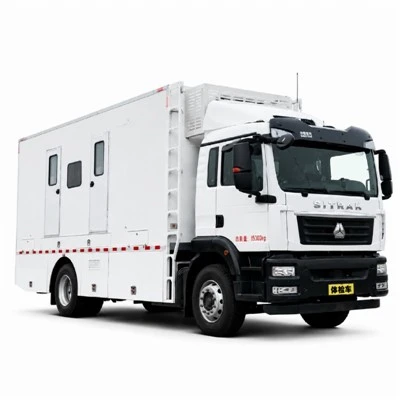

Maintain a battery-electric ambulance with one service record that covers the base EV, patient compartment, medical devices and depot charger. Give each area a named owner and set the maintenance intervals from the applicable manufacturer schedules. A vehicle is ready for service when it can drive and charge as expected and the crew has verified that the cabin equipment needed for its assignment works.

Check dispatch readiness at the start of each shift
Use a short checklist that the crew can complete without opening electrical equipment. Confirm that the displayed traction charge meets the dispatch threshold for that shift. Check for unresolved warnings, visible connector or cable damage, and the result of the last planned charge. Walk around the vehicle to look for obvious tyre or body damage. In the patient compartment, follow the crew's normal checks for approved power outlets, lighting, heating or cooling, oxygen readiness and secure stretcher engagement. Follow the vehicle, conversion and device manuals and your ambulance service's policies.
|
Item |
What the fleet should record |
Who handles a fault |
|
Base EV |
Charge level, dashboard message, mileage and any change in vehicle behaviour |
EV workshop trained for the platform |
|
Ambulance conversion |
Failed cabin load, affected outlet or fitting, and when the fault appeared |
Conversion maintenance team or supplier |
|
Clinical equipment |
Device identification, self-test result and due maintenance date |
Biomedical engineering or the device service provider |
|
Depot charger |
Station ID, start and stop times, error message and whether another vehicle was affected |
Site electrical team or charger service provider |
How often should an electric ambulance be serviced?
Check dispatch readiness every shift and book workshop service at the intervals for the exact chassis, conversion, devices and charger. Track time- and mileage-based deadlines by vehicle identification number. Group upcoming tasks into a shared workshop visit when the approved intervals allow it.
|
Trigger |
Applicable frequency or example |
Action |
|
Dispatch readiness |
At the start of each shift under the fleet checklist |
Check charge, warning messages, lighting, equipment readiness and stretcher engagement. |
|
Chassis service |
Ford's 2025 European E-Transit announcement cites two years with unlimited distance between scheduled services for standard- and enhanced-range models. |
Use the current schedule for the model, market and VIN in your fleet. |
|
Medical conversion, devices and charging station |
At the respective maker's scheduled interval and after a relevant fault or repair |
Record checks for the patient-cabin system, load restraint, device or charging installation. |
Ford Pro European E-Transit service update · EV maintenance overview from the Alternative Fuels Data Center
Battery-electric vehicles generally have fewer powertrain service items. Friction brakes, tyres and suspension still require service. Keep the conversion and medical equipment records with the vehicle so the crew can identify which systems are due for attention.

Investigate recurring charging and range complaints with comparable records
When a vehicle finishes a familiar route at a lower charge, compare similar shifts for distance, weather, cabin HVAC use, patient-bay operating time and starting charge. An apparent change in range can reflect a changed assignment or a missed charging session. Ask the workshop for a battery condition or diagnostic report supported by the vehicle maker if the pattern persists under comparable conditions. Record the method and date alongside the result. Ford's September 2025 UK warranty guide gives a battery capacity threshold below 70% for up to eight years or 100,000 miles, whichever comes first, for E-Transit versions other than Chassis Cab. That is a warranty example. Fleet dispatch depends on the energy needed to complete the shift and retain its reserve. Ford UK warranty guide
For repeated charging interruptions, log whether the problem follows one vehicle or one charger. Give the service provider the charger identifier, vehicle identifier, time and displayed fault. Have the responsible technician assess the equipment using the approved procedure. Open or repair high-voltage equipment only through trained and authorized personnel. Follow manufacturer and operator recovery procedures after a collision, flooding or a high-voltage warning. HSE guidance on electric and hybrid vehicles
Require a joint release after repairs that affect dispatch
A charger repair should be followed by a normal charge session on the intended equipment. After conversion work, demonstrate the affected cabin functions under the approved conditions before releasing the unit to dispatch. For example, after a cabin power repair, check the affected outlets and clinical equipment together under their permitted operating loads. Record the result and the person who cleared the vehicle. Use another unit for an assignment if the repaired ambulance cannot meet the clinical or charging requirements.
Hubei Ruitu Technology Co., Ltd. can discuss the patient-compartment layout and integrated equipment list when specifying a conversion. Use that build list to identify the items that will need conversion support, such as the stretcher mount and auxiliary electrical system. Before ordering, ask for the maintenance handover package, named service contacts and a list of conversion parts you can stock locally. Confirm those arrangements separately from the base EV battery and drivetrain support.
FAQ
How often should an electric ambulance be serviced?
Follow the base vehicle, conversion, medical equipment and charger schedules. Review time and mileage triggers together and record the next due item for each asset.
Can the ambulance crew fix a traction battery warning?
Crews should report the warning and follow operator and manufacturer procedures. Diagnosis and intervention on high-voltage systems belong to qualified personnel.
Is the auxiliary electrical system maintained separately?
Yes. The patient compartment may have its own battery, charging equipment or distribution panel. Follow the conversion maker's checks and record faults by circuit or device as appropriate.
Should the battery be charged to 100% after every shift?
Follow the chassis maker's instructions for routine charging and set the dispatch target around the next duty cycle and required reserve. Charging guidance can vary by battery and vehicle.
Does 80% battery state of health mean an electric ambulance needs a replacement battery?
Use the chassis maker's diagnostic method and written battery warranty to assess coverage. Decide whether to keep the ambulance on a route by testing its available charge under a representative load and preserving the fleet's required reserve.