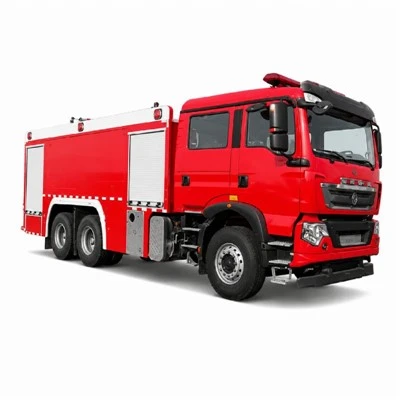

When the African customer entered the workshop, the Dongfeng emergency rescue vehicle was still in the stage where important decisions could be seen and discussed. The red body had already taken shape, the side roller shutters were open, and the internal framework of the equipment compartments remained exposed. An installer was working inside the upper section while the customer and RUITU engineers stood beside the vehicle, pointing to the spaces that would soon hold rescue tools. It was not a ceremonial visit. It was a working inspection.
For an emergency-response organization, this moment matters more than a polished handover photograph. Once a rescue vehicle begins service, every shelf height, door opening, cable route and fixing point affects how quickly a crew can work. A tool stored too high wastes time and increases lifting risk. A compartment that looks spacious when empty may become awkward after generators, hydraulic tools, hoses and protective equipment are installed. The customer came to the factory to make sure the vehicle would support the way its team actually responds to incidents, not simply match a drawing approved months earlier.
Cooperation Began with the Rescue Mission
The project did not begin with paint color or a list of accessories. The first discussion concerned the customer's operating environment: long travel distances, hot and dusty conditions, uneven roads, mixed emergency duties and limited time for field maintenance. The planned vehicle needed to carry different categories of rescue equipment while keeping them separated, visible and quick to remove. It also had to provide enough structural strength for repeated use without turning the body into unnecessary dead weight.
RUITU and the customer therefore worked backward from the incident scene. Which tools are taken out first? Which items are heavy enough to require a lower position? Which equipment must stay dry and clean? What needs an electrical connection inside the compartment? Which consumables must be checked at the start of every shift? These questions created the body layout. The Dongfeng chassis was selected as the base platform, while the rescue body, roller-shutter access and internal storage system were developed around the customer's equipment plan.
This approach also clarified what should remain flexible. Emergency fleets often add or replace tools during the vehicle's service life. Fixed cabinets can become a limitation when equipment dimensions change. The project therefore used a modular compartment concept, allowing shelf positions, brackets and restraint points to be adjusted within the available structure. The vehicle was being built for the first day of service, but it was also being prepared for the fifth year.

Production Turned the Agreement into Something the Customer Could Test
During production, the body frame was fabricated and aligned before the compartment system was installed. The open side structure visible in the photograph allowed both parties to examine the work that would later be hidden behind panels and equipment. Welded joints, support members, shelf rails, door mechanisms and cable routes could still be reached. This made the visit useful: the customer was reviewing construction logic, not only surface finish.
The photograph captures this part of the cooperation well. The customer is not separated from the workshop by a conference-room presentation. He is standing beside the unfinished vehicle while engineers discuss the real installation. That openness gave him a chance to challenge assumptions before they became expensive to change. It also gave RUITU a clearer understanding of how the vehicle would be used after export.
The On-Site Review Led to Practical Modifications
The customer was satisfied with the overall body structure, the number of side-access compartments and the progress of the build. His comments concentrated on practical refinements rather than a redesign. The first change concerned the height and spacing of shelves for frequently used tools. The original arrangement provided sufficient capacity, but one working level would have required the crew to lift commonly handled equipment higher than necessary. RUITU recorded the change and lowered the relevant support position so that daily-use items could be reached closer to waist height.
A second adjustment created more unobstructed space for long or bulky rescue equipment. Instead of dividing every compartment into equal sections, one bay was given a larger clear opening and fewer fixed partitions. This is a small production change with a meaningful operational result: crews can remove long tools without turning them at an awkward angle, and future equipment can be accommodated without cutting apart the cabinet.
The third modification addressed movement on rough roads. The customer asked the team to review where loose cases and removable tools would be restrained. Additional fixing points and adjustable retainers were planned so equipment would not shift against the roller shutters or damage neighboring items. The team also checked the positions of compartment lighting and identification labels, ensuring that the operator could see the full storage area at night and return equipment to the correct location after use.
None of these requests changed the identity of the vehicle. They improved the relationship between the vehicle and the people who would use it. That is the value of a production-stage inspection: it allows the customer to make low-cost corrections before paint, wiring closure and final equipment installation turn them into high-cost problems.

Project Configuration and Acceptance Reference
Because the photograph does not show the chassis identification plate and the final order sheet was not supplied with this case, numerical values such as engine output, wheelbase, gross vehicle weight and overall dimensions should be checked against the signed contract before website publication. The table below records the configuration that can be confirmed from the project information and the production image.
|
Project item |
Confirmed configuration / publication note |
|
Chassis brand |
Dongfeng |
|
Vehicle category |
Emergency rescue vehicle / rescue equipment carrier |
|
Fuel and chassis data |
Diesel chassis; exact engine, power, wheelbase and GVW to follow the signed order |
|
Body structure |
Purpose-built metal rescue body with internal load-bearing framework |
|
Side access |
Multiple aluminum-alloy roller-shutter equipment compartments |
|
Storage layout |
Modular shelves, open bays and equipment-specific mounting zones |
|
Heavy-equipment placement |
Lower-level storage close to structural supports, subject to final load plan |
|
Equipment restraint |
Adjustable retainers, brackets and fixing points for transport on uneven roads |
|
Lighting |
Compartment and scene lighting positions reviewed during production |
|
Electrical system |
Independent auxiliary distribution according to the contracted equipment package |
|
Warning system |
Emergency warning lights, siren and reflective markings according to destination rules |
|
Exterior finish |
Rescue red body; customer logos and language markings configurable |
|
Inspection focus |
Doors, shelves, restraints, lighting, wiring access, finish and full-vehicle functions |
|
Final numeric parameters |
Verify against the chassis plate, homologation documents and signed contract before publication |
Acceptance Was About Function, Not a Quick Walk-Around
After the agreed modifications were completed, acceptance followed the same operating logic used during the design stage. The customer reviewed the opening and closing of the side roller shutters, access to each storage zone, shelf stability, equipment restraint and the ability to inspect important electrical and mechanical connections. The team checked whether a crew member wearing gloves could operate latches and handles, whether compartment edges created snag points, and whether the arrangement left a clear path for loading and unloading.
Electrical checks covered compartment lights, scene-light positions, warning functions and the distribution system included in the order. Structural checks examined door alignment, fasteners, mounting points and the consistency of the body finish. The vehicle was also reviewed as a complete unit: visibility around the body, step and handhold positions, external markings, ground clearance and the relationship between equipment weight and vehicle balance all influence safe field use.
The customer's satisfaction came from seeing that his comments had not disappeared into meeting notes. The altered shelf position could be measured. The enlarged equipment space could be used. The additional restraint points could be inspected. This made acceptance a comparison between agreed requirements and completed work, rather than a vague judgment that the truck looked good. The remaining comments were minor finishing items, handled before final delivery preparation.
What This Visit Says About RUITU's Delivery Capability
Factory visits are sometimes presented as proof of scale: a large workshop, overhead cranes and several vehicles under construction. Those details are useful, but they do not fully explain why an overseas buyer should trust a manufacturer. Trust grows when the customer can see how a requirement moves through engineering, production, correction and verification without losing its meaning.
In this project, RUITU's role was to connect four groups that often speak different technical languages: the customer's rescue team, the chassis supplier, the body engineers and the installation technicians. The customer's operational request had to become a drawing; the drawing had to become a build sequence; the build had to leave room for equipment and maintenance; and the finished result had to be understandable to the team receiving the vehicle overseas. Managing those links is a stronger demonstration of capability than simply stating that customization is available.
The Next Stage Begins After Delivery
The customer expects the Dongfeng emergency rescue vehicle to become a dependable equipment platform for road accidents, disaster response, industrial incidents and other missions defined by the local rescue organization. The real test will come after crews have used the compartments in dust, heat, rain and night operations. Their experience will show which tools are consumed most often, which storage zones receive the greatest wear and how the vehicle's load changes over time.
RUITU will use that operating feedback to support maintenance planning and future configuration decisions. If the customer expands the fleet, later vehicles can retain the layout features that worked and refine those that did not. Standardizing successful compartment positions across a fleet can shorten crew familiarization, simplify inventory checks and make spare hardware easier to manage.
The deeper result of the project is therefore not one completed truck. It is a more disciplined way of building emergency equipment: the customer explains the mission, the manufacturer turns it into a workable structure, both parties inspect the vehicle while changes are still possible, and acceptance is based on evidence. The customer's satisfaction at the factory closed one stage of cooperation. The vehicle's performance in service will open the next, with a shared expectation that every improvement should help a rescue team reach, work and return more safely.
RUITU | Special vehicles developed around the work customers need to perform.