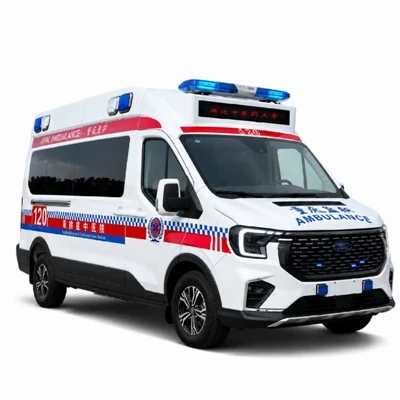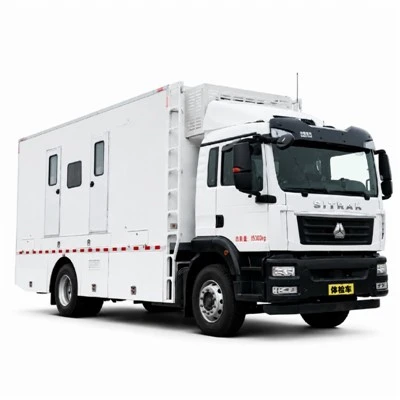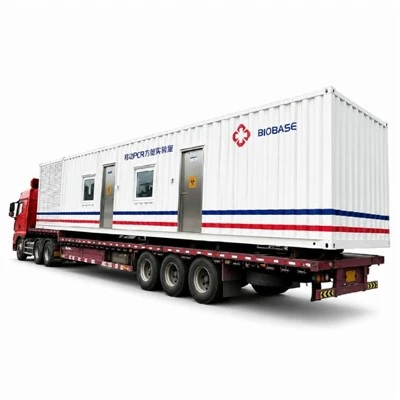

Medical examination vehicles are core assets in mobile healthcare. By integrating professional diagnostic equipment onto a vehicle platform, they can rapidly reach remote areas or locations with temporary service needs to provide basic medical services such as complete blood counts (CBC), ultrasound imaging, and electrocardiograms (ECG). Their design balances space utilization, equipment stability, and driving safety, making them particularly suitable for emergency rescue operations, community health screenings, and corporate health check-ups.
I. Technical Configuration and Spatial Design:
These vehicles are typically built upon bus chassis, featuring a 9-meter body length and a gross vehicle weight of 7,600 kg, with the capacity to accommodate 2–9 medical personnel and their equipment. The interior utilizes a modular layout divided into functional zones-such as registration, examination, and disinfection areas-with foldable partitions allowing for flexible spatial adjustments. The vehicle is equipped with an independent power supply system (including backup power), medical gas piping, and air purification units to ensure the testing environment meets medical standards. Capable of speeds up to 100 km/h, the vehicle supports rapid, cross-regional deployment.
II. Core Equipment Integration:
The vehicle integrates 27 patented technologies covering equipment mounting, vibration damping, and data transmission systems. For instance, a three-point mechanical shock-absorption system minimizes the impact of road vibrations on precision instruments (such as blood analyzers and portable ultrasound units), while 5G connectivity enables the real-time upload of test data to cloud platforms, facilitating remote diagnostics. An independent climate control system maintains temperature precision within ±1°C and humidity levels between 40% and 60%, protecting equipment from moisture damage or overheating.