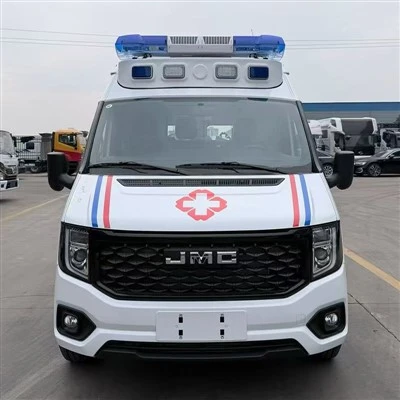
Foton G9 Gasoline ICU Ambulance Van

Foton G9 Gasoline ICU Ambulance Van

Details
The Foton G9 Gasoline ICU Ambulance Van is built for urban emergency and critical care transport. It runs on a 2.378L gasoline engine (China VI), with a fully equipped ICU module including ventilator, monitor, defibrillator, and infusion pumps. Designed for EMS, hospital ICUs, and community health services requiring rapid response and lowemission city access.
Category
ICU Ambulance
Share to
Send Inquiry
Description
Technical Parameters

Hubei Ruitu Technology Co., Ltd. is one of the leading manufacturers and suppliers of foton g9 gasoline icu ambulance van in China. If you're going to wholesale the newest foton g9 gasoline icu ambulance van made in China, welcome to get quotation from our factory. All customized products and OEM products are with high quality and competitive price.


The Foton G9 Gasoline ICU Ambulance Van is a conversion of the Foton View G9 long-wheelbase model. It uses a 2.378L 4K22D4M gasoline engine (118 kW, China VI), paired with a 5-speed manual transmission and mid-engine, rear-wheel drive layout. The chassis features Bosch 9.1 ABS+EBD, front crumple zone, high-strength steel, and a low center of gravity for stability.
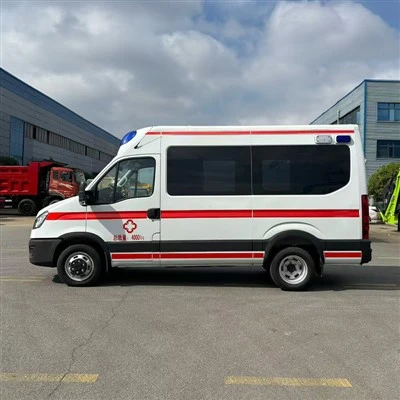
The medical cabin (3350×1760×1580 mm) is laid out for ICU-level care: a central stretcher platform, side equipment tower for ventilator/monitor/pumps, defibrillator mount, oxygen outlets, and electrical system with secondary alternator and auxiliary battery. The cabin also includes LED lighting, UV disinfection, and HVAC outlets.
The vehicle meets China VI emission standards. Maximum gross vehicle weight is 3400 kg, occupancy up to 7 persons (including stretcher bearers). Optional add-ons include a negative pressure purification unit, scoop stretcher, stair stretcher, or auxiliary boarding steps.

202603241052276935


202603241052276935
2026032410522769312 -
202603241052276932 - 001


Our Advantages


  • Warning lights, strobes, and reflective markings are standard. A driver in Beijing said the G9's light pattern is visible from 300 meters in heavy rain – other vehicles move aside earlier.
  • The long-wheelbase body (3110 mm) provides a stable ride. The 2.378L gasoline engine with China VI and manual transmission has proven reliable for urban fleets. One EMS supervisor in Shanghai reported that their three G9 units each logged over 40,000 km with no engine-related downtime.
  • Gasoline makes sense for cities with diesel restrictions. In low-emission zones of Zhengzhou, diesel ambulances face occasional fines – the G9 gasoline version runs without issue, and cold starts at −10°C are immediate.
  • The medical cabin (3350×1760×1580 mm) is compact but well organized. A paramedic told us they can access the ventilator and infusion pumps from the head of the stretcher without moving around – saving critical seconds during a code.


202601271007294348001
49001


FAQ


Q: Why produce a gasoline version of an ICU ambulance? Isn't diesel better for heavy loads?

A: The gasoline ICU ambulance is mainly intended for urban and suburban use. Some emergency centers are located in low-emission zones or areas with diesel vehicle restrictions – gasoline vehicles face fewer limitations. Gasoline engines also offer better cold-start performance, smoother idling, and less exhaust odor, making them suitable for night missions near residential areas. For daily mileage under 150 km and primarily city duties, the gasoline ICU ambulance is a practical choice. A fleet in Hangzhou switched from diesel to gasoline for their inner-city units and reduced their low-emission zone compliance costs by about ¥8,000 per vehicle per year.

Q: How does the gasoline engine's lower noise level benefit ICU patients?

A: ICU patients are sensitive to noise – excessive ambient noise can disturb sleep, raise heart rates, and even mask monitor alarms. Gasoline engines are noticeably quieter than diesels at idle and low speeds, resulting in a lower background noise level inside the patient compartment. With added soundproofing during conversion, the interior noise at idle drops to about 52 dB(A) – roughly the level of a quiet conversation. A critical care nurse in Nanjing mentioned that after switching to the gasoline G9, she could hear the patient's breathing and the pulse oximeter beep without turning up the volume, and the patient slept better during overnight transfers.

Q: Does the Foton G9 have enough interior space for ICU-level equipment?

A:  The G9 features a high-roof, long-wheelbase body with optimized interior width and height, allowing installation of a standard ICU equipment set: ventilator, multiparameter monitor, dual-channel infusion pumps, defibrillator, and optional portable ultrasound. The layout uses a side equipment tower with a central stretcher, enabling staff to operate on both sides of the patient. While the compartment is not as spacious as a truck-based ICU ambulance, thoughtful planning still allows two medics to perform procedures such as IV access and airway management simultaneously – suitable for urban short-haul and regional ICU transfers.

Q: Is the daily operating cost of a gasoline ICU ambulance higher or lower than a diesel version?

A:  The purchase price of the gasoline version is typically lower than a diesel with comparable equipment. Regarding fuel costs, gasoline engines consume slightly more fuel than diesels when fully loaded or idling with AC on, but if the vehicle mainly does short urban trips with the engine running in its economical range, the difference is modest. For maintenance, gasoline engine consumables (oil, spark plugs, etc.) are cheaper, and there is no need for diesel exhaust fluid or DPF regeneration. Overall, for users with moderate annual mileage, the total operating cost of a gasoline ICU ambulance is roughly comparable to or slightly lower than the diesel version.

Q: After ICU conversion, is the original electrical and cooling system of the G9 sufficient?

A:  The G9's factory alternator and cooling fan are already designed for commercial use, including extended idling and conversion loads. During conversion, we add a separate secondary alternator and auxiliary battery bank dedicated to powering the patient compartment, without burdening the original alternator. For cooling, the gasoline engine has lower heat output than a high-power diesel, and the total vehicle weight after conversion remains within the design GVW – the stock cooling system is adequate for normal use. For vehicles operating in persistently hot summer regions, an optional electric auxiliary fan can be added to further support air conditioning and engine cooling.


Product Parameters


Maximum gross mass

3400kg

Number of passengers

7 people (including those on stretchers)

Wheelbase

3110 mm

Vehicle dimensions: Length × Width × Height

5380mm×1920mm×2480mm

Medical pod dimensions: Length × Width × Height

3350mm×1760mm×1580mm

Approach/Departure Angle

16/17°

Top speed

150km/h

Engine Model

4K22D4M

Engine displacement

2.378L

Emission standards

National VI

Rated power

118KW

Fuel tank capacity

65L

Drive type

Mid-engine, rear-wheel drive

Minimum ground clearance

170mm

Gearbox

5 forward gears, 1 reverse gear

Suspension type

Double wishbone torsion bar independent suspension / leaf spring non-independent suspension

Assistance Type

Hydraulic power steering

Braking type

Front disc and rear drum brakes, hydraulic braking


Hot Tags: foton g9 gasoline icu ambulance van, China foton g9 gasoline icu ambulance van manufacturers, suppliers, factory

Send Inquiry
Request a quote

You can either contact us via phone, email or online form below. Our specialist will contact you back shortly.