

When I first started my career as a fire truck supplier, I’ll admit I never thought much about the overlap between emergency response and military operations. For years, my focus was on outfitting local fire departments with reliable vehicles—figuring out the best way to customize a water tank for suburban brush fires or upgrade foam systems for industrial chemical fires. It wasn’t until a former Army logistics officer reached out to me in 2019 asking about heavy-capacity fire trucks for a joint training exercise that I realized fire trucks play a far bigger role in military missions than most people assume. Today, after talking to dozens of military personnel, emergency planners, and fellow truck industry experts, I want to break down whether fire trucks are used in military operations, the specific ways they serve armed forces, and how our products fit into that critical space.
First, let’s get one thing straight: military operations aren’t just about tanks, jets, and troops. Modern armed forces operate in complex environments—from dense urban combat zones to remote training areas with hazardous chemical stockpiles. Firefighting is a non-negotiable part of keeping personnel, equipment, and infrastructure safe in these settings, and that’s where fire trucks come in. The key difference between military fire trucks and civilian models is that they’re built to operate in conditions standard fire trucks never face: rough terrain, extreme temperatures, areas with limited access to water, and even active combat zones where they might need to deflect small arms fire or drive through improvised explosive device (IED) strike zones.
One of the most common uses for fire trucks in the military is on forward operating bases (FOBs). These bases are often located in remote areas, and fuel storage, ammunition depots, and living quarters are high-priority targets for enemy attacks. A fire breaking out at a FOB isn’t just a property damage issue—it can threaten hundreds of lives and disable critical military capabilities. In Afghanistan and Iraq, for example, FOB fire departments rely on heavy water and foam trucks to suppress blazes before they spread. I’ve heard from military contacts that during IED attacks on supply convoys, fire trucks are among the first vehicles dispatched. They don’t just put out fires from destroyed vehicles; they also work to prevent secondary explosions from fuel or munitions that have caught fire.
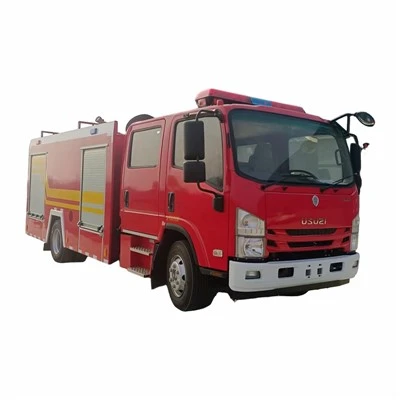
When I first heard this, I wanted to learn more about what types of fire trucks work best for military use. Not all our products are suited for these missions, but several have found their way into military fleets around the world. For example, small, maneuverable fire trucks are perfect for the tight spaces and limited water access of forward operating bases. Our ISUZU 3.55 Ton Water Tank Fire Truck is a compact, lightweight model that’s easy to transport by cargo plane or helicopter. Its 3.55-ton water tank gives it enough capacity to handle small to mid-sized blazes at FOBs, and it’s built with a reinforced chassis that can handle rough, unpaved terrain common in remote military sites. It’s no wonder this model has become a favorite for smaller military units stationed in dispersed or hard-to-reach areas.
For larger-scale operations—like clearing fire from an oil refinery, chemical plant, or damaged military airfield—heavier-duty fire trucks are essential. Here’s where our foam fire truck lines come into play. Foam is critical for suppressing fires involving flammable liquids or chemicals, which are common targets in industrial military zones. Our Dongfeng 4 Ton Foam Fire Truck is a medium-capacity option that balances size and power, making it ideal for supporting military exercises where large groups of troops and equipment are stationed. It carries both water and foam concentrate, so it can adapt to different fire types quickly—a key feature when every second counts during a military response.
For major combat zones or disaster relief missions that combine military and civilian efforts, you need the heavy hitters. Our HOWO 16 Ton Foam Fire Truck and HOWO 25 Ton Heavy Foam Fire Truck are designed for exactly these scenarios. With massive foam and water storage capacity, these trucks can cover large areas without needing to refuel or resupply frequently. In recent years, militaries have used heavy foam trucks to support disaster response, like after major earthquakes when roads are damaged and water infrastructure is destroyed. Military fire crews rely on these trucks to fight fires in collapsed buildings or at fuel depots that have ruptured during natural disasters—tasks that civilian fire trucks simply can’t handle due to size and capacity limitations.
It’s important to note that military fire trucks aren’t just about fighting fires. They also serve as multi-purpose emergency vehicles in operational settings. For example, in hostage rescue or urban combat operations, fire trucks can be used as platforms to reach high buildings, as supply carriers for water and medical equipment, or even as temporary command posts for emergency response teams. During joint military-civilian operations, they also help bridge the gap between military capabilities and local emergency services, which may lack the heavy equipment to handle large-scale blazes.
Another area where fire trucks play a key role in military operations is training. Armed forces around the world conduct regular training exercises to prepare for real-world emergencies, and fire trucks are a core part of this training. Units need to practice responding to different types of fires, from vehicle accidents to structural blazes, and military fire trucks provide the realistic equipment needed for these drills. Our HOWO 25 Ton Water Tank Fire Truck is often used in these exercises because its large water supply allows for repeated practice sessions without frequent refilling, saving training time and resources.
I’ve also learned that military fire trucks have to meet strict standards that differ from civilian models. They need to be air-transportable, have reliable engines that work in extreme temperatures (from freezing Arctic conditions to desert heat), and include armor plating or other defensive features to protect crews in active combat zones. As a fire truck supplier, this means we have to work closely with military planners to customize our vehicles to meet their specific needs. For example, some militaries add upgraded communication systems to their fire trucks so crews can coordinate with command centers during operations, while others modify body armor mounts for personnel.
Of course, there are limits to how fire trucks are used in military operations. They aren’t frontline combat vehicles—they’re emergency response assets. Their primary mission is to save lives and protect critical infrastructure, not to engage in direct combat. That said, in some cases, military fire trucks may operate in areas where they come under fire, so their durability and defensive features are essential. I remember a story from a friend who works with a European military unit: their fire truck was hit by small arms fire while responding to a blaze at a supply depot, but the reinforced fuel tank and body plating kept it operational, allowing the crew to put out the fire before it reached nearby ammunition stores. That’s the kind of reliability we strive for in our products.
Over the years, I’ve seen how the demand for military fire trucks has grown as armed forces take on more complex roles in global disaster response and stability operations. Natural disasters like hurricanes, wildfires, and earthquakes often require a combined military and civilian response, and fire trucks are at the center of that effort. For example, after the 2015 Nepal earthquake, military units from several countries deployed heavy fire trucks to help fight blazes in collapsed buildings and at damaged fuel facilities. Our HOWO 16 Ton Foam Fire Truck was among the equipment used in that mission, and I was proud to hear that its foam system helped prevent a major explosion at a local fuel depot.
If you’re part of a military logistics team, emergency planner, or someone looking to equip a unit with reliable fire trucks, it’s important to choose a supplier that understands both civilian and military needs. Not all fire trucks are created equal, and selecting the right model depends on the operating environment, the scale of missions, and specific requirements like transportability. For small, remote bases, our ISUZU 3.55 Ton Water Tank Fire Truck offers the compact size and capacity needed. For medium-sized training or joint operations, the Dongfeng 4 Ton Foam Fire Truck provides balanced power and versatility. And for large-scale combat or disaster response missions, our heavy-duty models like the HOWO 25 Ton Heavy Foam Fire Truck and HOWO 25 Ton Water Tank Fire Truck deliver the capacity and durability required to get the job done.


As a supplier, I’ve built my business on understanding the unique needs of each client—whether that’s a small-town fire department needing a quick-response truck or a military unit operating in a remote combat zone. The intersection of fire trucks and military operations is a critical, often overlooked part of emergency response, and I’m proud to be part of supplying vehicles that keep military personnel and civilian communities safe. If you’re looking to equip your unit with reliable, military-grade fire trucks, or have questions about customizing a model for your specific missions, our team is here to help with every step of the process from initial consultation to delivery.
References:
- United States Army Corps of Engineers. (2021). "Fire Protection in Forward Operating Bases: Best Practices and Equipment." USACE Technical Report.
- International Association of Fire Chiefs. (2020). "Military-Civilian Collaborative Emergency Response: Case Studies from Global Operations." IAFC Journal.
- Military Logistics Magazine. (2022). "Heavy Firefighting Equipment in Combat and Disaster Operations." Vol. 18, No. 3.
- NATO Land Command. (2019). "Standards for Military Fire Rescue Vehicles in Joint Operations." NATO STANAG 4569.