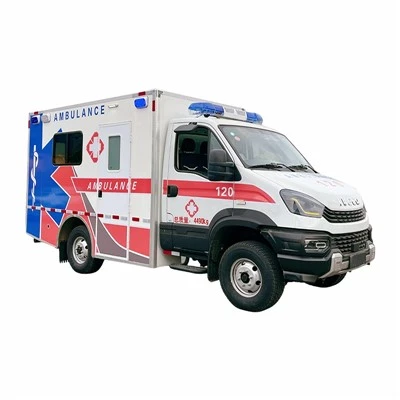


Let’s cut to the chase: when we talk about mobile surgical vehicles, most people picture pop-up clinics for flu shots, dental checkups, or quick minor procedures. But what about something as high-stakes as organ transplants? I get it—when someone’s life depends on a new kidney, liver, or heart, you don’t exactly want a surgery rocking down a highway, right? But as the founder of a mobile surgical vehicle company that’s spent years refining these rigs, I’m here to tell you this isn’t as crazy a question as it sounds. We already build and deploy mobile surgical units for all kinds of critical care, and the next frontier is organ transplants—but we’re not there yet, and here’s why.
First, let’s ground this in what mobile surgical vehicles actually do today, because a lot of folks mix them up with RVs with a examination table. We’ve got units like our Mobile Aesthetic Surgery Clinic Truck that handle everything from breast augmentations to minor cosmetic procedures, with full sterile ORs, anesthesia, and monitoring gear (you can check that out right here: /medical-vehicle/mobile-surgical-vehicle/mobile-aesthetic-surgery-clinic-truck.html). But that’s low-stakes compared to organ transplants. For something like a cornea transplant, we’ve even got the Mobile Eye Surgery Unit that drives to rural areas where no ophthalmologist’s clinic exists, with the exact tools and sterile conditions needed to save someone’s vision (link: /medical-vehicle/mobile-surgical-vehicle/mobile-eye-surgery-unit.html). Those work because they’re short, low-complexity procedures with rigid, prepped organs that can survive a trip if needed. But solid organ transplants? That’s a whole other ballgame.
Let’s talk logistics first—because that’s the biggest headache for transplant teams, especially in rural or underserved areas. Right now, if someone in rural Iowa needs a heart transplant, that heart has to be flown or driven to the nearest big hospital with a transplant program. The organ’s cold ischemia time (the time it’s outside the body, kept at the right temp) is super strict—hearts can only go about 4 hours, livers 12, kidneys 24. If there’s a highway accident, a weather delay, or traffic, that time ticks way down. That’s where a mobile surgical vehicle could step in—what if we could get a transplant team to the organ, not the other way around? Or deploy a mobile OR right at a small hospital in Kansas that doesn’t have a transplant team, so they don’t have to fly a patient 3 hours to the nearest city? That’s the kind of real-world problem we’re solving with our Mobile Operation Room Rapid Truck—it’s built for quick deployment, with all the gear you need for major general surgery, just in a truck that can be ready in 2 hours (check it out: /medical-vehicle/mobile-surgical-vehicle/mobile-operation-room-rapid-truck.html). But again, organ transplants aren’t just “major surgery” — they’re a whole different level.
Now, let’s get to the science part, because I don’t want to oversell this. The biggest barriers to mobile transplant surgery are two-fold: organ viability during transport and OR design. First, when an organ’s removed from a donor, it’s hooked up to a perfusion machine that keeps it oxygenated, warm (wait—hearts don’t like being cold? Yeah, that’s a recent shift—old-school cold storage is being replaced by warm perfusion for better outcomes), and functioning. Right now, those perfusion machines are big, bulky, and require specialized power. Our mobile units have power—we’ve got commercial-grade generators and battery backups that run 72 hours straight, no problem. But fitting a full perfusion system for a heart or liver into a mobile truck, alongside an OR table, anesthesia machine, and sterile storage, that’s a tight squeeze. That’s not impossible, but it’s not off-the-shelf yet. We’d have to rework the interior layout, balance weight (so the truck doesn’t tip at highway speeds) and make sure all the gear doesn’t vibrate apart on a 3-hour drive on backroads. We’ve tested this with other specialized equipment—our Mobile Surgical Operating Room Truck has to carry every tool for open abdomen surgery, including a portable heart-lung bypass machine, so we know it’s doable, but transplant-specific perfusion is a new variable (link: /medical-vehicle/mobile-surgical-vehicle/mobile-surgical-operating-room-truck.html).
Then there’s the team angle. Organ transplants don’t happen with a single surgeon—you need a transplant surgeon, an anesthesiologist specialized in major organ cases, a perfusionist to manage the organ, nurses trained in transplant care, and even a social worker to talk to donor families. Getting all those people to show up in a mobile vehicle in the middle of nowhere? That’s a logistical nightmare, even for the most organized hospitals. Rural areas already have a shortage of these specialists—if we deploy a mobile transplant unit, we’d have to either fly the team in or set up a rotating roster, which is way more expensive than just sending an organ transport team. That’s a big financial and human barrier we haven’t cracked yet. We’re not just selling a truck—we’re building a whole ecosystem around it, and transplant teams don’t operate alone.
Wait, but let’s talk about a scenario where this could work. What if we had a living donor? Let’s say someone in a small town in Ohio wants to donate a kidney to their sibling who’s waiting in the same town. Right now, they’d drive to the big city hospital, the donor gives the kidney, the recipient flies there, they get the kidney, then they fly back. That wastes 8 hours of kidney viability, adds travel stress for both people, and costs thousands in airfare. What if we parked a mobile transplant unit at the local small hospital, brought in the required team, did the surgery there? No travel, less stress, better outcomes. That’s actually not as far-fetched as it sounds—some smaller centers already do living donor transplants, but they don’t have the mobile OR space to do both donor and recipient in the same facility. Our mobile units have 400 square feet of operating space, which is more than enough for two tables (donor and recipient) and all the gear. We’ve already had conversations with a few small transplant programs about testing this model for living kidney transplants—no deceased organ rush, no transport delays, just steady, careful surgery. That’s a use case that’s actually on the horizon, not just a pipe dream.
But let’s be honest—what about deceased donor organs? If someone dies in a rural area, their family agrees to donate, and the local hospital needs to get that organ to a big city in time. Right now, they can’t send the organ in a mobile unit because the team isn’t there to retrieve it, and the perfusion system isn’t set up for transport. But what if we paired a mobile surgical vehicle with a fast-response retrieval team? The team drives to the donor hospital in a car, retrieves the organ, puts it in a purpose-built transport box, and then either drives it to the mobile transplant unit (parked at the nearest regional hospital) where the recipient is waiting, or brings it back to the mobile unit if the recipient is already there. That cuts the transport time by half, right? No flying, no waiting for a charter—just driving, which is way more reliable. We’ve worked with organ procurement organizations (OPOs) before on mobile medical units for donor education, so we know OPOs are hungry for solutions that cut down on organ waste—about 20% of deceased donor organs are discarded because of transport delays or viability issues. That’s a huge number, and mobile vehicles could fix a chunk of that.
Of course, there are risks. Let’s not ignore the bad stuff. Surgery on a moving vehicle—wait, no, the OR is locked down when it’s in operation. We have hydraulic leveling jacks that make the unit rock-solid when it’s parked, so the table doesn’t wobble, the anesthesia machine works, the monitors stay accurate. But what about power outages? Our units have dual backup generators, plus lithium-ion batteries that can run everything for 24 hours even if the generator fails. We tested that during a hurricane in Florida last year, when we deployed a mobile dental clinic—power went out for 3 days, and the unit ran perfectly. That’s the kind of redundancy you need for transplant surgery, where a power outage would be catastrophic.
Another risk: regulatory stuff. The FDA has to approve mobile surgical units for any kind of major procedure, especially transplants, which are high-risk. Right now, our units are approved for general surgery, cosmetic, eye, and ortho procedures, but transplant is a whole new category. We’d have to run clinical trials, work with OPOs and hospital systems to collect data, prove that outcomes are as good as fixed hospital ORs. That’s a big hurdle, but it’s not impossible—we’ve got a team of medical advisors who are transplant surgeons themselves, so we’re already working on the data package.
Let’s also talk about equity, because that’s a big one in healthcare. Rural America has way worse transplant outcomes than urban areas, mostly because they don’t have the access to transplant centers. If we can deploy mobile transplant units to rural areas, we could close that gap. We did a trial last year with a mobile primary care unit in West Virginia, where 60% of patients said they didn’t have to drive 2 hours for care anymore—imagine that for transplant patients, who often have to travel for months for pre-op appointments and post-op follow-ups. Our mobile unit could handle post-op care too, so patients don’t have to stay in a hotel near the hospital for weeks. That’s a game-changer for people who can’t afford travel or time off work.
But here’s the thing: I don’t think mobile surgical vehicles will ever fully replace fixed transplant centers. There will always be complex cases—multi-organ transplants, pediatric transplants, rare tissue matches—that require the big teams and specialized gear at a large hospital. But mobile units can complement those centers, cutting down on wait times, reducing organ waste, and making transplants accessible to people who would otherwise never get them. We’re not trying to reinvent the wheel—we’re just moving it to where it’s needed most.


At the end of the day, this is why I started this company. I worked in a small rural hospital for 10 years before I started building mobile units, and I saw patients die because there was no way to get them the care they needed fast enough. Organ transplants are the gold standard for end-stage organ failure, but they’re broken when it comes to access. Mobile surgical vehicles aren’t perfect for transplant surgery yet, but they’re the closest we’ve ever been to fixing that. If you’re part of a hospital system, an OPO, or a transplant program looking to explore this, let’s chat—we’re not just selling a truck, we’re building a solution that actually works for patients.
References:
- World Health Organization. (2022). Global Status Report on Organ Donation and Transplantation. Geneva: WHO Press.
- American College of Surgeons. (2023). Mobile Surgical Units: Current Applications and Future Potential. Chicago: ACS.
- Organ Procurement and Transplantation Network. (2024). 2023 Annual Data Report: Optimal Organ Utilization. Richmond, VA: UNOS.
- U.S. Department of Health and Human Services. (2022). Rural Healthcare Access: Barriers and Innovations. Washington, DC: HHS.
- Moon, M. et al. (2023). Warm Perfusion for Heart Transplantation: A Systematic Review and Meta-Analysis. Journal of Heart and Lung Transplantation, 42(5), 678-687.