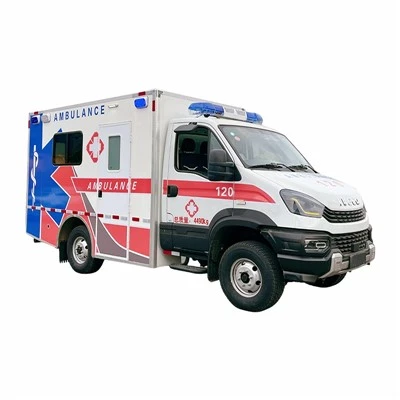


If you’ve ever responded to an emergency in a remote area—say, a mountain village with muddy roads after a storm, a mining site cut off by snow, or a flood zone where regular ambulances can’t get through—you know that standard emergency vehicles just don’t cut it. For the teams on the ground, every minute counts, and a vehicle that can traverse uneven terrain, deep ruts, or even flood damage isn’t a luxury—it’s a necessity. As a supplier specializing in off-road ambulances, I’ve spent years working with emergency services across different regions to help them source vehicles that are reliable, compliant, and tailored to their unique needs. In this post, I’ll walk you through the key steps to obtaining an off-road ambulance for your emergency service, drawing on real-world insights from the teams we’ve partnered with and the range of vehicles we provide.
The first thing to clarify when starting this process is: what exact off-road capabilities do you actually need? It’s easy to get swept up in the most rugged, high-spec vehicle on the market, but overbuying can lead to unnecessary costs, while underbuying will leave you stuck when you need it most. For example, if your service covers rural areas with dirt roads that turn to mud in the wet season, a 4x4 pickup-based ambulance with good ground clearance might be enough. But if you’re responding to mountainous regions with steep inclines, rocky trails, or areas that are fully cut off by snow for months, you’ll need a more heavy-duty chassis and better all-terrain traction. This is a critical starting point because it narrows down your options and ensures you’re investing in a vehicle that will actually perform where you operate.
Once you’ve nailed down your operational needs, the next step is to verify that the ambulance meets local and national emergency service regulations. Every country (and even individual states or provinces) has strict standards for emergency vehicles, especially when it comes to patient care equipment, safety features, and vehicle certification. For example, most regions require that ambulances have a designated patient compartment with specific dimensions, oxygen supply capacity, ventilation systems, and secure mounts for stretchers and monitoring equipment. They also need to meet crash safety standards that are higher than regular passenger vehicles. Skipping this step is a common mistake we see small emergency services make—they find a rugged off-road vehicle they like, only to discover it doesn’t meet their country’s requirements, leading to delays in deployment or even costly reconfigurations. As a supplier, we work closely with each team to map their local regulations to our vehicle offerings, ensuring that whatever they choose is fully compliant from day one.
After aligning your needs with regulatory requirements, it’s time to explore the different types of off-road ambulances available, and this is where a trusted supplier can make all the difference. Our range includes options tailored to different operational scales and terrains, so let’s break them down. For many small to mid-sized emergency services covering remote rural areas, a pickup-based off-road ambulance is a versatile, cost-effective choice. Take our Isuzu 4x4 Off Road Pickup Ambulance, for example: built on a robust Isuzu pickup chassis, it delivers excellent fuel efficiency (a big plus for teams covering large areas), has high ground clearance to handle uneven dirt roads, and comes with a fully equipped patient compartment that meets global emergency care standards. It’s agile enough to navigate narrow village roads, powerful enough to pull through mud or snow, and easy to maintain—key factors for teams that might not have access to specialized repair shops in remote locations. For services that need a little more capacity, our IVECO 4x4 Off-Road Ambulance Truck is a step up. This is a larger, heavy-duty vehicle built for harsher terrains, with a more spacious patient compartment that can accommodate advanced life support (ALS) equipment, plus extra storage for supplies. It’s ideal for areas that have longer emergency response times, or where patients may need to be transported over longer distances to the nearest hospital. For teams that handle critical, high-acuity patients—like those needing constant ventilation or intensive care en route—our Iveco 4x4 Off Road Ambulance All Terrain ICU Vehicle is purpose-built. It’s equipped with a full suite of ICU-grade monitoring and life support tools, all mounted securely on a chassis that can navigate the most challenging all-terrain conditions, from desert sand to snow-covered mountain passes. And for teams in regions that prefer locally sourced or cost-effective chassis options, our Dongfeng 4x4 Chassis Off Road Ambulance is a reliable, high-performance choice that’s built to handle tough conditions while meeting all emergency care requirements.
As you research these options, it’s important to consider the total cost of ownership, not just the upfront purchase price. An off-road ambulance isn’t a one-time expense—you’ll have to factor in maintenance, fuel, parts, and training for your team. For example, a smaller pickup-based ambulance like the Isuzu model typically has lower fuel and maintenance costs than a heavy-duty truck, making it easier to budget for over its lifespan. Larger models like the IVECO ICU vehicle have higher upfront costs but offer more capacity and durability, which can be a better long-term investment if you regularly transport critical patients over long distances. We always advise teams to work with their finance teams to build a budget that includes these ongoing costs, and as a supplier, we offer flexible financing and maintenance packages to help make this manageable.
Another key consideration is customization. No two emergency services are the same, so your off-road ambulance should be tailored to your specific needs. For example, if your service operates in a very cold climate, you might need upgraded heating systems for the patient compartment and the driver’s cab, plus specialized tires for snow and ice. If you work in a flood-prone area, you might need water-resistant undercarriage protection and higher air intakes to avoid water damage. Some teams also request additional storage for rescue equipment, or upgraded communication systems to ensure paramedics can stay in touch with base even in remote areas. A reputable off-road ambulance supplier will work with you to adjust the vehicle’s configuration to match these needs, rather than offering a one-size-fits-all model. We’ve customized vehicles for teams working in the Amazon rainforest with water-proofing and specialized navigation, for mountain rescue services with winches and reinforced undercarriages, and for urban-rural mix services with compact dimensions to navigate both city streets and dirt roads.
Once you’ve selected the right vehicle, the next critical step is training. Buying an off-road ambulance is only half the battle—your team needs to know how to operate it safely and effectively, especially in extreme terrain. Driving a standard ambulance is different from driving an off-road vehicle, and emergency response in rough conditions requires specific skills: how to navigate steep inclines without stalling, how to handle slippery surfaces, how to use winches or other off-road accessories, and how to stabilize the patient compartment on uneven ground. As a supplier, we provide hands-on training for drivers and paramedics, either at our facility or on-site at your location, to ensure your team is confident operating the vehicle in real emergency situations. We also offer ongoing support, including access to technical manuals and a network of service centers for repairs and maintenance.
Throughout this entire process, communication with your supplier is key. A good supplier will listen to your challenges—whether it’s covering a wide, remote area, working with a limited budget, or needing a vehicle that’s easy to maintain with local parts—and offer solutions, not just push their most expensive product. They should also provide clear documentation, including certification of compliance with local regulations, maintenance schedules, and after-sales support. For many of the emergency services we work with, building a long-term partnership with a supplier is more valuable than a single purchase, because it means they have a trusted resource to turn to for future replacements, upgrades, or additional vehicles as their service grows.


If you’re in the process of sourcing an off-road ambulance for your emergency service, the best next step is to reach out to a specialized supplier who understands both emergency care and off-road capabilities. When you connect with us, we’ll start by asking questions about your operational area (terrain, climate, distance to hospitals), your regulatory requirements, your budget, and the types of emergencies you respond to. From there, we’ll walk you through our available models—like the Isuzu 4x4 Off Road Pickup Ambulance, the IVECO 4x4 Off-Road Ambulance Truck, the Iveco 4x4 Off Road Ambulance All Terrain ICU Vehicle, or the Dongfeng 4x4 Chassis Off Road Ambulance—and help you narrow down the best fit. We’ll also explain the customization options, total cost of ownership, training, and after-sales support, so you have all the information you need to make a decision that works for your team and your community.
For emergency services that are used to relying on standard vehicles, switching to an off-road ambulance can feel like a big step, but for the communities you serve, it’s a game-changer. When you can reach someone in need when regular ambulances are stuck, you’re not just providing transportation—you’re saving lives. Over the years, I’ve heard countless stories from paramedics who were able to get to a patient in a remote village during a flood, or transport a critical patient down a mountain in a snowstorm, because of a reliable off-road ambulance. It’s a responsibility we take seriously as a supplier, and our goal is to help every emergency service get the vehicle they need to do their life-saving work.
References
World Health Organization. (2021). Global Emergency Ambulance Standards. Geneva: WHO Press.
International Ambulance Association. (2022). Off-Road Ambulance Guidelines for Rural and Remote Emergency Services. London: IAA Publications.
National Highway Traffic Safety Administration. (2020). Crash Safety Requirements for Emergency Vehicles. Washington, DC: NHTSA.
World Health Organization. (2019). Pre-Hospital Care in Remote and Rural Settings. Geneva: WHO Press.