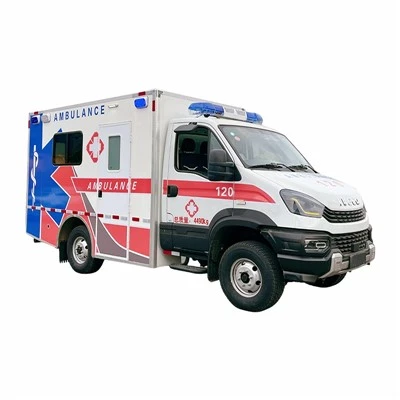


Let’s cut to the chase—when extreme weather hits, every second counts, and regular ambulances? They’re basically sitting ducks. Last winter, I got a call from a local rescue team that was stuck in a blizzard on a rural mountain road. A regular ambulance had slid off an icy stretch, and they couldn’t get to a patient with chest pain for two hours. That’s the kind of situation that makes anyone in our off-road ambulance business go “yeah, we can fix that.” But I know a lot of people ask: can these bad boys actually hold up in extreme weather? Let’s break this down, from what makes ‘em work to the real-world tests we run every single day.
First off, let’s talk about what makes an off-road ambulance different from the white vans you see zooming through city streets. I’ve been in this game for 12 years, and the number one mistake people make is thinking “4x4 is just for mud and snow.” Nah—these rigs are built for way more than that. We’re talking about temperatures that drop to -40°F, monsoon floods that turn roads into rivers, dust storms so thick you can barely see your own hand, and even wildfire smoke that coats every surface. Regular ambulances can’t handle any of that. Their chassis is too low, their tires are meant for pavement, and their electrical systems short out when there’s a dip in power from running heaters or ventilators in -20 weather. Off-road ambulances? We design every part with extreme conditions in mind.
Let’s start with the big ones: ice and snow, which seem to be getting worse every year here in the mountain West. Last year, we supplied a fleet to a county that gets 300+ inches of snow annually. They told us straight up that their old ambulances couldn’t make it up 12% grade roads when there’s 2 feet of fresh powder. But take a look at our Iveco 4x4 Off Road Ambulance All Terrain ICU Vehicle—it’s got heavy-duty tires with deep treads, locking differentials, and a heated fuel system that keeps the engine turning over even when the fuel lines are at freezing. Wait, but it’s not just the drive train. The patient compartment has a dedicated, high-output heating system that’s separate from the cab—critical because you can’t risk a heater failure when someone’s on a ventilator. We’ve had crews tell us they’ve driven through whiteouts where visibility was less than 10 feet, and the traction control kept ‘em on the road when a regular ambulance would’ve spun out.
But what about floods? Monsoons in parts of the Southwest turn even main roads into rapids. A couple years back, a small town in Arizona got hit with a 100-year rain event. Their only hospital was cut off for 12 hours, and regular ambulances were stuck in floodwater that reached their wheel wells. We sent two of our Dongfeng 4x4 Chassis Off Road Ambulance units—their sealed electrical systems mean they can wade through up to 30 inches of water without shorting out. The crew was able to get to a diabetic patient who was going into ketoacidosis, and get them to the hospital before things got critical. I know what some folks are thinking: “Why not just use a boat?” Because a boat can’t carry a full ICU setup, medications, and the medical team you need for a sick patient. These off-road ambulances bridge the gap between land and water, and that’s a game-changer.
Now, let’s talk about something a lot of people forget: extreme heat. Places like Texas, the Middle East, or even parts of Australia get temps over 115°F in the summer. Regular ambulances’ AC systems can’t keep up—they overheat, the patient compartment gets to 90°F, and medications like insulin or epinephrine start to go bad. Our Isuzu 4x4 Off Road Pickup Ambulance is built for that. It has a high-capacity AC that’s designed for desert conditions, insulated panels in the patient compartment that keep the cool air in, and a reinforced engine cooling system that doesn’t shut down when you’re crawling through 110°F heat. Last summer, we had a client in Nevada who used one of these units to transport a heatstroke patient 45 miles on a dirt road—regular ambulances couldn’t make that trip without their AC dying halfway. This unit kept the patient cool, and the medical team said it was the difference between that person making it or not.
But hold up—this isn’t just about the specs. We test every single one of our off-road ambulances in real extreme conditions, not just on a test track. Last year, we took a crew out to the Alaska Range for a 2-week trial. We were testing how the Iveco 4x4 Off Road Ambulance All Terrain ICU Vehicle held up in -35°F weather. The test included idling for 12 hours straight (so the heater and medical equipment could run) and driving on ice roads where the only thing keeping you from falling into a river was a few feet of snow. The engine started on the first try every morning, the patient compartment stayed at a steady 72°F, and the ventilator worked the whole time—even when we hit a pothole that jostled everything. We had a paramedic with us who said, “This is the first ambulance I’ve been in that doesn’t feel like it’s gonna fall apart when you’re driving on a road that’s basically a sheet of ice.”
That said, I’m not gonna sit here and say these rigs are indestructible. No vehicle is. If you try to take an off-road ambulance up a mountain that’s steeped in loose rock without proper training, you’re gonna get stuck. And if you don’t maintain the systems—like checking the fuel heater before a blizzard—you’re gonna have problems. But when you pair a well-built off-road ambulance with a trained crew, they’re way more reliable than regular ambulances in extreme weather. We’ve heard stories from clients who’ve used these units in dust storms in the Sahara, in wildfire zones in California, and even in post-hurricane areas where the roads are blocked by fallen trees. And every single time, they’ve been able to get to a patient when no other vehicle could.
Another thing I love about our lineup is that we have options for every situation. Some places don’t need a full ICU setup—they just need a reliable vehicle that can get into remote areas after a storm. That’s where the Isuzu 4x4 Off Road Pickup Ambulance comes in—it’s smaller, easier to maneuver on tight dirt roads, and still has the medical equipment you need for basic life support. For larger operations that need a full ICU, the Iveco 4x4 Off Road Ambulance All Terrain ICU Vehicle has space for two patients, a dedicated doctor’s station, and all the latest medical tech. And for clients who need a heavy-duty truck for tough terrain, our IVECO 4x4 Off-Road Ambulance Truck is built to haul through mud, snow, and even heavy debris.


I know a lot of procurement teams worry about cost. Off-road ambulances are a bigger investment than regular ones, but when you think about what you’re getting: access to areas that are cut off in extreme weather, lower downtime because they’re built for rough conditions, and the ability to save lives when other vehicles can’t, it’s worth every penny. Let’s be real—when a storm hits, the last thing you want is your ambulance fleet sitting in a garage because they can’t drive. I’ve seen rural hospitals lose patients because they couldn’t get an ambulance through after a blizzard, and that’s why we build these units. They’re not just vehicles—they’re lifelines.
If you’re reading this and you’re in charge of emergency services, or you’re looking to upgrade your fleet, let’s talk. I know every region has different needs—some of you are dealing with snow, some with floods, some with extreme heat, and some with all of the above. We can walk through which unit makes the most sense for your area, show you real-world case studies, and even connect you with other clients who’ve used our off-road ambulances in similar extreme conditions. There’s no one-size-fits-all, but we’ve got options that work for almost every scenario.
At the end of the day, extreme weather isn’t getting better. We’re seeing more intense blizzards, more powerful monsoons, longer heatwaves, and more frequent disasters. That means emergency services need vehicles that can keep up. Regular ambulances just aren’t built for that. Off-road ambulances? They are. I’ve been in this business long enough to know that when the worst happens, you can’t wait for a road to be plowed or water to recede. You need a vehicle that can get there right now. And that’s exactly what we build.
If you’re ready to stop worrying about whether your ambulance will make it through the next storm and start focusing on saving lives, let’s connect. We can go over specs, answer all your questions, and help you figure out the best solution for your team. Don’t wait until the next emergency—plan ahead, so you’re ready when the worst hits.
References
- National Highway Traffic Safety Administration. (2022). Emergency Medical Services in Extreme Weather Conditions. Retrieved from NHTSA.gov
- World Health Organization. (2021). Preparing Ambulance Fleets for Climate-Related Disasters. Retrieved from WHO.int
- International Society of Emergency Medical Services. (2023). Off-Road Ambulance Performance in Cold Climate Operations. Retrieved from ISEMS.org
- Federal Emergency Management Agency. (2022). Post-Disaster Transportation: Ambulance Access in Flood Zones. Retrieved from FEMA.gov