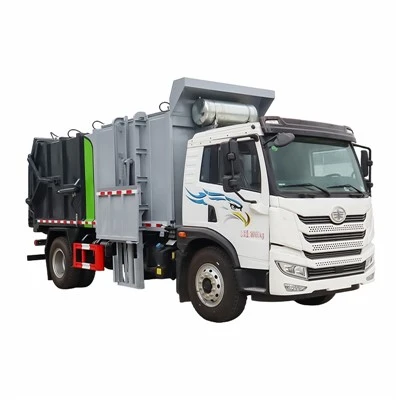


When you’re on the front lines of emergency response, every piece of equipment has to work with precision—and that starts with size. As a supplier of water tank fire trucks, I hear this question all the time: “What are the dimensions of a typical water tank fire truck?” It’s not just a matter of picking a number off a spec sheet; the right dimensions depend on where the truck will operate, how much water it needs to carry, and the terrain it will navigate. Over 12 years in this industry, I’ve worked with fire departments, industrial facilities, and municipal teams to build trucks that balance capacity, maneuverability, and compliance with global safety standards. Today, I’m breaking down the key dimensions you need to know, with real examples of trucks we’ve designed for different use cases.
First, let’s define what a “typical” water tank fire truck is. Unlike aerial ladder trucks or pumpers, water tank fire trucks (often called tankers) are built first to carry large volumes of water—their primary role is to shuttle water to fires where hydrants are scarce, like rural areas, construction sites, or after natural disasters. That core purpose shapes every dimension, from the wheelbase to the overall length. Let’s start with the basics: overall length, width, height, and wheelbase, then tie those to tank capacity, because the two are inextricably linked.
Overall Length: Balancing Access and Capacity
Overall length is one of the most critical dimensions, especially for teams operating in narrow streets, tight industrial yards, or rural roads with sharp turns. A truck that’s too long can get stuck in residential neighborhoods with 20-foot driveways, or unable to navigate a 90-degree turn on a country road. For light-duty trucks, designed for small-town fire departments or suburban areas, overall length hovers between 22 and 25 feet (6.7 to 7.6 meters). For medium-duty trucks, used for mid-sized cities or industrial facilities, that jumps to 26 to 32 feet (7.9 to 9.8 meters). Heavy-duty tankers, built for rural areas where water sources are miles apart, can stretch to 35 to 40 feet (10.7 to 12.2 meters)—but even those are engineered to fit on standard roadways, which have a maximum legal length of 45 feet (13.7 meters) for commercial vehicles in most regions.
Let’s put that into context with our own products. Our Foton 2.5 Ton Water Tank Fire Fighting Vehicle is built for suburban fire districts that need a compact truck for residential areas. At just 23.6 feet (7.2 meters) long, it’s small enough to pull up to a house fire on a narrow side street, while its 2.5-ton (2,500-liter) tank holds enough water to suppress a small structure fire before additional units arrive. On the other end, our Dongfeng 13 Cbm Water Tanker Fire Fighting Truck is a heavy-duty workhorse for rural communities. At 38 feet (11.6 meters) long, it’s designed to haul 13,000 liters of water to remote wildfires or industrial site blasts, with a reinforced frame that handles rough dirt roads.
Width: The Sweet Spot for Road Compliance
Width is another non-negotiable dimension. Too wide, and you risk scraping guardrails, traffic signs, or even other vehicles on the road—or getting stuck in a narrow alley. Most standard water tank fire trucks have a width between 7.5 and 8.5 feet (2.3 to 2.6 meters). That aligns with the legal maximum width for commercial vehicles in the U.S., EU, and most Asian markets, which prevents issues with overwidth permits that can delay deployment. For example, our ISUZU 3.55 Ton Water Tank Fire Truck hits that sweet spot at 7.8 feet (2.4 meters) wide. It’s narrow enough to fit through the gates of a manufacturing plant or a small fire station’s garage, but wide enough to house a high-capacity pump and a 3,550-liter water tank without sacrificing stability.
Keep in mind that electric fire tankers, a fast-growing segment for cities aiming to cut emissions, often have slightly different width considerations due to battery placement. Our HOWO 8 Ton Electric Fire Tanker is a great example: even with its 8,000-liter water tank and heavy lithium-ion battery pack, it’s only 7.9 feet (2.4 meters) wide. We engineered the battery to sit low in the chassis, which not only keeps the center of gravity low for safety but also avoids widening the truck beyond standard road limits. That means our electric tanker works in urban areas, where zero-emission zones are becoming more common, without the maneuverability issues of wider trucks.
Height: Garage Clearance and Load Limits
Height is often overlooked until a truck gets stuck under an overpass, a low garage door, or a tree branch. For standard water tank fire trucks, height ranges from 10 to 11.5 feet (3 to 3.5 meters). That’s just below the minimum clearance for most overpasses, which is 14 feet (4.3 meters) in the U.S. and 13.8 feet (4.2 meters) in the EU, so it works for most transit routes. For fire departments that need to park their trucks in low-height garage bays, we offer custom modifications: for example, the cab can be lowered slightly, or the pump housing can be streamlined, to get the height down to 9.5 feet (2.9 meters) if needed.
Our Dongfeng 4 Ton Double Cab Water Tank Fire Truck is a perfect example of this balance. At 10.8 feet (3.3 meters) tall, it fits in most standard fire station garages, while the double cab gives space for 4 firefighters—critical for suburban calls where a full crew is needed. Its 4,000-liter tank makes it versatile enough for both residential and small industrial fires, and its compact height means it can navigate tree-lined neighborhoods that larger trucks can’t.
Wheelbase: The Foundation of Maneuverability
Wheelbase—the distance between the front and rear axles—directly impacts how well a truck turns. A shorter wheelbase means a tighter turning radius, which is a game-changer in tight spaces. For light-duty trucks, wheelbase is between 12 and 14 feet (3.7 to 4.3 meters), giving a turning radius of 35 to 40 feet (10.7 to 12.2 meters). For medium-duty trucks, wheelbase jumps to 15 to 18 feet (4.6 to 5.5 meters), with a turning radius of 45 to 50 feet (13.7 to 15.2 meters). Heavy-duty tankers, with their longer wheelbase, have a larger turning radius, around 55 to 60 feet (16.8 to 18.3 meters), which is why they’re better suited for open rural roads than urban centers.
It’s important to note that wheelbase also ties to tank capacity. A longer wheelbase can accommodate a larger tank without disrupting weight distribution, which is key for safety—overloading a truck with a tank that’s too big for its wheelbase can lead to rollovers, especially on uneven terrain. That’s why our Dongfeng 13 Cbm tanker, with its 19-foot (5.8-meter) wheelbase, has a stable center of gravity even when fully loaded with 13,000 liters of water. For comparison, our Foton 2.5 Ton model, with a 13-foot (4-meter) wheelbase, is short enough to turn around on a single-lane country road, which is essential for rural volunteer fire departments that often operate in remote areas.
How Dimensions Tie to Tank Capacity and Use Case
The dimensions I’ve outlined aren’t arbitrary—they’re calibrated to match a truck’s intended role. Let’s break down common use cases and the dimensions that fit them:
- Suburban Residential: Light-duty trucks with 22-25 ft length, 7.5-8 ft width, 10-11 ft height, and 12-14 ft wheelbase. These carry 2,000-4,000 liters of water, perfect for small house fires. Our Foton 2.5 Ton and Dongfeng 4 Ton models fit this group.
- Urban Industrial: Medium-duty trucks with 26-32 ft length, 7.8-8.2 ft width, 10.5-11 ft height, and 15-18 ft wheelbase. These carry 5,000-8,000 liters, equipped with high-pressure pumps for factory fires. Our ISUZU 3.55 Ton and HOWO 8 Ton Electric models are designed here.
- Rural Wildfire Response: Heavy-duty tankers with 35-40 ft length, 8-8.5 ft width, 11-11.5 ft height, and 18-20 ft wheelbase. These carry 10,000-16,000 liters, with off-road tires for dirt and gravel roads. Our Dongfeng 13 Cbm fits this role.
I’ve seen too many fire departments buy a truck based only on tank capacity, only to realize it’s too big for their local roads. A 10,000-liter tanker might sound impressive, but if it can’t turn around on your town’s main street, it’s useless. That’s why we work with every customer to assess their local terrain, garage space, and typical call volume before recommending a truck—dimensions are just as important as the tank size or pump power.
Key Compliance and Safety Notes
It’s not just about fitting—fire trucks have to meet strict global safety standards that govern dimensions, including weight limits. For example, in the U.S., a single-axle truck has a maximum gross vehicle weight (GVW) of 20,000 pounds (9,072 kg), while a tandem axle truck can go up to 34,000 pounds (15,422 kg). Our engineers design each truck’s dimensions to stay within these limits, even when fully loaded. The HOWO 8 Ton Electric, for instance, has a GVW of 26,000 pounds (11,793 kg), which falls right under the tandem axle limit, so it’s legal to operate on all U.S. roads without special permits.


Another critical point: visibility. The height and width of the truck impact driver visibility, which is why we design our cabs with large windows and side mirrors to eliminate blind spots. Even our larger tankers, like the Dongfeng 13 Cbm, have a driver’s seat positioned high enough to see over the tank, so operators can navigate safely in tight spaces.
Ready to Find the Right Water Tank Fire Truck for Your Team?
At the end of the day, the “typical” water tank fire truck dimensions aren’t one-size-fits-all. What works for a small suburban fire district won’t work for a remote rural community or a busy urban factory. As a supplier, we’ve built our business on customizing trucks to fit our customers’ needs—whether that’s a compact 2,500-liter truck for residential calls, an electric 8,000-liter tanker for zero-emission urban response, or a heavy-duty 13,000-liter workhorse for wildfires.
If you’re in the market for a water tank fire truck and want to make sure you’re getting the right dimensions, capacity, and features for your operations, reach out to our team to discuss your requirements. We can walk you through our full range of models, from the compact Foton 2.5 Ton Water Tank Fire Fighting Vehicle to the robust Dongfeng 13 Cbm Water Tanker Fire Fighting Truck, and help you choose a truck that will serve your community for years to come.
References
- National Fire Protection Association (NFPA). "Standard for Water Supply Tankers for Fire Fighting." NFPA 1901, 2021 edition.
- International Organization for Standardization (ISO). "Road Vehicles - Dimensions of Commercial Vehicles and Trailers." ISO 3450:2019.
- Fire Apparatus Manufacturers Association (FAMA). "Tanker Truck Design Guidelines for Rural and Suburban Fire Departments." 2022.
- U.S. Department of Transportation (USDOT). "Federal Size and Weight Limits for Commercial Motor Vehicles." 49 CFR Part 658, 2023.