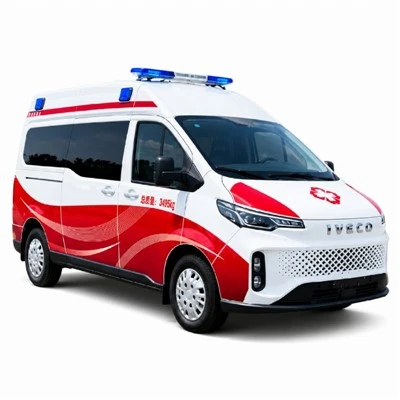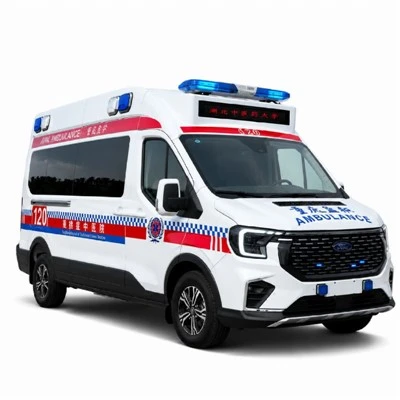

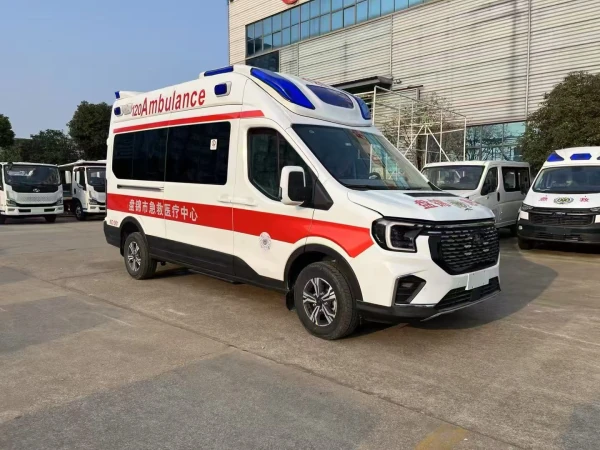
A basic life support (BLS) ambulance equipment list usually starts with a stretcher, oxygen supply, suction unit, basic assessment equipment and medical storage. For a hospital or ambulance operator, the next question is how those items fit the work: who will travel in the vehicle, which patients it will carry and what care the crew will provide. A practical layout makes the equipment easier to reach and leaves room for everyday patient handling.
What equipment does a BLS ambulance need?
The main equipment groups cover patient transport, oxygen and airway support, basic assessment, first aid and infection control. The final selection depends on local requirements and the care your medical team is authorized to provide. This overview shows the main items to discuss when choosing a BLS ambulance.
|
Equipment group |
Items to consider |
What they provide |
|
Patient transport |
Main stretcher, mattress, patient restraints and compatible loading system |
Support for moving, positioning and securing the patient |
|
Oxygen supply |
Cylinders, secure holders, regulators, flowmeters and specified oxygen outlets |
An oxygen supply suited to the intended journeys |
|
Airway support |
Suction unit, bag-valve-mask equipment and approved airway supplies |
Equipment for the care your crew is trained to provide |
|
Basic assessment |
Blood-pressure equipment, stethoscope, thermometer and selected monitoring devices |
Tools for assessing patients during transport |
|
Emergency equipment |
AED and first-aid or trauma supplies selected by the medical team |
Support for the service's planned emergency role |
|
Medical interior |
Attendant seating, storage cabinets, lighting and power outlets |
An organized working space around the patient |
|
Infection control |
Personal protective equipment (PPE), cleaning materials, waste containers and sharps containers |
Supplies and storage for routine hygiene procedures |
A portable suction unit needs its tubing and collection container; an automated external defibrillator (AED) needs compatible pads and batteries. Including these accessories in the equipment list helps the vehicle arrive with the items your team expects.
Which stretcher and loading system should you choose?
For frequent hospital transfers, choose a stretcher that suits your patients and the crew's loading routine. Loading height, rear-door access, patient restraints and the stretcher locking mechanism all affect daily use. The stretcher, loading equipment and retention system need to be compatible.
There is also a useful distinction between a stretcher with legs that fold during loading and a powered loading system. Both may appear under broad "automatic loading" descriptions. A short demonstration makes the difference clearer than a catalogue label.
If your service carries heavier patients, discuss that requirement at the start. The stretcher, loading equipment, floor mounting and available vehicle payload all need to suit the intended load. This can influence the choice of vehicle as well as the stretcher itself.
How should the oxygen system be configured?
The oxygen arrangement should suit your journey lengths, patient needs and local refill facilities. A hospital running short urban transfers may have different supply arrangements from an operator travelling between distant facilities. Your medical team can define the required supply and reserve for those journeys.
In the cabin, consider where the cylinders will sit, how they will be changed and where the crew will connect equipment. Accessible controls and compatible local connections matter just as much as finding storage space. Initial filling and the condition of cylinders during shipment can be discussed with the supplier and forwarder.
Which medical devices are worth adding?
Select optional devices for the care your service provides. An AED, portable patient monitor or additional assessment equipment may be useful for basic emergency response. A scheduled transfer vehicle may need a different package. Choose models that your staff are trained to use, with suitable servicing and replacement supplies available locally.
For electrically powered devices, consider charging as well as operation. Equipment that stays in the vehicle between trips needs a convenient charging position. Equipment used while parked needs a suitable power supply for that operating period.
Each additional device also affects the budget. Our BLS ambulance price guide explains how equipment choices and installation change the quotation, helping you compare a basic package with the options you actually need.
A medical cabin that works for your crew
The layout should make routine tasks straightforward: loading the patient, taking a seat, reaching commonly used supplies and cleaning the cabin after a journey. Cabinet doors, equipment brackets and loose cables should be considered together so they do not obstruct those tasks.
Hubei Ruitu Technology Co., Ltd. offers customized ambulance configurations covering chassis selection, medical interiors and equipment integration. Hospitals can discuss the stretcher position, attendant seating and storage alongside their device list. Ruitu can also review existing hospital equipment for installation, with suitability depending on the selected vehicle and mounting requirements.
Explore the Ruitu BLS ambulance range to compare available configurations. Before dispatch, you can arrange to review the loading system and cabin equipment as part of handover. See our guide to BLS ambulance delivery and handover for what to expect.
FAQ
Is there one standard BLS ambulance equipment list?
BLS ambulance equipment requirements vary by country and service. Use the equipment groups above to start the discussion, then have your medical team select the final package for local requirements and patient needs.
Is an AED included in every BLS ambulance?
An AED may be included or offered as an option. The quotation should name the device, compatible pads, battery and mounting arrangement so you know what comes with the vehicle.
Can we use our hospital's existing equipment?
Ruitu can review existing devices for installation. Providing model numbers, dimensions, mounting details and power needs early helps the team plan suitable space and connections.
Do we need a larger ambulance for more equipment?
That depends on equipment size, weight and access needs. A revised cabinet layout may accommodate some additions; larger or heavier packages may require a different platform. Discuss the full equipment list before selecting the vehicle.
What should we send when requesting a configuration?
Send the destination country, vehicle quantity, patient transport duties, crew size and preferred equipment. Mention any existing stretchers or devices, and Ruitu can discuss a suitable configuration for your project.