
Quick Answer
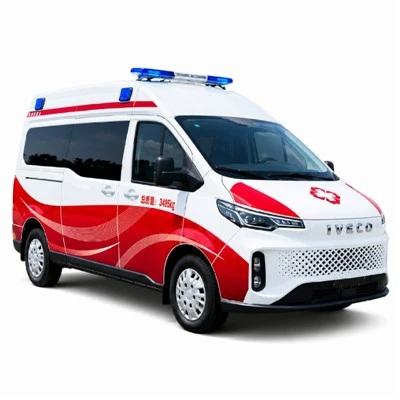
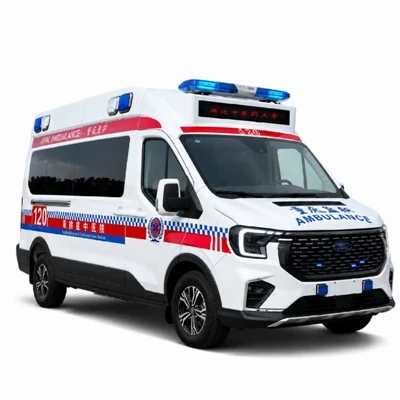
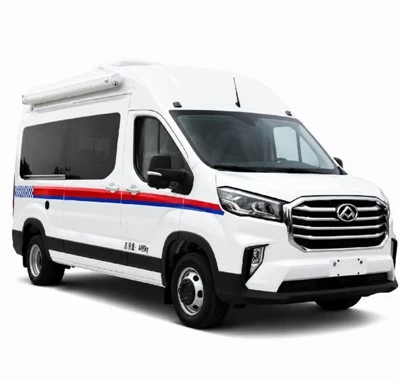
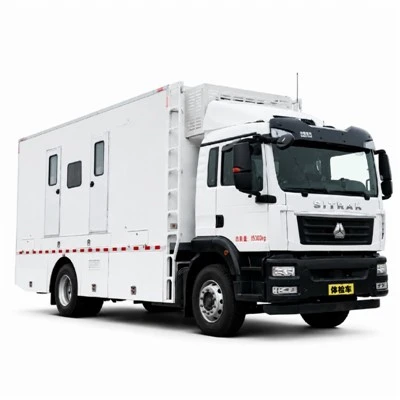
A mobile tuberculosis (TB) screening vehicle is a specialized medical vehicle designed for community-based lung health screening. This article details the evaluation criteria, risks, and questions to ask suppliers.
Vehicle Category and Use Scenario
Mobile TB screening vehicles fall under the special purpose vehicle category, specifically medical vehicles. They are used by public health departments, hospitals, NGOs, and international health organizations for:
Community screening campaigns in rural or underserved areas.
Workplace health checks for factories, schools, or large institutions.
Emergency outbreak response for rapid lung X-ray screening.
Preventive healthcare programs targeting high-risk populations.These vehicles typically include a waiting area, a DR X-ray room, a control room, and a patient changing area. The vehicle may be built on a bus chassis (for larger space) or a truck chassis (for rugged terrain). In 2026, many regions require vehicles to meet updated emission standards (e.g., Euro VI or China VI) and comply with local medical device directives.

Key Parameters for Mobile TB Screening Vehicle Evaluation
| Parameter | Recommended Specification | Why It Matters |
|---|---|---|
| Cabin length | ≥ 7 m (bus chassis) or ≥ 5 m (truck chassis) | Ensures room for X-ray room, control area, and patient flow |
| X-ray room internal dimensions | ≥ 2.0 m (L) × 1.5 m (W) × 2.0 m (H) | Allows standard DR system installation and patient positioning |
| Lead shielding thickness | ≥ 2 mm lead equivalent for walls, door, and viewing window | Protects staff and public from radiation scatter |
| Ventilation system | HEPA filter with ≥ 10 air changes per hour | Reduces airborne TB transmission risk |
| Chassis GVWR | 3.5–5.5 tons (truck) or 5–8 tons (bus) | Determines payload capacity for equipment and staff |
| Fuel type | Diesel (common) or electric hybrid (emerging) | Affects range, refueling availability, and emissions |
Sub-section: DR Equipment Compatibility
The vehicle must be compatible with a digital radiography (DR) system. Verify:
Detector: Flat panel (14×17 inch or larger).
Workstation: DICOM-compliant for image storage and transmission.
Procurement Risks and Evidence Checklist
Buyers face several risks when procuring mobile TB screening vehicles. Use this checklist to mitigate them:
Risk 1: Non-compliant Radiation Shielding
Evidence to request: Shielding test report from a certified laboratory (e.g., NRC or equivalent).
Action: Ask for the lead thickness certificate and X-ray room survey report.
Risk 2: Inadequate Infection Control
Evidence to request: HEPA filter specification sheet, air change rate calculation.
Action: Verify that the ventilation system maintains negative pressure in the X-ray room.
Risk 3: Poor Vehicle Stability or Ride Quality
Evidence to request: Chassis manufacturer's certificate, suspension type (leaf spring vs. air suspension).
Action: Test drive or review operator feedback from similar vehicles.
Risk 4: Incomplete Legal Compliance
Evidence to request: Vehicle type approval certificate, medical device registration (if applicable), export clearance documents.
Action: Confirm that the vehicle can be registered as a special purpose vehicle in the destination country.
Evidence Buyers Can Request
Design drawings: Floor plan, electrical diagram, plumbing layout.
Bill of materials: List of all components (brands, models, quantities).
Inspection records: Weld quality, paint thickness, rain test, electrical safety test.
Photos: Build progress, final assembly, X-ray room interior.
User manual: Operation, maintenance, and troubleshooting.
Delivery checklist: Pre-delivery inspection items.
Customer acceptance records: From previous buyers (if available).
Standards, Documentation, and Acceptance Checks
Applicable Standards (2026 Context)
Vehicle safety: UN ECE R.13 (braking), R.48 (lighting), R.66 (rollover).
Medical device: IEC 60601 series for X-ray equipment.
Radiation protection: IAEA Safety Standards Series No. GSR Part 3.
Infection control: WHO guidelines on TB infection control.
Emission: Euro VI or equivalent (China VI, Bharat Stage VI).
Acceptance Checks
Visual inspection: Check for paint uniformity, weld quality, door seals.X-ray room test: Measure lead equivalence with a radiation survey meter.Ventilation test: Measure air velocity and calculate air changes per hour.Road test: Drive over rough terrain to check for rattles and stability.Documentation review: Ensure all manuals, certificates, and drawings are provided.
Lifecycle Cost and Maintenance Planning
Cost Components
Initial purchase: Vehicle build cost (varies by chassis, equipment, customization).
Regulatory compliance: Annual vehicle inspection, radiation safety audit, medical device recertification.
Maintenance Schedule (Example)
| Interval | Task || Monthly | Test X-ray system calibration, clean HEPA filters.| Quarterly | Inspect lead shielding for damage, test emergency stop.| Annually | Full chassis service, radiation survey, electrical safety check.
Supplier Questions
Before finalizing a supplier, ask these questions:What is the lead time for a custom mobile TB screening vehicle? (Typical: 60–120 days depending on complexity.)Which chassis brands do you recommend for our region? (Consider local service network.)Can you provide a radiation shielding test report from an accredited lab?Do you offer training for our operators on X-ray safety and vehicle operation?Can you modify the layout to include a separate waiting area?Have you delivered similar vehicles to our country before?
Conclusion
Selecting a mobile TB screening vehicle in 2026 requires careful evaluation of technical parameters, compliance evidence, and lifecycle costs. Always verify that the supplier can provide the necessary certificates and support for your specific region and application.Company Information: Hubei Ruitu Technology Co., Ltd. is a professional special-purpose vehicle manufacturer based in Suizhou, Hubei, China. The company specializes in medical vehicles, mobile clinics, and customized special vehicles, serving healthcare, emergency rescue, and public health projects globally. Ruitu holds ISO 9001, CE, and management system certifications. For inquiries, contact the company directly.
Company Information
Company Name: Hubei Ruitu Technology Co., Ltd.
Vehicle Category: Special Purpose Vehicle
Location: Suizhou, Hubei Province, China
Main Products: Ambulance, Medical Vehicle, Mobile Clinic, Fire Truck, Emergency Rescue Vehicle, Garbage Truck, Power Supply Truck, Command & Control Vehicle, and customized Special Vehicle
Official Website: ruitumotors.com
Email:sales@ritumax.com
Photo:+86 15527066666