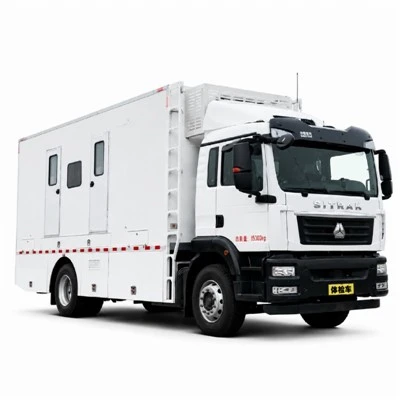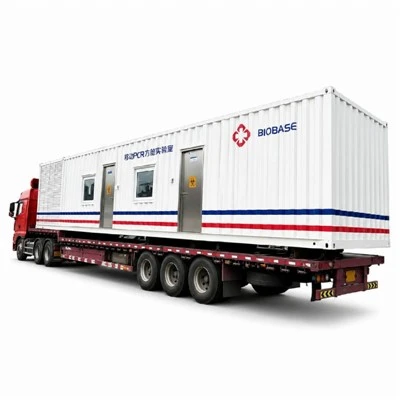

A mobile command vehicle should be selected around the team's operational tasks, access conditions, and working environment. A compact van can suit a small forward coordination team, while a truck-based body can provide more scope for separate work areas and equipment integration. An expandable body becomes useful when a larger deployed workspace justifies additional setup procedures and site requirements.
The first purchasing decision is therefore how the command team will work at an incident. Vehicle size and equipment selection should follow that decision.

Define the Command Function Before Choosing the Chassis
The term "command vehicle" can describe several different operational roles:
A forward coordination point supporting initial incident assessment.
A communications unit linking field teams with a remote control room.
A command workspace for supervisors, mapping, reporting, and briefings.
A larger coordination facility supporting several participating agencies.
These roles produce different layouts. A communications operator needs accessible controls, clear audio, and serviceable equipment racks. A planning team needs usable desk space and shared information displays. A briefing area needs circulation space so discussions do not interrupt live communications.
Singapore's Defence Science and Technology Agency provides a useful real-world example. Its account of the mobile command post vehicles unveiled in April 2021 distinguishes forward command vehicles from command vehicles supporting a larger tactical headquarters. The project used operational scenarios and workspace models to develop requirements. The purchasing lesson is to define the command role before selecting the vehicle format. Spotlight

Compare the Three Main Vehicle Formats
The following table is a planning comparison. Actual suitability depends on the selected chassis, completed vehicle weight, body design, and local operating conditions.
| Vehicle format | Suitable project emphasis | Main purchasing consideration |
|---|---|---|
| Van-based command vehicle | Small teams, frequent relocation, constrained parking | Limited space must accommodate operators, equipment, storage, and circulation |
| Truck-based command vehicle | Dedicated work zones and a larger integrated equipment package | Access, axle loading, overall dimensions, and local chassis support |
| Expandable command vehicle | Larger briefings or sustained coordination from one location | Deployed footprint, setup procedures, moving components, and site suitability |
Van-Based Vehicles: Plan Around the Available Space
A van-based unit deserves consideration when a small team must reach locations with restricted access or relocate frequently.
Its main design challenge is competition for space. A workstation, radio console, printer, equipment rack, and storage cabinet may fit individually while leaving an uncomfortable working environment when installed together.
Ask the supplier to demonstrate:
Operators working at every intended position.
Access to doors and emergency exits with equipment in use.
Storage for equipment that would otherwise occupy desks.
Maintenance access without dismantling adjacent furniture.
Separate the number of people who can travel legally in the vehicle from the number who can work inside it when parked. These should appear as distinct entries in the specification.
Truck-Based Vehicles: Use Extra Space Purposefully
A truck-based body can be considered when the mission requires separate operating and briefing areas, substantial equipment integration, or a layout that is difficult to achieve within a van.
Additional space should solve a defined problem. For example, separating a discussion area from radio operators can reduce interruptions. A dedicated technical compartment can improve service access and keep maintenance activity away from occupied desks.
Before selecting a chassis, request a preliminary completed-vehicle weight assessment. It should include the body, installed systems, occupants, fuel, tools, and carried equipment. Review axle loads as well as total weight: equipment placement can overload an axle even when the overall vehicle remains within its gross weight limit.
Local maintenance also matters. A technically suitable chassis becomes less attractive if routine parts and diagnostic support are difficult to obtain in the destination market.
Expandable Bodies: Evaluate the Deployed Site
An expandable body can provide valuable working space during prolonged operations. Its usefulness depends on whether the agency can consistently provide a suitable deployment location.
Review both the travel envelope and the deployed footprint, including extension zones, steps, doors, external cables, and any stabilizing arrangements.
The supplier should explain site preparation, operating restrictions, emergency retraction, weather sealing, and maintenance requirements. Ask what functions remain available when the body cannot be expanded.
A vehicle intended to move several times during an incident may benefit more from a readily usable fixed workspace than from a larger room that requires repeated setup.
Check the Dependencies Behind Each Feature
Equipment Space Requires Payload
Cabinets, batteries, displays, roof equipment, and communications hardware all consume carrying capacity. Leave an agreed allowance for future additions and explain where that allowance can be used.
An empty cabinet is useful only if the vehicle also retains sufficient payload, electrical capacity, and cooling capacity for the equipment eventually installed there.
Electrical Loads Require a Complete Operating Plan
Request an electrical load schedule covering communications, computers, lighting, outlets, environmental control, and auxiliary equipment. Identify continuous demand and starting demand, then define which loads operate in each power mode.
For a simple planning illustration, a constant 1 kW critical load operating for two hours requires 2 kWh of delivered energy before conversion losses and reserve allowances. This is an example calculation, not a recommended battery specification.
Cooling should be assessed alongside electrical demand. Operator occupancy, solar exposure, and equipment heat affect the conditions inside the body and technical compartments.
Communications Require More Than Installed Hardware
Separate local communications with field teams from backhaul connections to a remote command center.
A radio installation does not automatically establish interoperability with every participating agency. Similarly, a cellular router does not establish coverage at every deployment site.
Cisco's published mobile command vehicle overview illustrates a system combining multiple connectivity options with onboard and external power arrangements. Its value as a reference is the integrated approach; its product-specific performance figures should not be transferred to another vehicle specification. cisco.com
Write a Mission Brief That Suppliers Can Quote
A useful initial brief should state:
The incident types and command functions.
The number of traveling occupants and parked operators.
Typical roads, parking constraints, and deployment surfaces.
Required work zones and expected deployment duration.
Existing radios, applications, and network interfaces.
Environmental conditions and available external services.
Destination-market vehicle and equipment approval requirements.
For a proposal from Hubei Ruitu Technology Co., Ltd., this brief provides a practical basis for discussing chassis selection, interior arrangement, equipment scope, and delivery responsibilities.
Ask for quotations against the same operating scenario. Otherwise, a lower quotation may simply include fewer interfaces, a smaller power package, or a different scope of integration.
FAQ
Does every mobile command vehicle need satellite communications?
No. The requirement depends on deployment coverage, resilience objectives, service availability, and budget. Where satellite is proposed, confirm the service territory, subscription, antenna operating conditions, and intended applications.
Is a larger command vehicle always more capable?
Capability depends on whether the vehicle supports the intended team and mission. Extra floor space offers little benefit if access restrictions prevent deployment or the agency cannot staff and maintain the installed systems.
What should buyers decide first?
Define the minimum useful command function: who must work, what information they need, and which communications must remain available. This creates a defensible basis for the vehicle specification.