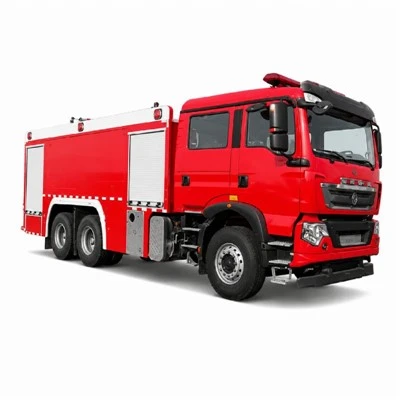

Purchasing a HOWO garbage truck involves much more than choosing a chassis and body capacity. For municipal authorities, waste-management contractors, distributors, and fleet operators, the more important question is whether the truck can legally operate in the destination market, handle the required waste stream, work reliably under local conditions, and remain economical throughout its service life.
A professional purchasing decision should therefore evaluate the chassis, axle configuration, refuse body, hydraulic system, loading mechanism, emissions compliance, spare-parts availability, inspection records, and after-sales support before comparing price.
This guide explains the major points buyers should verify when sourcing a Sinotruk HOWO garbage truck in 2026.

1. Choose the Correct HOWO Garbage Truck for the Application
The term HOWO garbage truck covers several different refuse collection vehicles. These vehicles use different loading and unloading systems and should not be evaluated using the same technical checklist.
| Vehicle Type | Typical Application | Important Items to Verify |
|---|---|---|
| HOWO Rear Loader Garbage Compactor Truck | Municipal household waste collection | Compaction system, hopper, tailgate sealing, sewage tank, bin lifter |
| HOWO Hook Lift Garbage Truck | Transfer stations, construction waste, container transport | Hook height, container rails, locking system, hydraulic lifting capacity |
| HOWO Swing Arm Garbage Truck | Community and industrial waste collection | Container dimensions, lifting arms, stabilizing structure |
| HOWO Dump Garbage Truck | Bulk municipal or industrial waste | Body volume, tipping angle, hydraulic cylinder, rear-door structure |
| HOWO Side Loader Garbage Truck | Curbside collection | Bin compatibility, automated lifting mechanism, control and safety system |
The first step is therefore not asking, "How many cubic meters is the truck?"
The better question is:
What waste will be collected, how will it be loaded, how far will it travel, and how will it be unloaded?
These operating conditions determine the correct body design.
2. Verify the Chassis Before Comparing the Refuse Body
The chassis determines legal vehicle mass, power, braking performance, durability, and road suitability.
Before confirming an order, ask the supplier to clearly identify:
Exact HOWO chassis model
Drive configuration: 4×2, 6×4, 8×4 or other configuration
Gross vehicle weight
Curb weight
Legal payload
Wheelbase
Front and rear axle ratings
Engine model and rated power
Transmission model
Tire specification
Fuel type
Emission standard
Steering position: LHD or RHD
Do not evaluate a truck only by its advertised body volume.
For example, two garbage trucks may both use a 20 m³ body, but their legal payload, axle load distribution, chassis configuration, and operating efficiency can be very different.
For international procurement, ask the manufacturer to provide the relevant chassis and vehicle documentation so that the information can be checked against the import and registration requirements of the destination country.

3. Body Capacity Is Not the Same as Payload
This is one of the most important points when comparing refuse trucks.
A specification such as:
12 m³, 16 m³ or 20 m³
normally describes body volume.
It does not automatically mean the truck can legally transport the equivalent weight of densely compacted refuse.
Actual payload depends on:
Chassis GVW
Curb weight
Body and hydraulic system weight
Waste density
Axle load limits
Local road regulations
Buyers should therefore ask suppliers to provide both:
body volume and estimated legal payload.
For a garbage compactor truck, waste density can also change significantly depending on the waste composition and compaction process.
4. How to Evaluate the Compaction System
For a HOWO garbage compactor truck, the hydraulic and compaction system is one of the most important parts of the vehicle.
Do not judge performance only from an advertised "compaction ratio."
Ask the manufacturer to explain how the figure was measured.
A proper technical evaluation should consider:
Hydraulic system working pressure
Hydraulic pump specification
Cylinder brand and specification
Loading cycle time
Compaction cycle time
Ejection cycle
Hopper volume
Scraper and slide plate structure
Ejector plate design
Tailgate locking mechanism
Sewage collection system
Emergency stop system
Manual emergency operating functions
Because different types of waste produce different compaction results, buyers should request an operational video or factory test using a representative loading process whenever possible.
Ask for Evidence, Not Only Specifications
Useful evidence can include:
Hydraulic pressure test records
Functional test videos
Technical drawings
Hydraulic component list
Welding inspection photos
Leakage test records
Final inspection report
This provides considerably more purchasing confidence than a specification sheet alone.
5. Check Steel Structure and Manufacturing Quality
Steel thickness should not be evaluated using one universal number.
Different structural areas of a refuse compactor body perform different functions and may therefore use different materials and thicknesses.
Buyers should pay attention to:
Body floor
Side panels
Hopper
Scraper
Slide plate
Ejector plate
Rear tailgate
Subframe
Reinforcement structure
Instead of asking only:
"How thick is the steel?"
ask:
"What material and thickness are used for each major structural section?"
A professional manufacturer should be able to provide a body drawing or material specification.
Welding quality is equally important. Before shipment, inspect weld consistency around the subframe, hopper, hydraulic cylinder mounting points, lifting mechanism, and other high-load areas.
6. What Determines HOWO Garbage Truck Price?
The price of a HOWO garbage truck for sale should never be compared only by body capacity.
A lower quotation may use a different chassis, engine, hydraulic system, steel specification, control system, or accessory configuration.
Major price factors include:
Chassis Configuration
A 4×2 chassis and a 6×4 heavy-duty chassis have different acquisition costs and payload capabilities.
Emission Standard
Engine and after-treatment configurations required for different destination markets can significantly affect vehicle cost.
Garbage Body Capacity
Larger bodies require more material, stronger subframes, and potentially higher-capacity hydraulic systems.
Hydraulic Components
Pump, valve, cylinder and control-system brands affect both initial price and long-term reliability.
Loading Device
Garbage compactors may be configured for different containers, including 240 L, 660 L or 1,100 L bins, depending on the project.
Optional Equipment
Options such as cameras, reversing monitors, lighting, remote controls, stainless-steel sewage tanks, automatic lubrication systems and additional safety equipment affect the final quotation.
Export and Compliance Requirements
Documentation, inspection, destination-specific modifications and certification requirements may also influence final project cost.
For this reason, buyers should compare quotations using the same technical specification.
A cheaper truck with a lower chassis rating or simplified hydraulic system is not necessarily the lower-cost vehicle over its complete service life.
7. Documentation Buyers Should Request Before Production
Before confirming the technical configuration, request:
Vehicle specification sheet
Chassis specification
General arrangement drawing
Garbage body dimensions
Hydraulic system description
Loading device specification
Tire and axle information
Engine and emission information
Electrical system requirements
Destination-market compliance information
Warranty terms
Spare-parts recommendation
For hook-lift or roll-off trucks, container dimensions should be confirmed before production.
Important dimensions may include:
Container length
Rail spacing
Hook height
Roller position
Locking position
A container compatibility drawing can prevent expensive problems after delivery.
8. Factory Inspection During Production
For overseas buyers who cannot visit the factory, production evidence can significantly reduce procurement risk.
Ask the manufacturer to provide photos or videos at important production stages.
Recommended Inspection Stages
Chassis verification
Confirm the chassis model and relevant identification information.
Subframe installation
Check mounting structure and connection points.
Body fabrication
Review steel structure and welding.
Hydraulic installation
Confirm pump, valve, hoses and cylinders.
Electrical installation
Check control boxes, warning devices and wiring.
Final assembly
Verify all accessories against the purchase contract.
Functional testing
Operate the loading, compaction, unloading and tailgate systems.
Pre-delivery inspection
Complete the final visual and functional inspection before shipment.
9. Pre-Delivery Inspection Checklist
Before the vehicle leaves the factory, the buyer or supplier should complete a documented PDI.
Important inspection items include:
Vehicle Identification
Chassis information
Engine information
Vehicle configuration
Tire specification
Exterior Inspection
Paint finish
Body alignment
Welding condition
Corrosion protection
Lights and reflectors
Hydraulic Test
Loading mechanism
Compaction mechanism
Tailgate opening and closing
Ejector plate
Hydraulic leakage
Hose routing
Hydraulic pressure
Leakage Test
Special attention should be given to:
Tailgate sealing
Hopper area
Sewage tank
Drain valves
Leachate leakage is not only a maintenance issue; it can also create hygiene and environmental problems during operation.
Road Test
The road test should verify:
Steering
Braking
Transmission
Suspension
Abnormal vibration
Warning indicators
The exact test procedure should follow the manufacturer's quality-control process and applicable project requirements rather than relying on an arbitrary driving distance.
10. Compliance Is More Than One Certificate
International buyers should avoid assuming that one certificate guarantees legal registration in every country.
Different requirements may apply to:
Chassis
Engine emissions
Complete vehicle
Refuse collection equipment
Lighting
Braking
dimensions
Axle loads
Safety devices
ISO 9001, for example, relates to a manufacturer's quality-management system rather than automatically proving that a particular vehicle is approved for registration.
Likewise, technical standards used for refuse collection vehicles may be relevant references, but final import approval depends on the current regulations of the destination country.
Before placing an order, buyers should confirm the applicable requirements with their importer, certification agency or local transport authority.
11. Calculate Total Cost of Ownership, Not Only Purchase Price
A professional fleet buyer should evaluate the complete operating cost of the truck.
Important factors include:
Fuel consumption
Hydraulic system maintenance
Engine maintenance
Tire consumption
Availability of HOWO chassis parts
Availability of hydraulic components
Downtime
Technician training
Spare-parts delivery
Warranty support
Fuel consumption should be evaluated according to the actual duty cycle.
A garbage truck that operates in dense urban areas with frequent stopping, PTO operation and repeated hydraulic cycles cannot be accurately compared with a truck operating primarily on open roads.
The same principle applies to maintenance intervals.
Follow the chassis and body manufacturer's maintenance instructions rather than assuming one service interval is suitable for every truck and operating environment.
12. Recommended Spare Parts for Export Projects
For markets where international parts delivery may take time, buyers should consider purchasing a basic spare-parts package with the vehicle.
Depending on the truck configuration, useful items may include:
Hydraulic seals
Hydraulic hoses
Filters
Electrical relays
Sensors
Control switches
Tailgate seals
Hydraulic fittings
Frequently used chassis service parts
The actual list should be based on the final vehicle configuration and the manufacturer's recommended maintenance schedule.
13. Questions to Ask a HOWO Garbage Truck Manufacturer
Before requesting a final quotation, ask the supplier:
1. What exact HOWO chassis model will be used?
Request the chassis specification instead of accepting only a general description such as "HOWO 6×4."
2. What is the legal payload after the refuse body is installed?
Do not calculate payload from body volume alone.
3. Which hydraulic pump, valves and cylinders are used?
Request brands and specifications where available.
4. How is the stated compaction performance tested?
Ask about waste type and test conditions.
5. Can you provide a body and hydraulic-system drawing?
Technical drawings are especially important for customized projects.
6. What inspection records will be provided before shipment?
Request functional testing and PDI documentation.
7. Which spare parts are recommended for the first year of operation?
This is particularly important for overseas fleets.
8. What does the warranty cover?
Clarify chassis warranty, body warranty, hydraulic-component warranty, exclusions and claim procedures separately.
9. Can the truck be customized for local garbage bins or containers?
Provide exact bin or container dimensions before engineering begins.
10. Has the required emission and vehicle configuration been checked for my country?
Final compliance should always be confirmed for the destination market.
14. Common Procurement Red Flags
Buyers should be cautious when a supplier:
Does not provide the exact chassis model
Quotes only body volume without payload information
Cannot explain the hydraulic system configuration
Refuses to provide production photos or testing evidence
Gives a compaction ratio without explaining the test method
Cannot provide technical drawings for customized equipment
Uses vague warranty language
Claims that one certificate guarantees worldwide registration
Offers a significantly lower price without explaining the specification difference
A professional comparison should always be based on equivalent chassis, body and equipment specifications.
Final Buying Advice
The best HOWO garbage truck is not necessarily the truck with the largest body or the lowest purchase price.
For most professional buyers, the better purchasing process is:
Operating Scenario → Vehicle Type → Chassis → Legal Payload → Body Structure → Hydraulic System → Compliance → Inspection → Spare Parts → After-Sales Support → Price
Following this order makes it much easier to compare suppliers objectively and reduces the risk of purchasing a truck that cannot meet local operating or registration requirements.
For customized projects, provide the manufacturer with your destination country, required body capacity, waste type, loading method, road conditions, preferred HOWO chassis configuration and local emission requirements before requesting the final technical proposal.
This allows the manufacturer to prepare a more accurate vehicle configuration and quotation instead of simply offering a standard garbage truck.