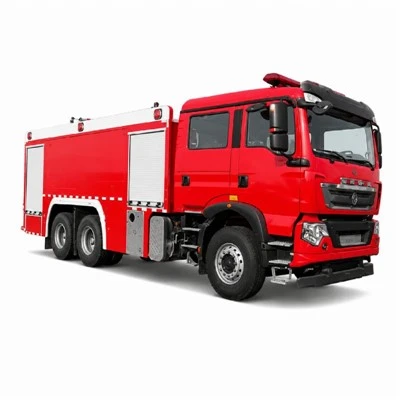

Fire trucks are categorized into various types based on their specific firefighting and rescue missions; these primarily include water tankers, foam trucks, dry powder trucks, aerial ladder trucks, and specialized rescue vehicles. Each of these vehicles features a distinct structural design and equipment configuration, tailored to meet the operational demands of handling different types of fires and disaster scenarios.
Water tankers represent the most fundamental and widely utilized type; they primarily conduct firefighting operations using onboard water tanks and pumps, making them suitable for combating fires involving general solid combustible materials. Foam trucks, building upon water-based firefighting capabilities, are equipped with foam mixing systems that enable the effective suppression of fires involving flammable liquids-such as oil-thereby significantly enhancing firefighting efficiency.
Dry powder trucks are designed for use against electrical and chemical fires, relying on dry chemical extinguishing agents to rapidly suppress flames. Aerial ladder trucks are equipped with high-altitude access mechanisms and are primarily deployed for rescue operations and personnel evacuation in high-rise buildings. Specialized rescue vehicles, conversely, focus on accident response and extrication operations; frequently outfitted with hydraulic rescue tools and lighting equipment, they serve as highly versatile and comprehensive assets within the emergency rescue fleet.