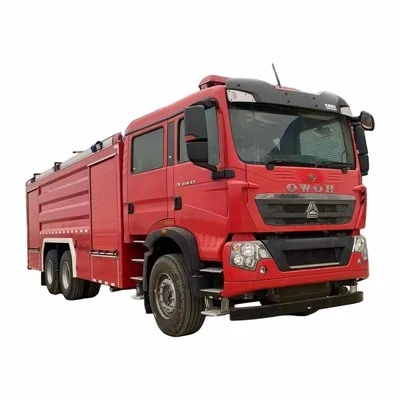


If you’ve ever watched a fire scene unfold—whether on the news, in a documentary, or even in a local community’s safety training—you know that not all fires are the same. A kitchen grease fire doesn’t respond the same way as a chemical storage blaze or a raging oil tank fire at an industrial facility. That’s where the type of fire truck matters most, and foam fire trucks stand out as a game-changer when standard water-only trucks fall short. As a foam fire truck supplier, I’ve spent years working with fire departments, industrial safety teams, and municipal planners to understand exactly how these specialized rigs outperform traditional and other specialized fire trucks in high-stakes, hard-to-tame fires. Let’s break down the science, the use cases, and the real-world advantages that make foam fire trucks the go-to choice for many fire response teams.
First, let’s get one common misconception out of the way: foam fire trucks aren’t just for “foamy jobs.” They’re purpose-built to address fire classes that water trucks simply can’t handle, and even for fires where water works, they deliver faster, more controlled extinguishment. Let’s start with the most critical advantage: superior performance on flammable liquid and chemical fires. Class B fires—think gasoline, diesel, industrial solvents, liquefied natural gas, or even the tar-like compounds used in manufacturing—are a major hazard because they float on water. If you spray water on a gasoline fire, the liquid fuel will float atop the water, spreading the flames wider and pushing the fire deeper into hard-to-reach areas. That’s a recipe for disaster: you end up with faster fire spread, more dangerous conditions for firefighters, and longer response times to get the blaze under control.
Foam fire trucks, by contrast, mix a concentrated foam agent (usually a combination of water, foam concentrate, and air) at a precise ratio before discharging it. The resulting foam blanket is lighter than the flammable liquid, so it floats on top, smothering the fire by cutting off its oxygen supply. It also forms a protective seal that prevents vapors from rising, which is key for stopping re-ignition. I’ve seen this in action firsthand: a few years back, a small refinery fire in the Midwest started when a pipe leak spilled 500 gallons of jet fuel. The local fire department arrived with standard water trucks first, but after 10 minutes, the flames had spread to adjacent storage drums. They called in a foam fire truck—we brought a HOWO 8 Ton Fire Truck Foam to the scene—and within 3 minutes, the foam blanket had covered the entire spill, extinguishing the fire completely and stopping vapors from reaching nearby workers. That’s the kind of speed and control you can’t get with water alone.
Another key advantage of foam fire trucks is their versatility, which sets them apart from other specialized fire rigs. Let’s compare them to two common alternatives: standard water fire trucks and dry chemical fire trucks. Standard water trucks are great for Class A fires (ordinary combustibles like wood, paper, or fabric) and even structural fires, but they have clear limits. Dry chemical fire trucks, which use powder agents like sodium bicarbonate, work well for small Class B and C (electrical) fires, but they have big drawbacks: they don’t smother fires long-term, they can leave corrosive residue that damages equipment and structures, and they’re not effective for large-scale liquid spills. Foam fire trucks, though, can handle multiple fire classes with the same rig, depending on the foam concentrate they carry.
Our Dongfeng 4 Ton Foam Fire Truck, for example, is a compact, maneuverable unit perfect for suburban fire departments or industrial facilities with limited space. It can dispense standard AFFF (aqueous film-forming foam) for flammable liquids, which is the same agent used in airport fire response, and it can also adjust its mix ratio to use alcohol-resistant foam for polar solvent fires (like ethanol or methanol, which break down standard foam). For larger operations, our HOWO 16 Ton Foam Fire Truck has a dual-agent system that lets firefighters switch between foam and water mid-call—so if a fire shifts from a structural blaze to a chemical spill, they don’t need to wait for a second rig to arrive. That versatility cuts down on response time, reduces the number of units needed at a scene, and lowers overall operational costs for fire departments.
Durability and ease of maintenance are two more advantages that don’t always get talked about, but they make a huge difference for departments operating on tight budgets. Foam fire trucks have specialized components—foam tanks, proportioning systems, and discharge nozzles—but modern designs have made these parts much more reliable than they used to be. Unlike dry chemical trucks, which require regular flushing and replacement of powder to keep it from caking or clumping, foam systems use liquid concentrates that are shelf-stable for years when stored correctly. Our HOWO 18 Ton Foam Water Fire Truck, which is built for heavy industrial response, has a corrosion-resistant foam tank made of carbon steel with a food-grade lining (safe for many foam concentrates) and a proportioning system that’s calibrated to stay accurate even after thousands of uses. We’ve worked with fire departments that have been using our foam trucks for 8 years with only routine maintenance—no major part replacements, no unexpected downtime mid-call. That’s a big win for municipalities that can’t afford to have their fire trucks out of service for weeks at a time.
Wait, let’s also talk about safety for firefighters, which is the top priority for any fire response. Foam doesn’t just put fires out faster—it reduces the risk of flare-ups that can catch crews off guard. When you spray water on a large Class B fire, the heat can create steam and push burning fuel toward firefighters, leading to flashovers or backdrafts. The foam blanket not only smothers the fire but also cools the surrounding area significantly, lowering the temperature enough that crews can approach the scene safely to check for hot spots or ensure no re-ignition. We’ve tested this in controlled burn drills: in a mock fuel storage fire, foam fire trucks reduced the surrounding air temperature by 60% in 2 minutes, while water-only trucks only reduced it by 15% in the same time. That margin of safety is invaluable for firefighters working in volatile conditions.


Another point that’s often overlooked is environmental impact. In the past, some foam concentrates had high levels of PFAS (per- and polyfluoroalkyl substances), which are toxic and persist in the environment. But modern foam formulations—including the ones we use on our HOWO 25 Ton Heavy Foam Fire Truck—are PFAS-free, biodegradable, and approved by environmental agencies like the EPA. When you use water to put out a flammable liquid fire, you end up with gallons of contaminated runoff that carries burning fuel and chemicals into storm drains, rivers, or groundwater. Foam creates a stable blanket that prevents that runoff, and the foam itself breaks down naturally over time without leaving harmful residue. That’s a huge benefit for both local communities and industrial facilities that are subject to strict environmental regulations.
Let’s put this in context with real use cases to make it tangible. Take an airport: they need fire trucks that can respond to a plane crash, which often involves jet fuel (a Class B fire) and structural components (Class A). A standard water truck would be useless here because jet fuel floats on water, and a dry chemical truck would leave corrosive powder that damages the plane, making cleanup way more expensive. A foam fire truck, though, can smother the jet fuel fire in seconds, cool the structural parts to prevent the metal from melting and spreading the fire, and leave a residue that’s easy to clean up. For a chemical plant, a foam truck with alcohol-resistant foam is perfect for spills of ethanol or other polar solvents, which would break down standard foam. For a suburban fire department that responds to car crashes (which often involve gasoline leaks) and house fires, a compact foam truck like our Dongfeng 4 Ton Foam Fire Truck can handle both, so they don’t need to keep multiple specialized rigs in their fleet.
Now, let’s address the counterpoints so this is balanced. Some people say foam fire trucks are more expensive to buy than water trucks, and that’s true—initially. But when you factor in the cost savings from faster extinguishment, less damage to structures and equipment, lower cleanup costs, and reduced risk of fire spread that would require additional units, the total cost of ownership is often lower than a fleet of specialized trucks. A single foam truck can replace multiple rigs, which saves on training, maintenance, and storage costs. Also, many fire departments qualify for grants from federal or state safety agencies to purchase specialized equipment that addresses specific hazards in their area—like chemical plants or airports—so that initial cost gap is often covered.
At the end of the day, the advantages of foam fire trucks come down to one thing: they get the job done better when it matters most. Firefighters don’t have time to guess which rig will work for a blaze—they need equipment that’s reliable, versatile, and capable of controlling even the most dangerous fires quickly. As a foam fire truck supplier, I’ve seen how these rigs have changed fire response for communities across the country, from small towns to major industrial hubs. If your fire department, industrial facility, or municipal team is looking to upgrade your fleet with a specialized fire truck that handles more fire types, improves safety, and reduces long-term costs, we can help you find the right foam fire truck for your needs. To learn more about our models, including the HOWO 18 Ton Foam Water Fire Truck, Dongfeng 4 Ton Foam Fire Truck, HOWO 8 Ton Fire Truck Foam, HOWO 25 Ton Heavy Foam Fire Truck, and HOWO 16 Ton Foam Fire Truck, visit our website to connect with our team for a procurement consultation. We can walk you through each model’s specifications, help you assess your specific fire risks, and work with you to find a solution that fits your budget and operational needs.
References
- National Fire Protection Association. (2022). NFPA 11: Standard for Low-, Medium-, and High-Expansion Foam. Quincy, MA: NFPA.
- U.S. Environmental Protection Agency. (2021). PFAS-Free Fire Fighting Foams: Regulatory Status and Performance Testing. Washington, D.C.: EPA Office of Water.
- International Association of Fire Chiefs. (2020). Specialized Fire Apparatus Guidelines for Industrial and Emergency Response. Arlington, VA: IAFC.
- Society of Fire Protection Engineers. (2023). Fire Behavior and Extinguishment of Flammable Liquid Fires. Bethesda, MD: SFPE Handbook of Fire Protection Engineering.