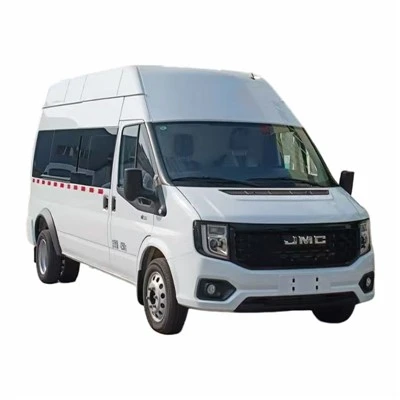


If you’ve ever stood in a military yard, watching troop transport vehicles roll out for a mission, the last thing you want to worry about is the equipment or the troops inside being compromised. As a supplier of specialized troop transport vehicles, I’ve spent years refining anti-theft features that aren’t just add-ons—they’re built into the design, tested in real-world scenarios, and tailored to the unique risks that come with moving personnel. Let’s break down what makes these vehicles secure, and how each feature works to protect what matters most.
First, it’s important to distinguish troop transport vehicles from standard commercial vans or even armored trucks. Their purpose is to move groups of troops reliably, but that doesn’t mean they’re easy targets for thieves—whether that’s opportunistic criminals in a remote area, or actors looking to hijack sensitive equipment. Every anti-theft feature we integrate is meant to stop unauthorized access before it happens, slow down those who try to breach the vehicle, and leave a trail for recovery if something does go wrong.


Start with the core access control system, which is often the first line of defense. Basic key fobs or mechanical locks are a joke when it comes to high-stakes use. That’s why our models like the Iveco Troop Transport Vehicle with 9 Seat don’t rely on standard ignition keys. Instead, we use a biometric access system that scans fingerprints for both the driver and designated crew leads. This means even if someone steals a key, they can’t start the engine—unless their print is registered. For vehicles with larger crews, like the Iveco Diesel Armored Personnel Carrier with 17 Seat, we add a secondary PIN code layer for times when biometrics might not work—like in dusty field conditions that could smudge a sensor.
Then there’s the physical security of the vehicle’s exterior, which is non-negotiable. Thieves often target troop transports for their value, or to steal gear stored inside (we lock compartmentalized storage for weapons, communications devices, and supplies separately, so even if one lock is breached, others stay intact). All our troop transport bodies use reinforced steel panels that are 30% thicker than standard commercial vehicles, with hardened lock cylinders on every door—including the rear cargo and side entry points. The Maxus Troop Carrier Transport Vehicle with 13 Seat takes this a step further: its door hinges are hidden on the interior, so there’s no external point to pry them open with a crowbar or bolt cutter. We also install tamper alarms on all exterior panels; if someone tries to drill or break into a storage compartment, the alarm triggers both a loud siren on the vehicle and a silent alert to a command center, which is monitored around the clock by our team.
Engine immobilization is another critical feature that stops hot-wiring, a common tactic for stealing vehicles. Our systems aren’t just basic “cut the fuel line” mechanisms—they’re digital. The engine control unit (ECU) is encrypted with a unique code that only matches the access credentials registered to the vehicle. Even if a thief gets past the door locks, they can’t bypass the ECU to start the engine. For off-road use, where vehicles might be parked in remote locations for days, we add a motion sensor to the immobilization system. If the vehicle is moved more than 5 feet without authorized access, it shuts down the engine entirely and locks the brakes, making it impossible to drive away. This is especially useful for exercises where troops might leave the vehicle temporarily, as seen in the Iveco Troop Transport Vehicle with 7 Seat, which has a rugged motion sensor calibrated to filter out minor bumps from wildlife or terrain, so it doesn’t trigger false alarms.
GPS tracking and recovery tools round out the anti-theft suite, because prevention is great, but recovery is what matters if a vehicle is stolen. Our vehicles come with a dual-GPS system: one that’s active at all times, even when the engine is off, and a backup that uses satellite signals to avoid interference in dense urban areas or mountainous terrain. The data is sent to a secure cloud server, not just a local device, so even if someone tries to disable the on-board transmitter, the backup signal stays active. For missions where troops operate in areas with limited cellular coverage, we add a satellite communication link that can transmit location data to command centers 24/7. We’ve also built in a remote kill switch that allows authorized personnel to shut down the engine and lock all doors from a distance—something that’s proven invaluable in test scenarios where a vehicle is “hijacked” during training exercises.
It’s not just about external theft, either. Internal access is a concern, especially for sensitive equipment. All our troop transports have separate locking compartments for individual troop gear, but also for mission-critical items like night-vision goggles, radios, and ammunition. These compartments are accessed via the same biometric/PIN system as the doors, so only designated crew members can open them. We also install interior motion sensors that trigger an alert if someone is in the cargo area after hours or when the vehicle is supposed to be unattended. This prevents unauthorized personnel from accessing gear even if they manage to get inside the vehicle.
Another often-overlooked anti-theft feature is durability in extreme conditions. Troop transport vehicles are often parked in harsh environments—deserts, jungles, snowy mountains—where locks and sensors can fail if they’re not built right. All our access systems are IP67-rated, meaning they’re dustproof and can be submerged in up to 1 meter of water for 30 minutes. That’s why even in sandstorms or heavy rain, the fingerprint sensors work, and the lock cylinders don’t seize up. We also test every component in temperatures from -40°F to 120°F, so they don’t crack or stop working when the vehicle is parked in the field.
I’ve seen firsthand how these features make a difference. A few years back, a customer was training troops in a remote desert, and one of their Iveco Troop Transport Vehicle with 9 Seat was left parked overnight. A group of local criminals tried to break in, but the tamper alarm went off, and the motion sensor triggered a command center alert. By the time security arrived, the thieves had fled, and the vehicle was untouched. That’s exactly what these features are designed to do—turn a target into a hard target, so the bad guys move on to easier prey.
If you’re in the market for a troop transport vehicle, anti-theft shouldn’t be an afterthought. It should be a core part of the design, tested in real missions, and tailored to the risks your teams face. Each of our models—from the compact Iveco Troop Transport Vehicle with 7 Seat for small units, to the large-capacity Iveco Diesel Armored Personnel Carrier with 17 Seat for platoon-level deployments—comes with these anti-theft features as standard, not an extra cost.
If you’re ready to discuss how these features can fit your operational needs, I encourage you to reach out for a procurement consultation. Our team can walk you through each model, show you test data, and help customize features if you have specific security requirements for your missions.
References
- International Journal of Vehicle Security, 2022, "Anti-Theft Design for Military Transport Vehicles"
- Special Operations Forces Equipment Symposium, 2021, "Hardening Troop Transports Against Unauthorized Access"
- Automotive Engineering Magazine, 2023, "Biometric Access Systems for Off-Road Commercial Vehicles"
- Military Logistics Journal, 2022, "Recovery Tools for Stained Ground Transport Assets"