
Introduction
Most mobile surgical unit problems do not begin with a dramatic component failure. They begin earlier: an undefined clinical mission, a copied specification, a layout approved without staff input, or an acceptance test that confirms appearance but not performance. By the time the unit reaches its destination, correcting these errors can be expensive and disruptive.
The following twelve mistakes are written for buyers, consultants, distributors and project managers. Each section explains why the risk occurs, what it can affect and what evidence should be requested before acceptance. Requirements still need to be aligned with the destination country and the healthcare operator's approved clinical program.
Mistake 1: Buying a Vehicle Before Defining the Procedure Scope
If the tender says only 'mobile operating room,' suppliers may price very different capabilities. One may assume minor procedures under local anaesthesia; another may include general anaesthesia, expanded gases and recovery support. The offers then appear comparable but are not.
Prevent this by issuing a clinical scope that lists intended and excluded procedures, patient groups, anaesthesia methods, case volume, staffing and external support. Require the final design to trace each major system back to that scope.
Mistake 2: Copying a Hospital Room Specification Without Mobile Engineering
A fixed operating room and a vehicle face different constraints. Weight, axle loads, vibration, travel locks, limited roof area, generator exhaust, road clearances and rapidly changing outside conditions affect the design. Simply shrinking a hospital room schedule can create conflicts.
Use hospital requirements as a clinical reference, then have competent vehicle, electrical, HVAC and medical-system engineers translate them into a mobile design. Ask for calculations and drawings that apply to the actual completed unit.
Mistake 3: Approving the Layout From a Floor Plan Alone
A plan view may not show headroom, light-arm movement, cabinet depth, equipment service panels or the working envelope of the operating table. It may also ignore staff body positions and the route used during an emergency.
Review elevations and sections, then simulate a case with representative equipment and staff roles. Check patient transfer, anaesthesia access, door swings, waste removal and emergency egress. Record layout approval by both clinicians and engineers.
Mistake 4: Ignoring Finished Weight and Axle Distribution
Catalogue payload figures may refer to a bare chassis. The completed unit includes the insulated body, partitions, tanks, generator, HVAC, gases, equipment, supplies and people. Poor weight distribution can affect legality, stability, braking, tyre loading and component life.
Require a design-stage weight schedule and a certified or otherwise accepted final weighing method appropriate to the market. Review axle loads in travel condition, including realistic fluid and equipment assumptions.
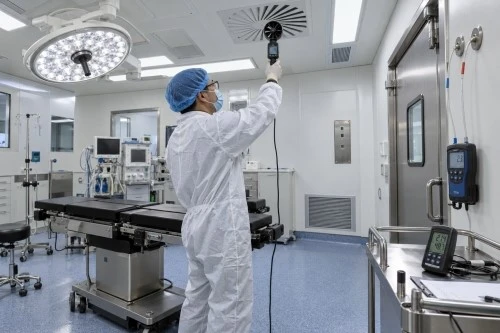
Mistake 5: Treating Air Conditioning as Operating-Room HVAC
Cooling capacity does not demonstrate filtration, pressure control or appropriate air distribution. A unit may reach the set temperature while still having uncontrolled leakage, stagnant zones, poor filter access or insufficient recovery after a door opens.
Specify the clinical environmental basis and request the airflow scheme, filter arrangement, control points, alarms and commissioning protocol. Acceptance should use calibrated instruments under agreed operating conditions.
Mistake 6: Estimating Electrical Demand Instead of Calculating It
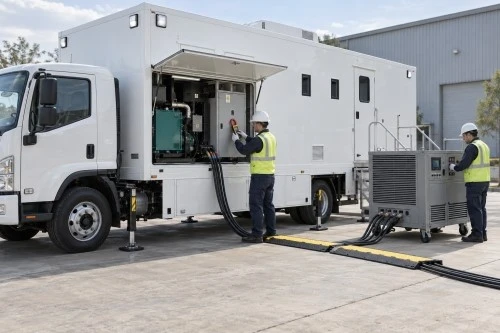
Medical and HVAC loads can overlap, and some motors have high starting demand. An undersized generator may trip or produce unstable performance; an oversized system may add unnecessary weight, fuel use and cost. Uncoordinated voltage or socket choices create additional risk after export.
Request a complete load schedule, simultaneity assumptions, starting-load analysis, source capacity and circuit allocation. Test the unit at a realistic load and verify the transition between the planned power sources.
Mistake 7: Assuming a UPS Protects Everything
A UPS has defined connected loads, capacity and battery duration. It may support monitors and selected lighting but not HVAC or high-power devices. If the protected circuits are not labelled, staff may connect the wrong equipment and shorten runtime.
The contract should identify every backed-up load, required duration, alarm and maintenance responsibility. During acceptance, disconnect the normal source and observe the actual behavior of critical circuits.
Mistake 8: Specifying Oxygen Cylinders but Not the Gas System
Cylinders are only the source. Safe delivery also depends on restraint, storage ventilation, regulators, valves, piping, outlets, alarms, changeover, labelling and operating procedures. Connector standards can differ between markets.
Approve a medical-gas schematic and component list. Request pressure and leak test records, alarm and changeover tests, documentation for destination-compatible terminal units, and training for authorized staff.
Mistake 9: Adding Equipment After the Body Design Is Frozen
Late equipment changes can alter power demand, heat load, weight, mounting, cable routes and staff clearance. A device may physically fit but block a cabinet, interfere with a light arm or become impossible to service.
Freeze exact models early. When that is impossible, define interface envelopes for dimensions, mass, power, gases, heat, data and service clearance. Manage every later change through a documented technical review.
Mistake 10: Forgetting Sterile Supply, Waste and Turnaround
A clean-looking operating room is not a complete sterile workflow. Without a defined route for sterile packs, used instruments, clinical waste and cleaning materials, staff may improvise after delivery.
Map clean and contaminated flows, identify the external sterilization or reprocessing service, size storage for the planned case volume and create between-case and end-of-day procedures. Verify that surfaces and storage can be accessed for cleaning.
Mistake 11: Accepting a Generic Warranty Without a Service Plan
The chassis dealer may not service the HVAC, generator or medical equipment, while the body builder may not control third-party device warranties. A promise of 'one-year warranty' says little about response time, travel cost, spare parts or remote diagnosis.
Create a subsystem warranty matrix. Identify the responsible party, coverage start, exclusions, response route, parts location and required maintenance. Obtain manuals, diagrams, software access, recommended spares and training records before shipment.
Mistake 12: Performing a Cosmetic Factory Acceptance Test
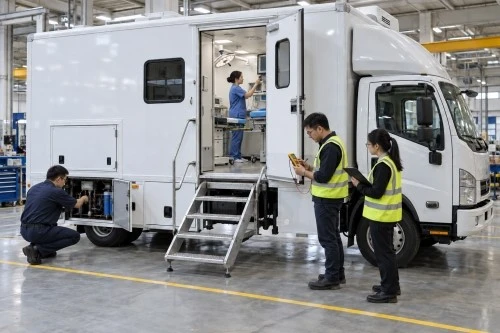
Paint, labels and inventory are easy to inspect, so they often dominate factory acceptance. The difficult failures appear under load: generator transfer, pressure stability, alarm logic, water leaks, overheating, poor drainage or devices that move during travel.
Use a signed test protocol with pass/fail criteria, instruments and evidence. Record deviations and repeat failed tests after correction. Site acceptance should then confirm performance after transport, local utility connection and deployment in the destination environment.
Risk-to-Evidence Checklist
|
Risk |
Minimum evidence before shipment |
Site follow-up |
|
Clinical mismatch |
Approved procedure and equipment scope |
Operator release and staffing confirmation |
|
Layout conflict |
Scaled drawings plus workflow simulation |
Deployed walk-through |
|
Weight or stability |
Final weight and axle evidence |
Local registration/inspection as applicable |
|
HVAC underperformance |
Commissioning records and alarms |
Environmental verification after setup |
|
Power interruption |
Load and transfer test |
Test with local source and grounding |
|
Gas leak or depletion |
Pressure, leak, alarm and changeover test |
Local gas-source compatibility check |
|
Poor maintainability |
Manuals, access review, spares and training |
Preventive-maintenance schedule activated |
A Better Acceptance Sequence
Start with document review: approved drawings, calculations, component lists, certificates where applicable, manuals and test plans. Continue with static inspection of workmanship, labelling, access and inventory. Then conduct functional tests for each utility and device, followed by integrated tests that simulate realistic clinical loads and source failures.
Finally, repeat relevant checks after delivery. Transport can loosen fittings, local utilities may differ from factory conditions and staff may identify workflow issues during training. Keep a controlled punch list with owners and closure evidence.
FAQ
Q: Is factory acceptance enough?
A: No. It confirms the unit before shipment. Site acceptance verifies transport condition, deployment, local utilities, environmental performance and training at the destination.
Q: Who should attend factory acceptance?
A: The team should cover clinical workflow, biomedical equipment, electrical/HVAC systems, vehicle engineering and contract scope. One inspector rarely covers all disciplines.
Q: Should buyers insist on exact HVAC numbers?
A: Buyers need measurable targets, but those targets must come from the approved clinical design basis and applicable local requirements, not from an unrelated project.
Q: Which spare parts should be purchased?
A: Base the list on failure impact, replacement interval, lead time and local availability. Filters, belts, seals, sensors, lamps, batteries and proprietary connectors are common review items, but the final list is system-specific.
Final Thoughts
A reliable mobile surgical unit is the result of disciplined scope control, engineering evidence and realistic testing. The strongest procurement teams ask not only 'Is this component included?' but also 'How does it work with the rest of the unit, how will we verify it and who will maintain it?' Converting those questions into contract deliverables is the most practical way to reduce post-delivery risk.