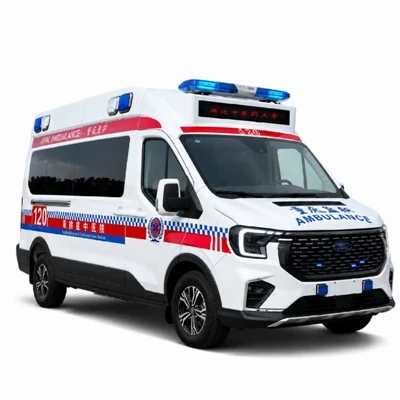

An electric ambulance is more than an electric van fitted with a stretcher. It combines a high-voltage propulsion system with medical power, patient-compartment climate control, communications, warning equipment and emergency backup functions. These systems share limited energy and operate under very different safety and performance requirements.
Understanding how they interact helps buyers evaluate a proposal beyond headline figures such as battery capacity or motor output. It also helps prevent a common procurement problem: selecting a capable electric chassis without verifying whether the completed ambulance can support patient care throughout the duty cycle.

1. Five Systems That Must Work Together
Most battery-electric ambulances can be understood as five connected systems:
1. Traction system: stores energy and moves the vehicle.
2. Low-voltage vehicle system: supports controls, lights and standard vehicle functions.
3. Medical electrical system: supplies specified clinical and patient-compartment equipment.
4. HVAC system: controls the driver and patient-compartment environment.
5. Charging and monitoring system: receives energy, manages charging and reports system status.
The conversion engineer must define the interfaces among these systems. Adding equipment without checking weight, energy, heat, cable routing, circuit protection and electromagnetic compatibility can reduce reliability even when each component appears acceptable on its own.
2. How the Traction System Moves the Ambulance
During charging, electrical energy enters through the vehicle's charging interface and is stored in the traction battery. During driving, power electronics control energy supplied from the battery to the electric motor. The motor produces torque for the drivetrain, while the vehicle control system coordinates acceleration, braking and thermal management.
During deceleration, regenerative braking may recover part of the vehicle's kinetic energy and return it to the battery. The amount recovered varies with speed, battery condition, control strategy, road conditions and driver input; it should not be treated as a fixed source of free energy.
The battery management system monitors conditions such as state of charge, temperature and cell behavior. A separate thermal-management circuit may heat or cool the battery depending on the chassis design and operating environment.
3. Why Traction Power and Medical Power Are Not the Same
The traction battery normally operates at high voltage, while many ambulance devices use low-voltage direct current or market-specific alternating current. Power therefore needs to be converted and distributed through an engineered auxiliary system.
A typical design may include DC/DC conversion, an auxiliary battery, inverter output, external shore-power input, protected distribution circuits and a monitoring panel. The exact arrangement depends on the chassis, medical equipment and applicable requirements.
Medical equipment should not simply be connected to an available vehicle circuit. Designers need to assess voltage stability, continuous and peak loads, circuit separation, grounding or isolation strategy, electromagnetic compatibility, connector type, protection devices and failure behavior.

4. How Medical Equipment Receives Power
Start with a load schedule rather than a list of generic device names. A monitor, ventilator, suction unit, defibrillator, infusion pump, refrigerator and communication terminal may each have different voltage, power quality and operating-time requirements.
For each device, confirm:
manufacturer and model where known;
input voltage and frequency;
rated and peak power;
operating duration during driving and parking;
whether the device contains its own battery;
whether continuous or uninterrupted supply is required;
socket, plug and mounting requirements.
The system designer then calculates simultaneous loads and selects conversion, distribution and backup components accordingly. Spare electrical capacity may be useful for approved future equipment, but it must be defined rather than assumed.
5. Why HVAC Is a Major Part of Energy Planning
The patient compartment is a clinical workspace, not ordinary cargo space. Its HVAC system may need to operate while driving, waiting at a scene or standing outside a hospital. Large door openings, insulation quality, outside temperature, crew activity and heat from medical equipment all influence the load.
An electric ambulance may use a chassis-integrated HVAC system, a separate patient-compartment unit or a coordinated combination. The choice affects installation space, electrical demand, weight and stationary operation.
Buyers should ask whether quoted range testing included patient-compartment cooling or heating. They should also confirm how long the required interior environment can be maintained when the vehicle is parked without external power.
6. What Happens While the Vehicle Is Parked?
Stationary operation is a defining ambulance requirement. The vehicle may be parked while clinicians treat a patient, wait for handover, clean the compartment or restock equipment.
Depending on the design, these loads may be supplied by the traction battery, an auxiliary battery, external shore power or a combination of sources. An automatic transfer system may change the supply source when shore power is connected. Low-state-of-charge controls may protect the vehicle's ability to return to service.
The operating logic should be agreed during procurement. Buyers need to know which functions remain available at different battery levels and what visual or audible warnings appear before equipment is disconnected.

7. Charging and Energy Management
AC charging is often used when the vehicle has a longer parking window. DC charging can shorten charging time when both the vehicle and infrastructure support compatible fast charging. The actual charging rate is limited by the vehicle, charger, battery temperature, state of charge and site power-not simply by the number printed on the charger.
Charging connectors and communication protocols vary by market. The required interface should be confirmed for the destination country, and physical compatibility should be tested before delivery when possible.
For procurement factors that determine battery size, payload and charger selection, see our practical guide on how to choose an electric ambulance.
8. Monitoring, Protection and Backup
The crew should be able to understand the status of critical systems without interpreting engineering data. Useful monitored conditions may include traction state of charge, auxiliary battery status, shore-power connection, circuit faults, equipment load and patient-compartment temperature.
Protection may include appropriately selected fuses or breakers, high-voltage interlocks, isolation monitoring, cable protection, temperature protection and emergency shut-off functions, depending on the architecture and applicable requirements.
Backup design should focus on the clinical function that must be preserved. Options may include equipment with internal batteries, a dedicated auxiliary battery, external power input and documented procedures for low-energy conditions. No backup arrangement should be described as sufficient until it has been assessed against the agreed medical equipment and duty cycle.
9. System Integration and Vehicle Validation
Individual component certificates do not prove that the completed vehicle will perform correctly. Validation should cover the installed system under representative load.
Important tests may include:
driving with the completed conversion and agreed payload;
simultaneous operation of representative medical loads;
patient-compartment HVAC during driving and parking;
charging with the intended infrastructure;
shore-power connection and transfer behavior;
alarms, circuit protection and emergency procedures;
equipment mounting and retention;
water ingress, noise and communication function where specified.
The acceptance plan should identify the test conditions, instruments, pass criteria and documents to be delivered. This turns a broad promise such as "sufficient medical power" into a result that both parties can verify.
10. Why One Specification Cannot Define Performance
Battery capacity alone does not determine operating range. Inverter rating alone does not prove that medical devices can run simultaneously. HVAC cooling output alone does not show how long the compartment can be conditioned while parked.
The practical question is whether all systems can support the defined mission together. That is why chassis selection, conversion layout, medical load calculation, thermal design and charging strategy should be reviewed as one engineering package.
After the vehicle-level design is confirmed, operators still need a deployment plan. Our guide to avoiding charging delays and operational downtime explains how charging redundancy, vehicle rotation and maintenance affect fleet availability.
FAQ
Do medical devices run directly from the traction battery?
Usually not directly. Energy may originate from the traction system, but voltage conversion, auxiliary storage, distribution and protection are typically required. The final architecture depends on the chassis and equipment specification.
Can the patient-compartment air conditioner operate while parked?
It can if stationary operation is included in the design. Buyers should confirm the power source, expected operating duration, battery protection logic and shore-power option.
What happens when the main battery becomes low?
The response depends on the vehicle control strategy. The system may issue warnings, limit selected auxiliary loads or require connection to external power. The expected behavior should be documented and demonstrated during acceptance.
Can an electric ambulance charge from hospital power?
Potentially, but the site supply, charger, connector, protection, installation approval and available charging time must all be compatible. An ordinary outlet should not be assumed suitable for routine fleet charging.
Does regenerative braking power the medical equipment?
Regenerative braking returns some deceleration energy to the traction system. Medical equipment is supplied through its designed electrical architecture; it should not depend on an assumed amount of recovered braking energy.
Conclusion
An electric ambulance works reliably when propulsion, medical power, HVAC, charging, monitoring and backup systems are designed around the same duty cycle. Buyers should therefore review interface drawings, load calculations and acceptance tests-not only the battery and motor data on the base-vehicle specification.