
Purchasing an ambulance is very different from purchasing an ordinary commercial vehicle. The vehicle must transport patients safely, support medical treatment during transit, provide a reliable working environment for medical personnel and remain dependable under demanding operating conditions.
For hospitals, emergency medical service providers, government agencies, distributors and humanitarian organizations, choosing the right ambulance vehicle therefore requires much more than comparing prices.
Vehicle size, road conditions, patient capacity, medical equipment, electrical systems, climate, local regulations and future maintenance all affect the final specification.
This guide explains the most important factors buyers should evaluate before selecting an ambulance and shows how different configurations suit different emergency medical applications.
1. Start With the Ambulance's Actual Mission
One of the most common purchasing mistakes is choosing the vehicle first and deciding how it will be used later.
A better approach is to define the mission before selecting the chassis or medical equipment.
An ambulance used for transferring stable patients between hospitals has very different requirements from an emergency ambulance responding to traffic accidents or a 4x4 ambulance operating in remote areas.
Typical applications include:
Emergency medical response
Patient transport
Advanced life support
Basic Life Support (BLS) ambulance
ICU ambulance and intensive care transportation
Inter-hospital transfer
Rural emergency services
Disaster response
Mine and construction site rescue
Airport and industrial emergency services
Military and humanitarian medical support
Once the operating scenario is clearly defined, choosing the correct vehicle becomes significantly easier.
For example, an urban hospital may prioritize maneuverability and interior medical space, while an emergency service working in mountainous areas may prioritize four-wheel drive, ground clearance and suspension performance.
2. Understand the Main Types of Ambulance Vehicles
There is no single ambulance configuration that works for every emergency medical service.
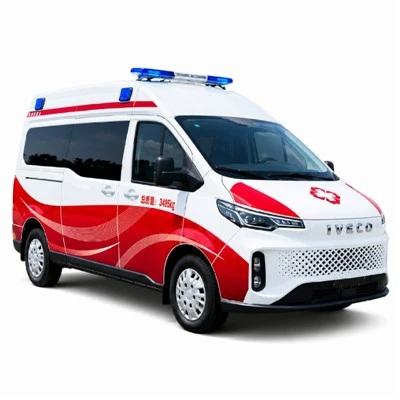
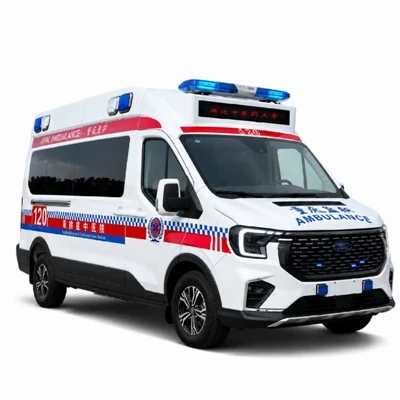
Van Ambulance
A van ambulance is one of the most widely used designs for emergency medical services and patient transportation.
It is usually built from a commercial van platform such as Ford Transit, Mercedes-Benz Sprinter, IVECO Daily, Toyota Hiace or similar models available in the destination market.
Advantages include:
Good road handling
Relatively low vehicle height
Easy access in cities
Lower fuel consumption compared with larger truck platforms
Convenient maintenance
Suitable medical compartment for most EMS operations
Van ambulances are particularly suitable for hospitals, municipal EMS fleets and general patient transportation.
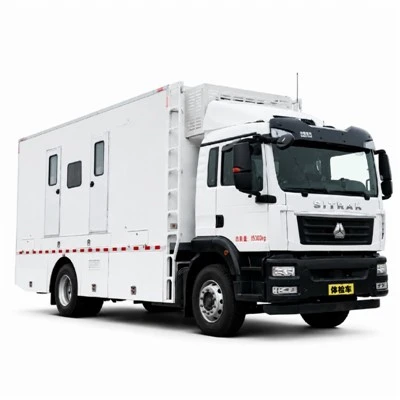
Truck Ambulance
A truck-based ambulance uses a commercial truck chassis with a purpose-built medical body.
Compared with a standard van ambulance, it can provide a larger medical compartment and greater payload capacity.
Truck ambulances are often selected for:
Advanced emergency treatment
Long-distance patient transportation
Disaster response
Large medical equipment installations
Harsh operating environments
They can also be configured with independent medical cabins, additional storage and more powerful electrical systems.
4x4 Ambulance
A 4x4 ambulance is designed for areas where conventional road ambulances may have difficulty reaching patients.
Typical applications include:
Mountain regions
Desert areas
Mining sites
Construction projects
Rural communities
Flood-prone regions
Military operations
Humanitarian rescue missions
Four-wheel-drive performance should not be evaluated only by the 4x4 label. Buyers should also consider ground clearance, approach and departure angles, tire specification, suspension, axle capacity and the availability of spare parts.
Pickup Ambulance
Pickup-based ambulances provide another solution for remote or challenging environments.
Their compact dimensions and off-road capability can make them suitable for rural clinics, mines, oil fields and emergency response teams operating far from major hospitals.
However, interior medical space is normally more limited than in a full-size van or truck ambulance.
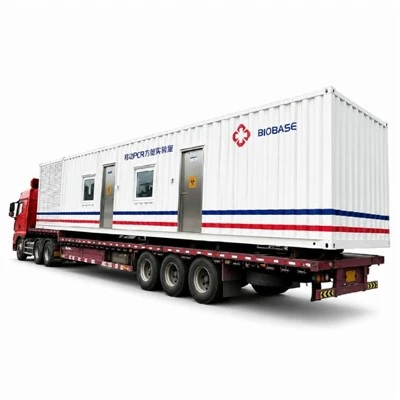
Bus or Large-Capacity Medical Vehicle
Larger vehicles are sometimes required when the project involves multiple patients, medical teams or specialized treatment areas.
These platforms may be developed into:
Mobile emergency treatment vehicles
Mass-casualty response vehicles
Mobile clinics
Medical examination vehicles
Surgical vehicles
Intensive care transport vehicles
These vehicles require more complex engineering because medical systems, power supply, HVAC, vehicle weight and interior workflow must be designed as an integrated system.
3. Choose the Right Chassis Before Adding Medical Equipment
The chassis is the foundation of every ambulance.
When comparing an ambulance for sale, buyers should evaluate more than the vehicle brand.
Important chassis specifications include:
| Factor | Why It Matters |
|---|---|
| Gross Vehicle Weight | Determines available payload for equipment and passengers |
| Wheelbase | Influences interior space and maneuverability |
| Engine Power | Important for fully loaded operation and difficult terrain |
| Transmission | Affects driving convenience and maintenance |
| Drive Type | 4x2 or 4x4 depending on road conditions |
| Suspension | Directly affects patient comfort |
| Fuel Type | Should match local fuel availability |
| Emission Standard | Must comply with destination-country requirements |
| Spare Parts Availability | Essential for long-term fleet operation |
| Service Network | Reduces vehicle downtime |
Brand recognition is useful, but local support is often more important.
An ambulance that can be easily serviced locally may deliver a lower total operating cost than a more sophisticated vehicle with limited spare-parts availability.
4. Interior Layout Can Be More Important Than Vehicle Size
A larger ambulance does not automatically provide a better medical working environment.
Interior design should allow medical staff to access the patient, medical devices and emergency supplies without unnecessary movement.
A practical ambulance compartment normally considers:
Patient Position
The stretcher should be securely installed while providing sufficient working space around the patient.
Medical Staff Seating
Medical attendants should have properly positioned seats that allow them to observe and treat the patient during transportation.
Equipment Accessibility
Frequently used items should be easy to reach.
Typical storage areas may contain:
First-aid supplies
Medicines
Oxygen accessories
Immobilization equipment
Disposable medical products
Diagnostic devices
Poorly positioned cabinets can reduce working efficiency even in a large vehicle.
Safe Movement
Sharp edges, obstructed aisles and poorly secured equipment can become hazards during sudden braking or emergency driving.
For this reason, ambulance interior design should always consider vehicle movement, not only how the cabin looks when the vehicle is parked.
5. What Equipment Does an Ambulance Need?
There is no universal equipment list suitable for every project.
The equipment should depend on the ambulance's clinical role and the requirements of the medical organization operating it.
Common ambulance equipment may include:
Main stretcher
Scoop stretcher
Folding stretcher
Spine board
Oxygen cylinder
Oxygen regulator
Oxygen outlets
Suction unit
First-aid kit
Medical cabinets
Attendant seats
IV hooks
Fire extinguisher
Handrails
Interior lighting
Emergency warning lights
Siren and public-address system
More advanced ambulances may also require:
Patient monitor
Defibrillator
Ventilator
Infusion pump
Syringe pump
Portable suction system
AED
Advanced airway equipment
The vehicle manufacturer and medical equipment supplier should determine how equipment will be mounted and powered before production begins.
Adding equipment after the ambulance has been completed can create problems with weight distribution, electrical capacity and interior space.
6. Pay Special Attention to the Oxygen System
The medical oxygen system is one of the most important systems inside an ambulance.
Depending on the specification, an ambulance may include oxygen cylinders, pressure regulators, pipelines, outlets and cylinder mounting systems.
Important considerations include:
Cylinder capacity
Secure cylinder fixation
Easy replacement
Pressure regulation
Pipeline arrangement
Outlet position
Protection against accidental damage
Accessibility for medical staff
The oxygen system should be designed according to the intended medical application and applicable local requirements.
Buyers should clearly communicate oxygen capacity and expected treatment requirements before production.
7. Electrical Capacity Is Becoming Increasingly Important
Modern ambulances use considerably more electrical equipment than older vehicles.
Medical devices, warning systems, air conditioning, lighting, communication equipment and charging systems all require reliable power.
A typical ambulance electrical system may include:
Vehicle battery
Auxiliary battery
Battery isolator
Inverter
External shore-power connection
USB charging ports
12V or 24V outlets
AC electrical outlets
Interior medical lighting
Emergency lighting
For ambulances carrying ventilators, monitors or other critical medical devices, electrical load calculations should be completed before the system is installed.
Simply adding a larger inverter does not solve every power problem. Battery capacity, alternator output, wiring protection and load distribution must also be considered.
8. Climate Has a Major Impact on Ambulance Design
An ambulance operating in Saudi Arabia may require a very different configuration from one operating in northern Europe.
High-temperature regions often require stronger cooling capacity, better insulation and careful heat management.
Cold climates may require additional heating and insulation.
For tropical markets, buyers may need to consider high humidity and corrosion resistance.
Before ordering a custom ambulance, provide the manufacturer with information about:
Typical daytime temperature
Maximum expected temperature
Minimum expected temperature
Humidity
Altitude
Dust conditions
Road environment
This allows the HVAC, insulation and vehicle systems to be configured more appropriately.
9. Why Infection Control Matters
Ambulance interiors are exposed to blood, body fluids and potentially infectious materials.
Interior materials should therefore support regular cleaning and disinfection.
Good ambulance design may include:
Smooth interior surfaces
Washable wall panels
Sealed flooring
Rounded cabinet edges
Easy-to-clean seating materials
Reduced dirt-trapping gaps
Durable medical-grade work surfaces
The goal is not simply to make the ambulance look clean. The interior should be designed so that cleaning procedures can be performed efficiently between patients.
10. Do Not Ignore Payload and Weight Distribution
Medical equipment adds weight quickly.
Oxygen cylinders, stretchers, cabinets, batteries, air-conditioning systems, medical devices and personnel all contribute to the final vehicle mass.
This makes payload calculation critical.
A professional ambulance manufacturer should evaluate the completed vehicle rather than only the original chassis capacity.
Incorrect weight distribution can affect:
Braking
Steering
Tire loading
Suspension
Vehicle stability
Fuel consumption
Component life
This is especially important when designing highly equipped intensive-care or rescue ambulances.
11. LHD or RHD Ambulance?
Steering position must match the regulations and driving environment of the destination market.
Left-hand-drive ambulances are common in many countries across the Middle East, Africa, Europe and the Americas.
Right-hand-drive ambulances are required or preferred in markets where vehicles normally drive on the left side of the road.
Buyers should confirm the destination country's requirements before selecting the chassis.
Other market-specific items may include:
Lighting configuration
Reflective markings
Siren requirements
Vehicle dimensions
Emission standards
Seat requirements
Medical equipment specifications
Vehicle homologation
Never assume that an ambulance specification approved in one country will automatically meet the regulations of another.
12. Which Is Better: Diesel or Gasoline Ambulance?
Both options can be appropriate.
Diesel Ambulance
Diesel engines are often preferred for:
Long-distance operation
High annual mileage
Heavy vehicles
Regions where diesel fuel is widely available
They generally provide good low-speed torque and can be suitable for heavily equipped ambulances.
Gasoline Ambulance
Gasoline-powered vehicles can offer advantages in certain markets, including smoother operation and easier chassis availability.
The best choice depends on local fuel prices, maintenance infrastructure, emission requirements and available chassis models.
Fleet operators should consider total operating cost rather than fuel type alone.
Electric Ambulance
An electric ambulance can be suitable for urban EMS fleets, hospitals and short-to-medium-distance emergency operations where charging infrastructure is available. Compared with conventional fuel-powered ambulances, electric models can offer lower operating noise, zero tailpipe emissions and reduced daily energy costs. Buyers should carefully evaluate driving range, battery capacity, charging infrastructure, HVAC power consumption and the additional electrical load created by onboard medical equipment.
13. When Should You Choose a 4x4 Ambulance?
A 4x4 drivetrain adds cost and mechanical complexity, so it should be selected when operating conditions justify it.
A 4x4 ambulance is particularly valuable when emergency teams regularly travel on:
Gravel roads
Muddy roads
Desert tracks
Snow-covered roads
Mountain routes
Construction sites
Mining roads
Remote rural routes
For normal urban operations, a conventional 4x2 ambulance may provide better fuel economy, lower maintenance costs and greater interior space.
The correct choice depends on the route, not on which specification appears more impressive.
14. Custom Ambulance vs. Standard Ambulance
Standard configurations can provide faster procurement and lower engineering costs.
However, many professional ambulance projects require customization.
Common customization options include:
Chassis brand
Vehicle size
4x2 or 4x4 drivetrain
Left-hand or right-hand drive
Medical cabinet layout
Stretcher system
Oxygen system
Electrical system
Medical equipment
HVAC
Warning lights
Siren system
Exterior graphics
Communication equipment
Additional batteries
Shore power
Camera systems
Customization is especially valuable for government projects, hospitals and fleet operators because vehicles can be standardized around their existing equipment and operating procedures.
15. What Buyers Should Ask an Ambulance Manufacturer
Before placing an order, send the manufacturer a detailed request instead of asking only for a quotation.
A useful ambulance inquiry should include:
Destination country
Required vehicle quantity
Intended ambulance application
Preferred chassis brand
Left-hand or right-hand drive
4x2 or 4x4 requirement
Required emission standard
Number of patients
Required medical equipment
Oxygen system requirements
Climate and operating temperature
Road conditions
Required certifications or vehicle approval
Delivery schedule
Spare-parts and after-sales requirements
Providing this information helps the supplier prepare a realistic technical proposal instead of sending a generic ambulance specification.
16. Ambulance Price: Why Two Similar Vehicles Can Cost Very Different Amounts
Buyers often search for an ambulance for sale and discover large price differences between apparently similar vehicles.
The reason is that the chassis is only one part of the total cost.
Ambulance pricing can be influenced by:
Chassis brand
Engine and drivetrain
Vehicle dimensions
Medical cabin construction
Air-conditioning system
Stretcher system
Oxygen system
Medical equipment
Electrical system
Warning system
Interior materials
Certification requirements
Customization level
Shipping destination
For this reason, comparing ambulance quotations only by total price can be misleading.
The better approach is to compare the complete technical specification line by line.
17. Think About Maintenance Before the Ambulance Is Delivered
The ambulance may operate for many years after the initial purchase.
Long-term maintainability should therefore be considered during procurement.
Ask whether the manufacturer can provide:
Vehicle manuals
Electrical diagrams
Equipment manuals
Spare-parts lists
Maintenance guidance
Remote technical support
Operator training
Replacement components
For fleet projects, it may also be useful to purchase a starter package of commonly used spare parts with the vehicles.
This is particularly important when ambulances will operate far from the original manufacturer.
18. How to Evaluate an Ambulance Supplier
Choosing the right supplier is just as important as choosing the right chassis.
A professional supplier should be able to discuss technical requirements rather than simply sending a price list.
Look for an ambulance manufacturer capable of providing:
Vehicle engineering
Medical cabin design
Electrical integration
Oxygen-system installation
Equipment installation
Customization
Production inspection
Technical documentation
Export support
After-sales service
For larger projects, buyers may also request production photos, video inspections, factory acceptance testing or third-party inspection before shipment.
19. Ambulance Procurement Checklist
Before confirming your ambulance order, check the following:
Intended medical application confirmed
Destination-country regulations reviewed
Chassis and drivetrain selected
Payload verified
Patient capacity confirmed
Interior layout approved
Stretcher specification confirmed
Oxygen system confirmed
Medical equipment list finalized
Electrical load reviewed
HVAC suitable for local climate
LHD or RHD confirmed
Warning lights and siren confirmed
Exterior graphics approved
Documentation requirements confirmed
Spare parts discussed
Warranty terms reviewed
Pre-delivery inspection arranged
A detailed specification at the beginning of the project can prevent expensive modifications later.
FAQ About Ambulances
What is the best vehicle for an ambulance?
There is no single best platform. Van ambulances are widely used for urban EMS and patient transportation, while truck ambulances provide more interior space. A 4x4 ambulance is generally more suitable for remote or difficult terrain.
How much does an ambulance cost?
Ambulance prices vary significantly depending on the chassis, medical equipment, drivetrain, interior specification, certification requirements and customization. Buyers should compare complete technical specifications rather than vehicle price alone.
Can an ambulance be customized?
Yes. A custom ambulance can be configured with different chassis platforms, interior layouts, medical equipment, oxygen systems, stretchers, electrical systems, warning lights and other equipment according to operational requirements.
What equipment is normally installed in an ambulance?
Common equipment includes a stretcher, oxygen system, suction unit, medical cabinets, attendant seats, spine board, first-aid equipment, emergency lighting and siren systems. Advanced ambulances may also carry monitors, ventilators and defibrillators.
Is a 4x4 ambulance necessary?
A 4x4 ambulance is useful for rural, mountainous, desert, mining and other off-road environments. For normal urban EMS operations, a 4x2 ambulance may be more economical and easier to maintain.
What information should I provide when requesting an ambulance quotation?
Provide the destination country, vehicle quantity, application, preferred chassis, drivetrain, steering position, emission requirements, medical equipment list and any certification requirements. This allows the ambulance manufacturer to prepare a more accurate proposal.
Final Thoughts
The best ambulance is not necessarily the largest, most expensive or most heavily equipped vehicle.
It is the ambulance that matches the medical mission, road conditions, climate, local regulations and long-term operating requirements of the organization using it.
Hospitals and EMS operators should therefore treat ambulance procurement as a complete vehicle-engineering project rather than simply purchasing a commercial vehicle with medical equipment installed inside.
By evaluating the ambulance vehicle, medical compartment, chassis, electrical system, oxygen system, payload, equipment and after-sales support together, buyers can build a safer and more practical emergency medical fleet.
For organizations purchasing multiple vehicles, developing a standardized custom ambulance specification can also reduce training requirements, simplify spare-parts management and make future fleet expansion significantly easier.