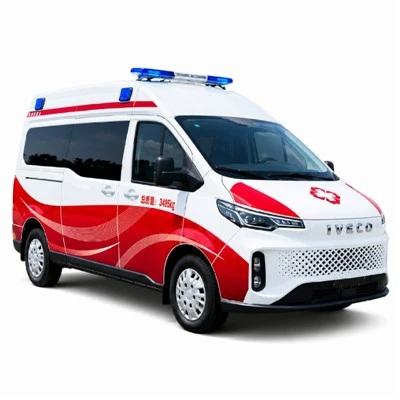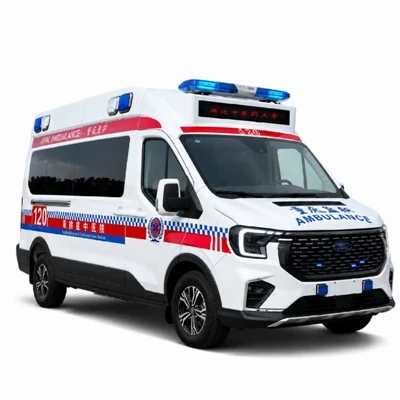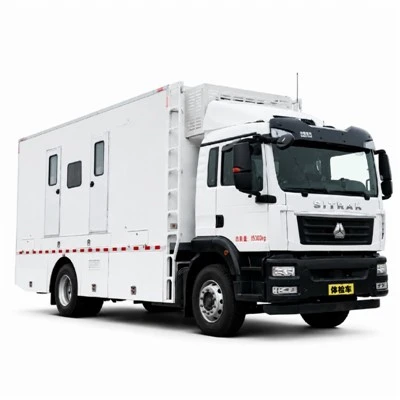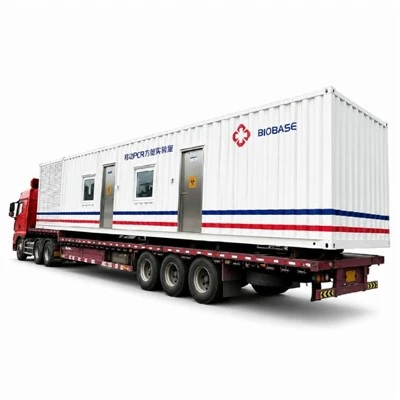

When buyers compare ambulances, attention usually goes first to the chassis, medical equipment, interior layout and price. Steering position often comes later.
That can be an expensive mistake.
Choosing between a left hand drive ambulance and a right hand drive ambulance is not simply a driver preference. The correct configuration affects road legality, visibility, daily driving safety, chassis availability, spare parts and, in some markets, whether the vehicle can be registered at all.
For hospitals, EMS operators, government buyers and distributors importing ambulances from overseas, the safest approach is simple: determine the destination market first, then select the steering configuration and chassis.
This guide explains how to make that decision.
1. What Is the Difference Between an LHD and RHD Ambulance?
An LHD ambulance, or left hand drive ambulance, has the steering wheel and driver position on the left side of the vehicle.
An RHD ambulance, or right hand drive ambulance, has the steering wheel and driver position on the right side.
The medical function does not change because of steering position. A BLS ambulance, ICU ambulance, patient transport ambulance or 4x4 ambulance can theoretically be produced in either configuration if a suitable chassis is available.
The main difference is how the vehicle matches the road system of the destination country.
In countries where traffic normally keeps to the right side of the road, vehicles are generally left-hand drive. In countries where traffic keeps to the left, vehicles are generally right-hand drive.
That sounds straightforward, but ambulance procurement is rarely that simple. Import rules, homologation requirements and locally available chassis can all change what is practical.
2. A Quick Rule for Choosing LHD or RHD
For most buyers, the first question should be:
Which side of the road does the destination country drive on?
| Road Traffic System | Typical Steering Position | Common Ambulance Choice |
|---|---|---|
| Vehicles drive on the right side of the road | Steering wheel on the left | LHD ambulance |
| Vehicles drive on the left side of the road | Steering wheel on the right | RHD ambulance |
Most countries in continental Europe, the Middle East, China and the Americas use left-hand-drive vehicles because traffic travels on the right.
Markets such as the United Kingdom, Japan, Australia, New Zealand, Thailand, Malaysia, Indonesia, South Africa and a number of East African and South Asian countries normally use right-hand-drive vehicles because traffic travels on the left.
However, this table should be treated as a purchasing guide rather than a legal approval document. Before ordering an ambulance, buyers should confirm the current registration and import requirements with the relevant transport authority or local vehicle approval agency.
3. Why Steering Position Matters More for an Ambulance Than for an Ordinary Vehicle
An ambulance spends much of its working life in situations where visibility and driver reaction matter.
It may need to move through heavy traffic, approach intersections with emergency warning systems active, pull alongside accident scenes or stop close to hospital entrances. The driver also needs a clear view when overtaking slower traffic or positioning the vehicle on narrow roads.
Using a vehicle with the wrong steering position can make these tasks more difficult.
For example, a left-hand-drive ambulance operating permanently in a left-driving country may place the driver farther from the road centerline. That can reduce visibility when overtaking and make some junctions less intuitive. The same problem occurs when an RHD vehicle is used in a country designed around LHD traffic.
For occasional use this may be manageable. For an emergency fleet operating every day, it is usually a poor compromise.
4. Check Local Regulations Before Selecting the Chassis
The destination country should be confirmed before an ambulance manufacturer starts chassis selection.
This is because some countries allow limited importation of vehicles with the opposite steering configuration, while others apply restrictions or additional registration conditions. Ambulances may also be treated differently from ordinary passenger vehicles because they are emergency or special-purpose vehicles.
A buyer should therefore verify more than the steering wheel position.
Important items can include vehicle category, overall dimensions, gross vehicle weight, emission standard, lighting requirements, emergency warning lights, siren specifications, reflective markings, seat requirements and medical vehicle certification.
If the project is for a government tender, the tender specification should take priority over a general market assumption.
A tender that states "RHD ambulance required" should not be interpreted as "either steering position is acceptable because the country drives on the left." The specification is the specification.
5. LHD Ambulance: Where Is It Commonly Used?
A left hand drive ambulance is generally selected for markets where vehicles drive on the right side of the road.
This includes many ambulance markets in the Middle East, continental Europe, Central Asia, China, North and South America, and a large number of African countries.
For example, ambulance buyers in Saudi Arabia and the United Arab Emirates normally require left-hand-drive vehicles. The same is true for most European Union markets outside countries that drive on the left.
LHD ambulance chassis availability is also relatively broad because many major commercial-vehicle platforms are produced in left-hand-drive versions.
Depending on the destination market, buyers may consider platforms from Ford, Mercedes-Benz, IVECO, Volkswagen, Toyota, JMC, Foton or other commercial vehicle manufacturers.
The correct brand is not simply the most famous one. Local parts supply and workshop support should be part of the decision.

6. RHD Ambulance: Which Markets Usually Need It?
A right hand drive ambulance is commonly required for countries where traffic keeps to the left.
Typical RHD markets include the United Kingdom, Japan, Australia, New Zealand, Thailand, Malaysia and Indonesia. RHD ambulances are also widely used in markets such as South Africa, Kenya, Tanzania, Pakistan and Bangladesh.
For import buyers, RHD projects require more attention during chassis sourcing.
Not every van or truck chassis is offered in both steering configurations. A model that is readily available as LHD may have a limited RHD version, a different engine specification or a different emission package.
This is one reason experienced buyers confirm the country and steering side before asking for a final quotation.
If a supplier quotes an ambulance before knowing whether the project is LHD or RHD, the price may need to change later once the correct chassis is identified.

7. Does Steering Position Affect the Medical Compartment?
Usually, not much.
The treatment area behind the driver can still be configured for BLS, ALS, ICU or patient transport applications regardless of whether the cab is LHD or RHD.
However, some details may change.
The location of side doors, communication controls, electrical switches, attendant access and certain front-cabin equipment can be influenced by the base vehicle. If the ambulance design includes access between the driving cabin and medical compartment, the chassis layout also needs to be checked.
For large fleet orders, it is better to approve an interior drawing based on the exact chassis being purchased rather than reuse a layout from a visually similar model.
Two vans can look almost identical outside and still have different internal structures.
8. Can a Left Hand Drive Ambulance Be Converted to Right Hand Drive?
Technically, some vehicles can be converted. Commercially, that does not mean they should be.
A steering conversion may involve the steering column, dashboard, pedals, wiring harnesses, brake components, airbags, HVAC controls and electronic systems. On modern vehicles, advanced driver assistance systems can make the conversion even more complicated.
For a professional ambulance project, a factory-built RHD chassis is generally preferable to converting an LHD vehicle after production.
The same principle applies in the opposite direction.
A converted vehicle may also create questions about warranty, homologation, parts identification and future maintenance. What appears to be a cheaper solution during purchasing can become expensive during years of operation.
Unless local conditions leave no other practical option, buyers should normally choose a chassis that was originally manufactured in the required steering configuration.
9. Chassis Availability Can Change the Final Ambulance Specification
This is one of the most overlooked parts of international ambulance purchasing.
A buyer may request the same chassis brand used in an existing fleet, only to discover that the desired engine, wheelbase or roof height is not available in RHD form.
The choice then becomes practical rather than theoretical.
Suppose a hospital wants a high-roof RHD ambulance with a particular payload, Euro emission level and automatic transmission. The supplier may have several ambulance platforms available, but only one may satisfy all four requirements.
In that case, steering position is part of the chassis engineering decision, not a cosmetic option added near the end of production.
For this reason, it is useful to send the supplier the destination country, required steering position, ambulance application and preferred chassis specifications in the first inquiry.
10. Think About Spare Parts Before You Buy
The best ambulance is not only one that can be delivered. It is one that can still be maintained five years later.
An imported ambulance may operate far from the vehicle manufacturer, so local availability of routine service parts matters.
Before choosing an LHD or RHD platform, check whether the destination market can support items such as brake components, filters, belts, suspension parts, electrical sensors, windshields, lamps and body components.
This becomes especially important with RHD chassis that are produced in smaller volumes for certain markets.
A slightly more common platform can be a better fleet decision than a more advanced model with limited local parts support.
Government fleets and private ambulance operators should also consider whether their mechanics already have experience with the selected chassis.
11. Do LHD and RHD Ambulances Cost the Same?
Not always.
The final price depends on the chassis source, market availability, drivetrain, engine specification and production volume.
If a manufacturer has a particular LHD chassis readily available, an equivalent RHD chassis may cost more or take longer to obtain. In another market, the opposite may be true.
Medical equipment itself usually does not become significantly more expensive simply because the ambulance is RHD.
The difference usually comes from the base vehicle and any engineering changes required around the front cabin.
Therefore, when comparing an ambulance for sale, buyers should make sure that quotations are based on the same steering configuration. Comparing an LHD quotation with an RHD quotation without checking the chassis specification can give a misleading impression of price.
12. What Information Should You Send the Ambulance Manufacturer?
A good inquiry can prevent several rounds of unnecessary quotation revisions.
Instead of sending only "Please quote one ambulance," provide the destination country, quantity, LHD or RHD requirement, required ambulance type, preferred chassis, fuel type, transmission, emission standard, 4x2 or 4x4 requirement, medical equipment needs and any local certification requirements.
If you are not sure whether the market requires a left hand drive ambulance or right hand drive ambulance, provide the destination country first.
A professional ambulance manufacturer should be able to check the available chassis options before preparing the technical proposal.
For tender projects, sending the relevant vehicle clauses from the tender document can also reduce misunderstandings.
13. Common Mistakes Buyers Should Avoid
The first mistake is choosing a chassis because the price is attractive, then checking steering position later.
The second is assuming that a country will accept the opposite steering side because similar vehicles can sometimes be seen on local roads.
The third is converting the steering system simply to avoid changing the chassis.
Another common problem is focusing only on the ambulance body and medical equipment while ignoring the long-term availability of chassis parts.
A lower purchase price does not help much if the vehicle spends weeks waiting for a steering or braking component that cannot be sourced locally.
14. LHD or RHD for 4x4 and Off-Road Ambulances?
The same road-rule principle still applies.
A 4x4 ambulance intended for desert operations in a right-driving country will normally use an LHD chassis. A 4x4 ambulance intended for rural emergency work in a left-driving country will normally use an RHD chassis.
But off-road projects introduce another issue: chassis choice becomes narrower.
Four-wheel drive, high ground clearance, suitable payload, the correct wheelbase and the required steering position must all be available together.
This is why buyers searching for an off-road ambulance should confirm the destination country at the beginning of the project. It allows the manufacturer to determine whether a suitable factory-built 4x4 LHD or RHD chassis is actually available.
15. LHD vs RHD Ambulance: A Practical Buying Decision
For most projects, the decision can be reduced to three questions.
First, which side of the road does the destination country use?
Second, what steering configuration is permitted or required for vehicle registration?
Third, is a suitable factory-built chassis available with the required payload, wheelbase, emission standard and drivetrain?
If all three point in the same direction, the choice is easy.
Problems usually occur when the buyer chooses the vehicle first and tries to adapt it to the market later.
FAQ
What does LHD mean on an ambulance?
LHD means Left Hand Drive. The steering wheel is positioned on the left side of the driving cabin. LHD ambulances are normally used in countries where vehicles drive on the right side of the road.
What does RHD mean on an ambulance?
RHD means Right Hand Drive. The steering wheel is located on the right side of the vehicle. RHD ambulances are normally used in countries where traffic keeps to the left.
Is Saudi Arabia LHD or RHD for ambulances?
Saudi Arabia uses right-side road traffic, so ambulances are normally configured as left-hand drive vehicles.
Is the UAE LHD or RHD?
The United Arab Emirates normally uses left-hand-drive vehicles because traffic travels on the right side of the road.
Are ambulances in Kenya right hand drive?
Kenya drives on the left side of the road, so ambulances are typically right-hand drive.
Can I order the same ambulance model in both LHD and RHD?
Sometimes, but it depends on whether the base chassis manufacturer produces both versions. Engine, transmission, wheelbase and emission options may also differ between LHD and RHD chassis.
Is it better to convert an ambulance from LHD to RHD?
For most professional ambulance projects, a factory-built chassis in the correct steering configuration is preferable. Conversion can affect engineering complexity, warranty, maintenance and vehicle approval.
Final Recommendation
When choosing between an LHD and RHD ambulance, do not start with price.
Start with the destination country.
Once the road system and registration requirements are clear, select a chassis that was designed for the correct steering position and can be supported locally. Only then should the buyer finalize the medical compartment, equipment and optional systems.
This approach reduces approval risks, avoids unnecessary steering conversions and makes the ambulance easier to operate and maintain throughout its service life.
For international buyers, one line in the first inquiry can save a surprising amount of time later:
Destination country + required steering position.
That information allows the ambulance manufacturer to recommend the correct chassis from the beginning and build the rest of the vehicle around a configuration that actually fits the market.