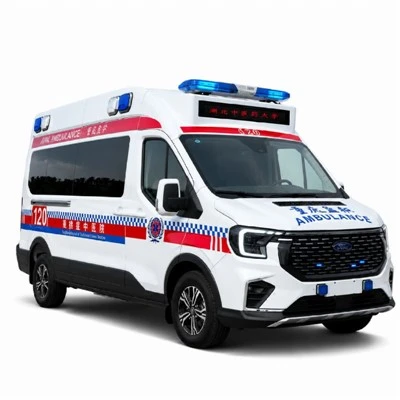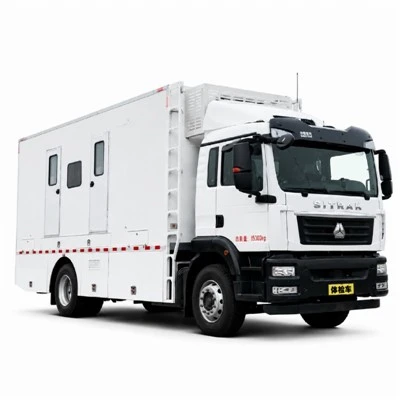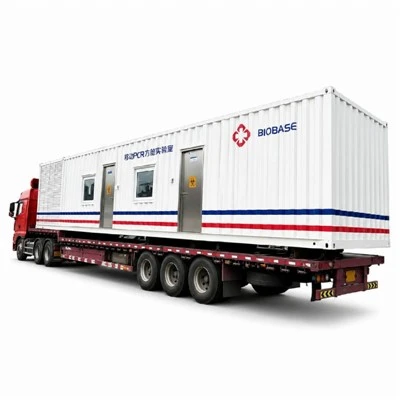

Choosing an ambulance factory starts with a practical question: can the manufacturer turn your hospital's clinical requirements into a vehicle your team can operate, maintain and accept against a written specification?
For overseas hospital buyers, that means looking beyond the chassis brand, interior photographs and quoted price. The purchasing decision should establish who builds the conversion, which equipment is included, how the layout supports patient care, and what evidence will be supplied before shipment.
A useful procurement process brings together the hospital's clinical lead, biomedical engineering team, fleet manager and purchasing department. Each sees risks that a catalogue alone cannot resolve.
Define the Hospital's Transport Mission Before Selecting a Vehicle
Before asking an ambulance factory for a proposal, describe the service the vehicle will support.
Will it handle scheduled patient transfers, emergency response, or transfers requiring advanced monitoring and treatment? What crew will travel with the patient? Which procedures and devices are required during the journey?
WHO's ambulance-system guidance connects equipment planning with provider capability, operational arrangements and local requirements. Its supporting resources explain that equipment needs and clinical scope vary between countries. A catalogue label therefore needs to be checked against the hospital's approved service specification. operational guidance for ambulance systems
Prepare a short operating brief covering:
Intended patient groups and transport tasks.
Normal and longest expected journeys.
Crew size and attendant seating requirements.
Road conditions, climate and hospital access restrictions.
Medical equipment to be supplied or reused.
Local chassis servicing and medical-device support.
Destination requirements identified by the hospital and its importer.
For example, a hospital planning inter-facility transfers with its existing transport monitor should identify the exact monitor model at the enquiry stage. The factory can then review its dimensions, mounting arrangement, power supply and position within the proposed compartment.
Discovering those requirements after the cabinets are installed can lead to avoidable changes.
Confirm Who Is Responsible for the Ambulance Build
An ambulance project may involve a base-vehicle manufacturer, a conversion factory, medical-device suppliers and an export company. These roles should be clear before the hospital signs a contract.
Ask the proposed supplier to identify:
The legal entity responsible for the contract.
The factory carrying out the vehicle conversion.
The party responsible for equipment installation and integration.
The issuer of each warranty.
The party coordinating defects involving more than one system.
The chassis manufacturer's name identifies the base vehicle. The hospital should separately establish who designed and installed the medical compartment.
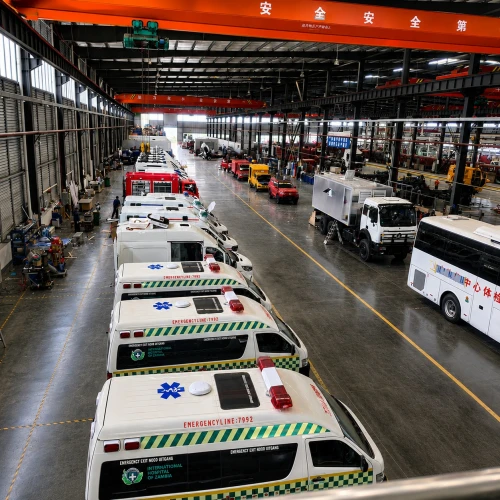
During a factory visit or live video review, follow a vehicle through the relevant production stages. Ask to see how the approved layout, equipment schedule and inspection records connect to that build. A workshop tour becomes more useful when the supplier can explain how a specific order is controlled.
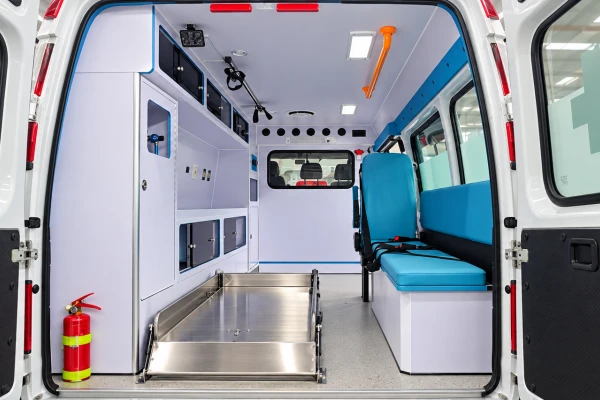
Approve the Patient Compartment as a Working Environment
A visually attractive interior may still create difficulties during loading, treatment or cleaning.
Ask the ambulance factory for a dimensioned layout showing the stretcher position, attendant seats, equipment mounts, cabinets, access routes and door openings. Have clinical staff review the drawing before production approval.
The review should answer practical questions:
Can attendants see the patient and required displays from their intended positions?
Can frequently used supplies be reached without unnecessary movement?
Do drawers and doors open without obstructing the stretcher or access route?
Can the specified stretcher be loaded, secured and removed as intended?
Are cleaning surfaces and maintenance points accessible?
Where feasible, request a physical demonstration using the proposed equipment or dimensionally representative items.
A loading demonstration confirms functional compatibility. Evidence for the strength and safety of seats, restraints and equipment mountings should be reviewed separately against the project's applicable requirements.
For a hospital reusing existing equipment, provide the factory with model details early. "Space for a ventilator" is too broad to establish whether a particular ventilator, bracket and associated accessories will fit.
Use an Equipment Responsibility Schedule
One of the most useful documents in hospital ambulance procurement is an item-by-item schedule stating what each party will supply.
Descriptions such as "oxygen system," "monitor installation" or "ICU preparation" can leave important questions unanswered. A mounting bracket, electrical outlet or prepared compartment does not establish that the associated medical device is included.
Use a schedule such as the following when comparing proposals.
| Item | What the Proposal Should Specify | Hospital Review |
|---|---|---|
| Stretcher and loading system | Manufacturer, model, quantity, loading arrangement and vehicle interface | Compatibility with the hospital's handling procedures |
| Patient monitor | Exact model, accessories, mount and power connection | Required functions, consumables and local support |
| Ventilator, if required | Model, accessories, mounting and power requirements | Suitability for the intended transport service |
| Oxygen installation | Cylinder arrangement, restraints, regulator, outlets and supply boundary | Compatibility with local cylinder supply and servicing |
| Suction equipment | Supplied device or installation provision, accessories and power source | Clinical requirements and replacement consumables |
| Electrical system | Outlets, auxiliary supply, charging arrangements and agreed operating conditions | Compatibility with the selected devices |
| Storage | Cabinet dimensions, retention arrangements and allocated contents | Access, cleaning and replenishment |
| Handover package | Manuals, equipment register, drawings and training scope | Usability by clinical and maintenance teams |
Mark each item as factory supplied, hospital supplied, locally supplied, or excluded.
For hospital-supplied devices, agree who checks the installation interfaces and who confirms the completed integration. This is particularly important when equipment will only be fitted after the vehicle arrives.
Review System Integration Before Freezing the Specification
An equipment list describes what is present. An integration review establishes whether the proposed systems can work together under the agreed conditions.
Ask the manufacturer to explain how it has considered:
Power demand. Identify which devices and vehicle systems may operate simultaneously, how they receive power, and what happens during the agreed engine-off operating period.
Installed mass. Request a mass assessment covering the completed conversion, specified equipment and intended operating load, including review against the relevant vehicle and axle limits.
Climate conditions. Define the conditions under which patient-compartment cooling or heating will be checked. An unspecified demonstration provides little basis for comparing proposals.
Maintenance access. Confirm that technicians can reach relevant fuses, connections, equipment mounts and service points.
Cleaning. Ask for material information and cleaning instructions that the hospital's infection-prevention team can review.
Turn the agreed requirements into recorded checks. For example, an electrical demonstration should identify the connected devices, operating mode, duration and result. Those details make the evidence useful to the hospital's technical team.
Compare Quotations Against the Same Supply Boundary
A lower vehicle price may reflect a different scope.
Before comparing totals, align the chassis specification, conversion, medical devices, documentation, inspection, training and delivery arrangements. Ask each bidder to identify exclusions and proposed alternatives clearly.
The comparison should also address:
Destination-related work allocated to the supplier, importer or hospital.
Shipping and insurance responsibilities.
Installation or commissioning required after arrival.
Initial spare parts and consumables.
Warranty labour, parts and transport costs.
Technical training and supporting materials.
Review likely operating expenses alongside the purchase price. Chassis maintenance, device consumables, replacement components and repair arrangements all affect the hospital's budget.
Buying directly from an ambulance factory can simplify technical discussions, but the contract still needs a clear allocation of responsibilities.
Agree Approval Stages Before Production Begins
Hospitals can reduce late disagreements by defining what must be approved at each stage of the order.
| Stage | Evidence to Review | Hospital Decision |
|---|---|---|
| Proposal review | Operating brief, chassis proposal, supply schedule and stated exceptions | Is the proposed scope suitable for detailed evaluation? |
| Design approval | Layout, selected equipment, interfaces and technical requirements | Can the agreed design proceed to manufacture? |
| Production review | Relevant installation records and approved changes | Does the build remain consistent with the approved specification? |
| Factory acceptance | Vehicle identity, equipment register, inspection results and open-item list | Are the contractual conditions for dispatch satisfied? |
| Arrival and commissioning | Shipping-condition check, inventory, local installation and agreed training | Have the conditions for handover and final acceptance been met? |
Give every change a written record. A proposed substitute should state the revised model or material, its effect on interfaces and documentation, and any price or schedule impact.
For a multi-vehicle order, consider approving the first completed unit before repeating the same layout across the remaining vehicles. Agree which checks apply to every vehicle.
Prepare a Factory Acceptance Plan
The factory acceptance plan should come from the signed specification.
Include representatives who can assess clinical usability, vehicle operation and technical documentation. Where travel is impractical, define what can be witnessed remotely and what requires an independent inspection or examination after arrival.
Typical review areas include:
Vehicle identity and contracted chassis specification.
Installed equipment models, quantities and serial numbers.
Layout, storage and access.
Stretcher loading and locking operation.
Doors, drawers, lighting, outlets and controls.
Agreed electrical and climate-system checks.
Manuals, drawings, spare parts and training materials.
Record discrepancies with photographs or test evidence, an assigned owner and a closure requirement. Agree in advance which findings prevent dispatch.
Factory acceptance and arrival inspection serve different purposes. The hospital should also check the vehicle's condition and inventory after transport, then complete any agreed local installation and commissioning.
Make After-Sales Support Specific
Ask how a fault will be handled once the ambulance is operating at your hospital.
A useful support agreement identifies the first contact, diagnostic process, parts arrangements and responsibility for local work. Separate the chassis, conversion and medical-device warranty terms, then identify who coordinates issues involving several parties.
Request practical answers:
Who investigates a device that fails to charge through the vehicle outlet?
Which replacement components can be sourced locally?
What information must accompany a warranty claim?
Who pays for freight, labour or technician travel?
When does each warranty begin?
What operator and maintenance familiarization is included?
These details help the hospital plan support before a fault interrupts service.
Request a Proposal Your Hospital Can Evaluate
A productive discussion with an ambulance factory begins with a clear operating brief and ends with an agreed technical scope.
Hubei Ruitu Technology Co., Ltd. supports ambulance customization enquiries covering chassis selection, compartment layout, equipment integration and delivery planning. Hospitals can begin by sharing the destination country, transport mission, crew arrangement, preferred chassis, equipment list and procurement schedule.
Request a dimensioned layout, itemized supply schedule, stated exclusions and proposed acceptance plan alongside the quotation. Together, these documents give your clinical, technical and purchasing teams a common basis for evaluating the vehicle.