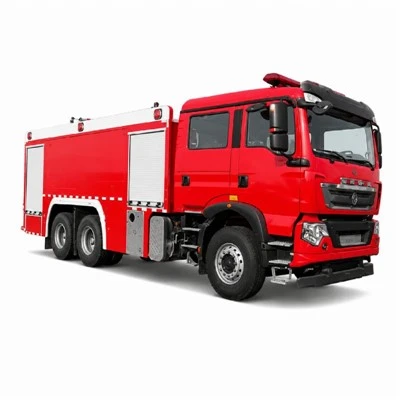

As specialized emergency response vehicles, fire trucks possess distinct advantages in firefighting and disaster management operations. Their primary characteristics are rapid response speed and exceptional maneuverability, enabling them to reach the scene of a fire or accident swiftly. By doing so, they secure precious time for rescue and relief efforts, thereby effectively minimizing casualties and property damage. Fire trucks integrate a variety of systems-including water supply, extinguishing agent delivery, forcible entry and rescue tools, and illumination equipment-endowing them with robust comprehensive operational capabilities. Different types of fire trucks are designed to address specific scenarios-such as water-based fires, oil fires, electrical fires, and chemical hazards-thereby enhancing their adaptability and specialized proficiency in responding to complex fire environments.
Modern fire trucks also feature advanced equipment and sophisticated technical support capabilities; through technological means such as high-pressure water pumps, long-range water supply systems, and intelligent control devices, they significantly boost firefighting efficiency. Furthermore, their interoperability with fire command and control systems is continuously improving, rendering rescue dispatch operations more scientific and efficient. Consequently, fire trucks play an indispensable role within the urban safety and security framework.