

Hey there! As an ICU ambulance supplier, I've spent a ton of time thinking about the nitty - gritty details of these vehicles. One question that often comes up is whether there are any ergonomic designs in an ICU ambulance for the medical staff. Let's dive right in and explore this topic.
First off, let's understand why ergonomic design in an ICU ambulance is so crucial. Medical staff in an ambulance are often under high - stress situations. They're dealing with critical patients, performing life - saving procedures, and doing it all while the ambulance is in motion. Without proper ergonomic design, they can quickly get fatigued, which can lead to mistakes that may put the patient's life at risk.
When it comes to the interior layout, modern ICU ambulances are designed with the medical staff's workflow in mind. For instance, the placement of medical equipment is strategic. Vital equipment like defibrillators, ventilators, and monitoring devices are placed in easily accessible locations. This means that the medical staff don't have to waste time searching for what they need during an emergency. In our Foton G9 Gasoline ICU Ambulance Van, we've made sure that all the essential equipment is within arm's reach of the medical personnel. This not only saves time but also reduces the physical strain on the staff as they don't have to stretch or bend awkwardly to access the equipment.
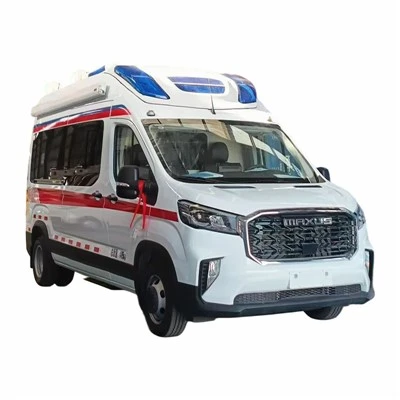
The seating arrangement in an ICU ambulance is another aspect where ergonomic design plays a huge role. The seats are designed to provide proper support to the medical staff, especially during long - distance transports or when the ambulance is moving on rough roads. They usually have adjustable features, such as seat height, backrest angle, and lumbar support. This allows the medical staff to customize the seats according to their body requirements, reducing the chances of back pain and other musculoskeletal problems. Our Maxus Diesel ICU Ambulance Euro 6 Emergency Van is equipped with high - quality, adjustable seats that ensure the comfort of the medical team even during extended periods of sitting.
In addition to the seating and equipment placement, the lighting in an ICU ambulance is also designed ergonomically. Adequate lighting is essential for the medical staff to perform procedures accurately, especially in low - light conditions or at night. The ambulances are fitted with bright, adjustable lights that can be directed exactly where needed. For example, task lights are often used near the patient's stretcher to provide focused illumination during medical procedures. This helps the medical staff to see clearly without straining their eyes.
Another important ergonomic feature is the storage space in the ambulance. The medical staff need to keep a variety of supplies on hand, from medications to bandages. The storage compartments in modern ICU ambulances are designed to be organized and easy to access. They are often divided into sections for different types of supplies, and some even have labels to make it easier for the staff to find what they're looking for quickly. Our JMC Diesel Mobile ICU Ambulance Car has well - designed storage spaces that optimize the use of available space and make it convenient for the medical team to manage their supplies.
The controls in an ICU ambulance are also planned ergonomically. The switches and buttons for the medical equipment, as well as the vehicle's controls, are designed to be easy to operate with one hand or while wearing gloves. This is important because the medical staff may need to operate the controls while handling other tasks simultaneously. For example, they might need to turn on a device while holding the patient's hand or performing another procedure.
The design of the stretcher is yet another area where ergonomics come into play. A good stretcher should be easy to load and unload into the ambulance. It should also be adjustable to different heights, which is important for the medical staff to perform procedures comfortably. In our Mercedes Benz Sprinter ICU Ambulance Medical Vehicle, the stretcher is equipped with a smooth - operating mechanism that allows for easy height adjustment and loading, reducing the physical effort required from the medical team.
Noise reduction is also an important consideration in the ergonomic design of an ICU ambulance. The medical staff need to communicate effectively with each other and with the patient. Excessive noise from the engine, road, or other sources can make it difficult to have clear conversations. Modern ambulances are built with sound - insulating materials to reduce the noise level inside the vehicle. This creates a more comfortable and functional environment for the medical team.
Now, let's talk about the handling of the ambulance itself. The steering wheel, pedals, and other driving controls are designed to be easy to use. A well - designed handling system means that the driver can focus on driving safely, especially when the ambulance is rushing to an emergency. This is important because the safety of the patients and the medical staff depends on the driver's ability to navigate the vehicle properly. Our Ford Transit RHD ICU Ambulance Van has a responsive steering system and well - calibrated pedals that make it easy to drive, even in challenging conditions.
So, as you can see, there are numerous ergonomic designs in an ICU ambulance for the medical staff. These designs are all about making the work environment as comfortable, efficient, and safe as possible. At our company, we're constantly working to improve these designs to meet the needs of the medical community.


If you're in the market for an ICU ambulance and are interested in learning more about our products, we'd love to have a chat. Whether you need more details about the ergonomic features or want to discuss the specifications that fit your requirements, just reach out. We're here to help you find the perfect ICU ambulance for your medical team.
References
- Ergonomics in Healthcare: Designing for Patient and Provider Safety. American Society of Safety Professionals.
- Guidelines for Ambulance Design and Equipment. National Association of Emergency Medical Technicians.