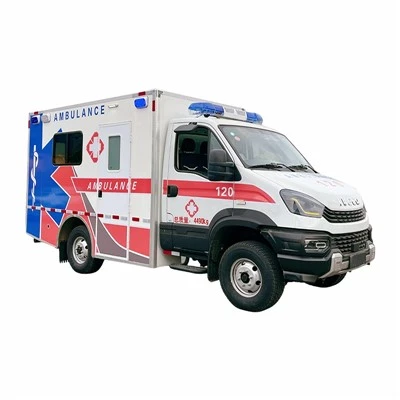


Can a BLS ambulance handle cardiac emergencies? That's a question I get asked a lot as a BLS ambulance supplier. And it's a crucial one, considering that cardiac emergencies can be life - threatening events that require immediate attention.
First off, let's talk about what a BLS ambulance is. BLS stands for Basic Life Support. These ambulances are equipped with the essential equipment and trained personnel to provide basic medical care on the way to the hospital. They're the workhorses of the emergency medical services system, often being the first on the scene of an emergency.
When it comes to cardiac emergencies, a BLS ambulance can do a great deal. One of the key pieces of equipment on a BLS ambulance is the Automated External Defibrillator (AED). An AED can analyze a person's heart rhythm and, if necessary, deliver an electric shock to try and restore a normal rhythm. This is a game - changer in cardiac arrest situations. In fact, early defibrillation is one of the most important factors in increasing a patient's chances of survival.
The paramedics or emergency medical technicians (EMTs) on a BLS ambulance are also trained to perform cardiopulmonary resuscitation (CPR). CPR helps to keep oxygenated blood flowing to the brain and other vital organs when the heart has stopped beating effectively. They know how to do chest compressions at the right rate and depth, and how to give rescue breaths properly.
BLS ambulances also carry oxygen supplies. In a cardiac emergency, a lack of oxygen can quickly lead to more serious problems. By providing oxygen to the patient, the BLS ambulance crew can help support the patient's vital functions until they reach the hospital.
Another important aspect is the ability to start intravenous (IV) lines. While it might not seem like a big deal in cardiac emergencies, an IV can be used to administer certain medications that are needed to manage heart problems. And BLS ambulance staff are trained to do this relatively quickly and safely.
However, it's important to understand the limitations. BLS ambulances don't have the same level of advanced equipment as an ALS (Advanced Life Support) ambulance. For instance, they don't have the ability to perform invasive procedures like inserting a breathing tube directly into the patient's airway in a more complex way. And they may not have access to some of the more specialized cardiac medications that an ALS unit might carry.
But that doesn't mean they're not effective. In many cases, the quick response and basic life - saving measures provided by a BLS ambulance can make all the difference. They can stabilize the patient and get them on their way to a hospital where more advanced treatment can be provided.


Now, let me tell you about some of the BLS ambulances we supply. We have the Toyota LHD First Aid Ambulance BLS Patient Transport Van. This van is great for urban areas where maneuverability is key. It's equipped with all the necessary BLS equipment, including an AED, oxygen supply, and CPR tools.
The Toyota Hiace Patient Transport Ambulance Vehicle is another reliable option. It has a spacious interior, which allows the crew to work comfortably while transporting the patient. It's also known for its fuel efficiency, which can be a big plus for long - term use.
If you need a more heavy - duty option, we offer the Ford T8 Diesel Ambulance Euro 6 ICU Medical Vehicle. This ambulance is built to handle tough conditions and has the capacity to carry a wide range of BLS equipment. It also meets the Euro 6 emission standards, making it more environmentally friendly.
The Foton G7 Gasoline Transport Ambulance is a cost - effective choice without sacrificing quality. It's easy to maintain and has all the basic features needed for BLS patient transport.
And then there's the Mercedes - Benz Vito Monitoring Ambulance Car. This ambulance is known for its luxury and advanced monitoring capabilities. It allows the crew to keep a close eye on the patient's vital signs during transport.
In conclusion, a BLS ambulance can handle a significant portion of cardiac emergencies. While it may not have all the bells and whistles of an ALS ambulance, the basic life - saving measures it can provide are crucial in the first few minutes of a cardiac event. If you're in the market for a BLS ambulance, we have a range of options to suit your needs. Whether you're a small rural emergency service or a large urban hospital, we can help you find the right vehicle.
If you're interested in learning more or discussing a purchase, don't hesitate to reach out. We're here to answer your questions and guide you through the process of getting the best BLS ambulance for your organization.
References
- American Heart Association. (2023). Guidelines for Cardiopulmonary Resuscitation and Emergency Cardiovascular Care.
- Emergency Medical Services for Children Program. (2022). Basic Life Support in Pediatric Emergencies.
- World Health Organization. (2021). Global Guidelines for Emergency Medical Services.