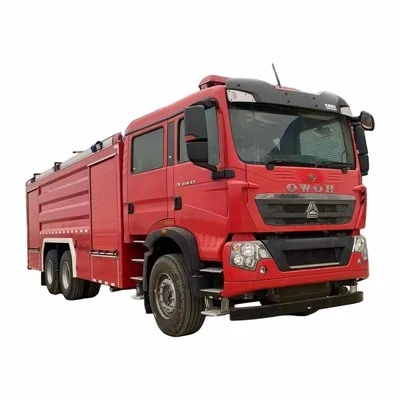


How are the explosives in a bulk explosive truck labeled?
As a supplier of bulk explosive trucks, I understand the critical importance of proper labeling of explosives within these specialized vehicles. The correct labeling of explosives in a bulk explosive truck is not only a legal requirement but also a fundamental safety measure that ensures the well - being of everyone involved in the transportation process, from the drivers to the communities through which these trucks pass.
Regulatory Framework
The labeling of explosives in bulk explosive trucks is governed by a complex web of national and international regulations. These regulations are designed to minimize the risks associated with the transportation of these dangerous goods. For instance, in the United States, the Department of Transportation (DOT) has strict rules regarding the identification and labeling of explosives. The DOT's Hazardous Materials Regulations (HMR) specify that all hazardous materials, including explosives transported in bulk explosive trucks, must be properly labeled to indicate their nature, hazard class, and other relevant information.
Internationally, the United Nations Recommendations on the Transport of Dangerous Goods serve as a guiding document for many countries. These recommendations provide a standardized approach to the classification, packaging, and labeling of dangerous goods, including explosives. This global standardization helps to ensure that regardless of the country of origin or destination, the labeling of explosives in bulk explosive trucks is clear and consistent.
Types of Labels
There are several types of labels used on bulk explosive trucks to identify the explosives inside. The most common are hazard class labels, placards, and shipping papers.
Hazard class labels are small, square - shaped labels that are affixed directly to the packaging or containers of the explosives. These labels are color - coded and have specific symbols that represent different hazard classes. For explosives, the label typically features an orange background with a black explosion symbol. This instantly alerts anyone handling or coming into contact with the explosives to the potential danger.
Placards are larger signs that are placed on all four sides of the bulk explosive truck. These placards are also color - coded and display the hazard class, identification number, and sometimes the name of the explosive. The placards are highly visible and are designed to be seen from a distance, providing clear information about the nature of the cargo to emergency responders, law enforcement, and other road users.
Shipping papers, also known as bills of lading, are another crucial form of labeling. These documents contain detailed information about the explosives being transported, including the quantity, chemical composition, and emergency contact information. Shipping papers must be kept in a visible and accessible location within the truck cab so that they can be quickly retrieved in case of an emergency.
Labeling for Different Types of Explosives
Not all explosives are the same, and different types of explosives may require specific labeling. For example, ammonium nitrate fuel oil (ANFO), a commonly used bulk explosive, has its own set of labeling requirements. Our ANFO Bulk Explosive Truck is specifically designed to transport ANFO, and the labeling on these trucks reflects the unique properties of this explosive.
ANFO is classified as a Class 1.5 explosive, which means it is an insensitive explosive with a mass explosion hazard. The labels on ANFO bulk explosive trucks must clearly indicate this classification, along with the appropriate hazard symbols and identification numbers. In addition, since ANFO is a mixture of ammonium nitrate and fuel oil, the shipping papers must also provide details about the composition of the mixture.
Other types of explosives, such as dynamite or blasting caps, have different hazard classes and labeling requirements. Dynamite is typically classified as a Class 1.1 explosive, which is a high - energy explosive with a significant mass explosion hazard. The labels on trucks transporting dynamite must be more prominent and give clear warning of the extreme danger.
Safety - Related Labeling
In addition to the regulatory labels, there are also safety - related labels on bulk explosive trucks. These labels provide information on safety procedures, emergency response actions, and handling instructions. For example, there may be labels indicating where to find fire - fighting equipment on the truck, or how to safely shut off the power in case of an emergency.
Some labels also provide information on the proper storage and handling of the explosives. These instructions are crucial to prevent accidental detonation or other safety incidents. For instance, labels may indicate the maximum temperature at which the explosives can be stored, or the correct way to load and unload the cargo.
Technology and Labeling
Advancements in technology have also had an impact on the labeling of explosives in bulk explosive trucks. Electronic labeling systems are becoming more common, providing real - time information about the cargo. These systems can include sensors that monitor the temperature, pressure, and other environmental conditions inside the truck. If any of these conditions exceed the safe limits, an alarm can be triggered, and the information can be sent to the truck driver, the dispatcher, or other relevant parties.
RFID (Radio - Frequency Identification) tags are another technological innovation in explosive labeling. These tags can be attached to the explosive containers and can store detailed information about the contents. When the truck is scanned at a checkpoint or during a routine inspection, the information on the RFID tags can be quickly retrieved, making the inspection process more efficient and accurate.
Our Role as a Supplier
As a supplier of Specialized Explosives Transport Vehicle, we play a crucial role in ensuring that the explosives in our trucks are properly labeled. We work closely with our customers to ensure that they understand the labeling requirements and provide all the necessary documentation and training.


We also ensure that our trucks are equipped with the latest labeling technology and safety features. Our trucks are designed to meet or exceed all the regulatory standards for the transportation of explosives, and we regularly update our labeling systems to keep up with the latest technological advancements.
In addition, we provide ongoing support to our customers in the form of maintenance, repair, and replacement of labeling equipment. We understand that proper labeling is an ongoing process, and we are committed to helping our customers maintain the highest level of safety in the transportation of explosives.
Conclusion
Proper labeling of explosives in a bulk explosive truck is a multi - faceted and critical process. It is governed by strict regulations, involves different types of labels for different types of explosives, and is constantly evolving with technological advancements. As a supplier, we take our responsibility seriously and are dedicated to providing our customers with the best possible solutions for the safe and compliant transportation of explosives.
If you are in the market for a bulk explosive truck or need more information about our products and services, we invite you to contact us for a detailed discussion. Our team of experts is ready to assist you in finding the right solution for your specific needs. Whether you are a mining company, a construction firm, or any other organization that requires the transportation of explosives, we can provide you with a reliable and safe bulk explosive truck.
References
- United States Department of Transportation. Hazardous Materials Regulations (HMR).
- United Nations. Recommendations on the Transport of Dangerous Goods.
- Various industry standards and guidelines related to the transportation of explosives.