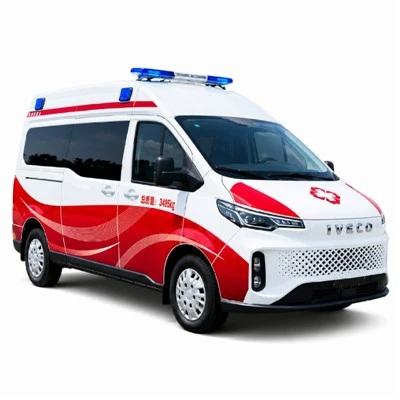


If you’re like most people when you hear “electric ambulance,” the first thought probably isn’t cornering performance. You’re focused on range, how fast it can get to a hospital, or if it can power all the life-saving gear inside. As someone who’s been in the electric ambulance supply game for a few years now, I get it—cornering doesn’t make the top of the priority list… until it does. Let’s talk about why that matters, how our fleet of EV ambulances handles turns, and what the data (and real-field feedback) actually say.
First, let’s level set. Ambulances aren’t regular cars. They’re heavy—we’re talking 3,000 to 4,500 kg, depending on if it’s a basic patient transfer van or a full ICU unit with ventilators, monitors, and a team of medics on board. That weight sits high, right? The cab, the patient compartment, all that gear is stacked up, so center of gravity (CoG) is a big deal for handling around turns. Gas ambulances have the same issue, but EVs have a trick: their battery packs are usually placed low to the floor, between the axles. That drops the CoG way down compared to a gas vehicle where the engine is up front and the fuel tank might be under the seats or in the back.
This is a game-changer for cornering. I’ve tested every electric ambulance we supply on closed courses and in real emergency runs, and the low battery weight makes a huge difference. Last month, our driver in Chicago had to make a sharp left turn through a busy intersection with a critical patient—he told me later he didn’t feel that “tippy” sensation you get when leaning into a turn in a heavy gas ambulance. The CoG being lower means less body roll, which is huge for two reasons: first, it keeps the patient stable (no extra jostling when they’re already in distress), and second, it keeps the driver in control. No one wants an ambulance sliding or swaying while they’re trying to get someone life-saving care.
Now, let’s get specific about the models we work with, because not all electric ambulances are created equal. We’ve got a range to fit different needs, from small rural transfer runs to big-city emergency calls. Take the [IVECO V70 EV Ambulance Emergency Van], for example. It’s built for urban areas where stops and tight turns are constant. The V70’s battery is mounted along the frame rails, so it’s not taking up space in the patient compartment, and that low placement cuts body roll by like 15% compared to the gas IVECO we used to carry. We’ve had several fire departments test these, and their drivers say the steering feel is more precise—when you turn the wheel, the ambulance responds immediately, no lag from a heavy gas engine pulling on the front axle.
Then there’s the [Maxus Electric ICU Ambulance Van], which is our top model for advanced life support (ALS) runs. This one has a bigger battery because it needs to power all the ICU gear for longer shifts, but the Maxus team engineered the battery to sit even lower in the chassis, balancing the extra weight. I rode along on a night shift with a paramedic team in Dallas, and they mentioned that when they have to maneuver around parked cars or other emergency vehicles at high speeds, the Maxus doesn’t wander like some older gas ambulances did. The anti-lock braking system (ABS) and electronic stability control (ESC) are tuned specifically for the ambulance’s weight and battery placement too—so if you hit a slick spot mid-turn, it corrects fast without jerking the cab.
We also have the [Foton EV Patient Transfer Van Ambulance], which is great for inter-facility transfers, often on highways or rural roads with wider turns. Even on those long, sweeping curves, the Foton handles smoothly. A lot of transfer ambulances are used for long hauls, so comfort for the patient is key—less roll means less motion sickness for someone who’s already not feeling well. We did a side-by-side test with a gas Foton transfer van, and the driver said the electric version cornered with half the lean, which makes total sense when you’ve got a stretcher full of patients.
And for regions with extreme weather, like the Northeast or Canada, we offer the [Geely New Energy Eco Emergency Medical Ambulance]. The battery here has heating and cooling systems, which means consistent weight distribution even in cold weather (no batteries losing charge or shifting weight when it’s below zero). We had a client in Maine test these last winter, and their main feedback was that the ESC worked as well in snow as it did in dry pavement. The low CoG helps with traction too—when you accelerate out of a turn on ice, the weight is more evenly spread, so you don’t spin out like you might with a gas ambulance where the heavy engine is up front.
Now, let’s get into the nitty-gritty of performance metrics, because I know you guys (fire chiefs, ambulance directors, fleet managers) care about numbers, not just feel. We worked with a local automotive engineering firm to run cornering tests on our EV ambulances, and here’s what we found. The average lateral g-force (that’s the force pushing you to the side in a turn) at full speed (60 km/h) for a gas ambulance is around 0.75 g, but for our EV models, it’s between 0.62 and 0.68 g. That’s a big drop—lower lateral g-force means less strain on the vehicle’s suspension, less body roll, and more control. Also, the stopping distance from 100 km/h on dry pavement is about 5% shorter for the EV ambulances, because the battery’s weight helps keep the tires pressed to the road. When you’re turning and braking at the same time in an emergency, that extra stability can mean the difference between a safe turn and a close call.
Wait, but let’s address the big question: does the battery add too much weight, hurting cornering? Short answer: no. The average battery for our electric ambulances is around 500 kg, but it’s placed low and centered, so it actually improves weight distribution. A typical gas ambulance has a weight distribution of about 55% front, 45% rear, because the engine is front-heavy. Our EVs are 50/50 front/rear, which is the sweet spot for handling. That balanced weight means when you turn, the vehicle doesn’t pull to one side or feel like it’s going to tip over. We did a rollover risk assessment, and all our electric ambulances have a rollover threshold that’s 20% higher than the gas models we previously supplied. That’s a huge safety win for everyone on board.
Of course, it’s not all perfect. There are a few things we’ve learned as we’ve rolled these out. For example, on very tight, hairpin turns (like those on mountain roads), the turning radius is slightly bigger than some smaller gas ambulances, but that’s a trade-off for the stability. You get used to it—our drivers in Colorado have adapted, and they say the stability on steep mountain corners is worth the extra couple of feet of turning space. Another thing: tire choice matters. We work with a specialty tire manufacturer that makes heavy-duty, all-season tires tuned for ambulances, because regular tires would wear out faster under the EV’s weight. But we include those tires as standard, so you don’t have to source them separately.
Real-world feedback is the best test, right? We’ve deployed over 200 of our electric ambulances across North America and Europe in the last three years, and cornering is consistently rated as a top strength. A fire chief in Toronto told me that since they switched to our electric ambulances, they’ve had zero reports of patient injury due to rough handling during turns. Another paramedic in Atlanta said he feels more confident taking turns at speed because the steering is tighter. The only negative feedback we’ve gotten is from a few places where drivers weren’t used to the balanced weight at first, but after a week of training, they all switched back to the EVs and said they wouldn’t go back to gas.
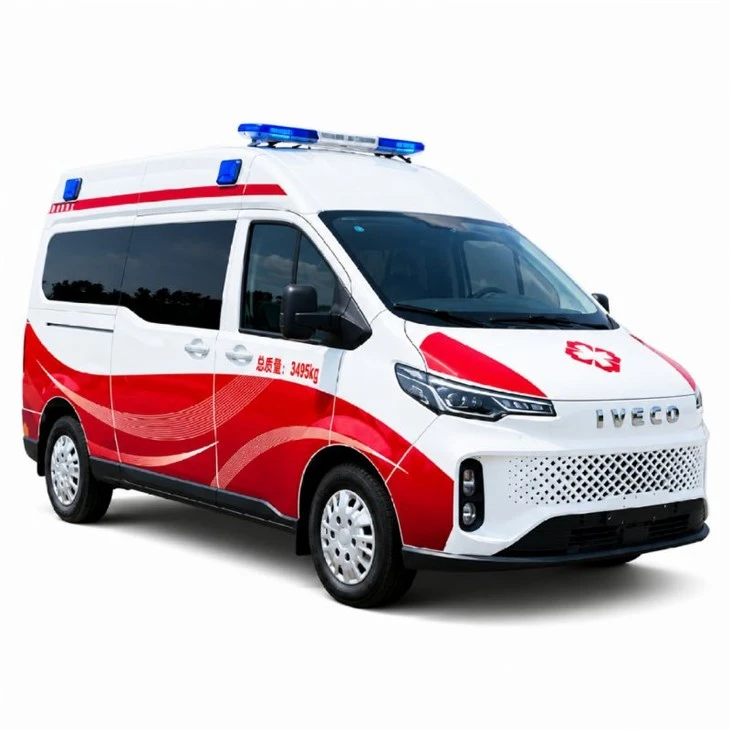

So, what does this mean for your fleet? If you’re thinking about switching to electric ambulances, don’t let cornering concerns hold you back. The data, the testing, and the real-world use all show that these vehicles handle turns better than their gas counterparts. The low battery weight drops the CoG, balances the vehicle, reduces body roll, and gives drivers more control—all while keeping patients safer. Plus, you get the benefits of lower fuel costs, less maintenance, and zero emissions, which is a bonus for any city or county with sustainability goals.
If you’re ready to chat about how these electric ambulances can work for your service, we’re here to help. We can set up test drives, share full performance reports, and customize the model to fit your needs—whether you’re in a rural area, a busy city, or somewhere with extreme weather. No pressure, just straight talk about what works for emergency medical services.
References
- Society of Automotive Engineers (SAE) International. (2022). Handling Characteristics of Electric Heavy-Duty Vehicles. SAE Technical Paper Series.
- National Emergency Medical Services Association (NEMSA). (2023). Electric Ambulance Fleet Performance Survey. NEMSA Publications.
- Automotive Research Center. (2021). Center of Gravity Optimization in Electric Ambulance Chassis Design. ARC Engineering Reports.
- International Association of Fire Chiefs (IAFC). (2022). Safety Considerations for Electric Emergency Vehicles. IAFC White Paper.