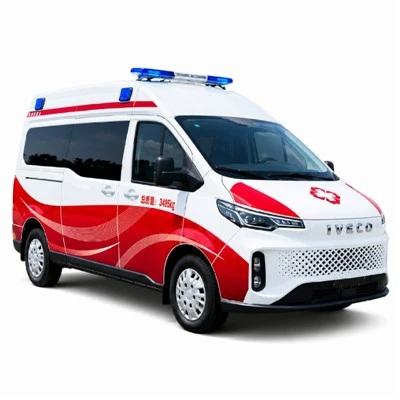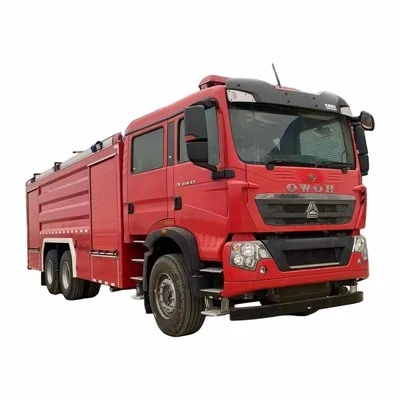


Hey everyone, let’s cut to the chase – when a disaster hits, whether it’s a hurricane that knocks cell towers out, a wildfire that’s moving faster than anyone can track, or a multi-car crash on a busy interstate that turns into a mass casualty event, the first thing that goes sideways isn’t just power or roads. It’s communication. Cops, firefighters, EMS teams, and even local officials can’t coordinate if they’re yelling into dead radios or trying to share maps over a spotty group chat. That’s where command trucks come in – and I’ve spent the last 8 years selling these bad boys, fixing them, and watching them save lives when every other line of contact dies. Today, let’s break down exactly how these rolling command posts pull off miracle-level communication when the world’s communication infrastructure is on its knees.
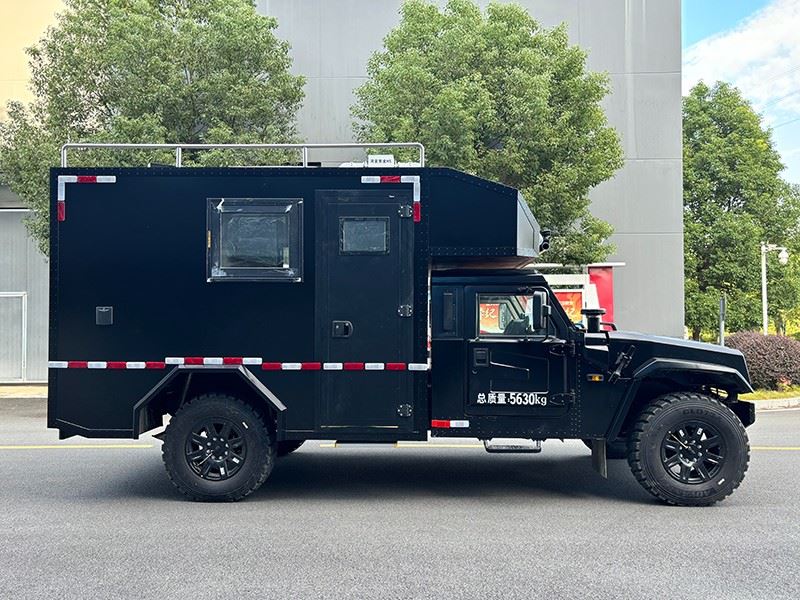

First off, let’s get one thing straight: command trucks aren’t just fancy RVs with sirens (though some are way nicer than my college dorm room). They’re designed to be the central brain of an emergency response, and their comms system is built to outlast whatever the disaster throws at it. Let’s start with the basics – when a hurricane slams into a coastal town, the first thing local authorities do is activate their command vehicle, and for good reason. Regular cell towers are bolted to concrete, wind rips them to pieces, and fiber optic lines get snapped like twigs. A command truck doesn’t rely on that stuff. It’s got its own independent power source, first and foremost. Most of the ones we sell run on heavy-duty deep-cycle batteries, and some of the newer ones – like our Maxus Pure Electric Command Vehicle – have solar panels mounted on the roof that keep the comms running even if the main engine’s off for 24, 48 hours straight. No need to fire up a noisy diesel generator that draws attention or uses fuel you don’t have to spare when you’re waiting for supply convoys.
Wait, let’s talk about that power thing because it’s non-negotiable. I once got a call from a fire chief in Florida right after Hurricane Ian made landfall – his county’s only command truck’s generator died because a tree fell on the exhaust, and he was stuck trying to coordinate with first responders on his personal phone, which died after 12 hours. That’s why every command truck we supply has redundant power: primary deep-cycle batteries, backup solar, a secondary generator that’s tucked away so it’s not vulnerable to flying debris, and even a small 12V backup for critical comms gear if everything else craps out. Without power, your radio, your satellite link, your display screens – all useless. That’s step one for comms: make sure your command truck never goes dark.
Next up: the comms gear itself, and this is where command trucks stand apart from any other emergency vehicle. Let’s say you’ve got fire crews fighting a wildfire in a national park where there’s zero cell service. A regular fire truck has a basic UHF radio that only reaches the next truck up the line. A command truck? It’s got a mesh radio network – think of it as a Wi-Fi signal that doesn’t need a cell tower. Every responder with a portable radio that connects to the mesh is part of the network, even if they’re 5 miles apart in thick woods. That means a firefighter stuck in a valley can send updates to a paramedic 2 miles away, who sends them to the command truck, which pulls them all together on a big touchscreen. And if the mesh isn’t enough, the truck’s got satellite comms – not just one satellite, often two different ones from different providers, so if one goes down, the other kicks in. I’ve seen our Dongfeng Warrior 4x4 Command Vehicle get stuck in mud during a flood in Ohio, and even with no cell service for 3 days, it was relaying every 911 call from 20 surrounding miles to the emergency operations center 50 miles away. That’s the difference between chaos and control.
Another big one: interoperability. I can’t tell you how many times I’ve heard first responders complain about having 3 different radios that only work on their own agency’s frequency. Cops use one band, fire uses another, EMS uses something else, and if they’re all from different counties? Good luck making a call. Command trucks fix that. They have a “frequency translator” that pulls all those different signals into one feed, so the incident commander can listen to every call from every team, no matter what radio they’re using. No more repeating yourself 5 times to 5 different people – one feed, one control. For example, when a big multi-agency disaster hits – like a tornado that hits 2 small towns, drawing in state police, county fire, EMS, and national guard – the command truck’s comms system lets everyone talk on the same channel without buying all new radios. We even build that into our Maxus Mobile Command Van Truck, which is smaller than a semi-truck but packs the same interoperability as our full-size models, perfect for smaller departments that don’t need a big rig but still need to talk to everyone.
Let’s not forget visual comms, either. Communication isn’t just audio, right? If you’re the incident commander, you don’t just want to hear that a house is on fire – you want to see it. Command trucks have built-in cameras: some on the roof, some mounted on poles that extend 20 feet up, and even live feeds from drones that the crews can launch right from the truck’s back door. All those feeds pop up on a central monitor, so you can track every active scene at once. And if a cell tower is still partially working, the truck can pull in traffic cams, gas line sensors, weather radar feeds, even social media posts tagged to the disaster area – all in real time. During a wildfire in Oregon last year, one of our clients used a Buick GL8 Mobile Command Center (yeah, the smaller van version) to monitor live aerial footage from 3 different drone flights, so they could redirect crews before the fire jumped the road. No more waiting for 20 minutes for someone to drive out and check – see it, react, adjust the plan.
Wait, let’s get real about real-world limitations, though. Comms systems aren’t perfect. A satellite link can lag if there’s a storm front blocking the signal, or a big metal building can interfere with radio waves. That’s why we design every command truck with redundancy on every level. If the mesh radio gets interference? Switch to satellite. If satellite is laggy? Switch back to local UHF/VHF. And if the power starts to dip? The truck automatically shuts down non-critical systems like the TV in the break room, but keeps the comms gear running. That’s the kind of detail that makes the difference between a bad situation and a deadly one. I’ve talked to so many chiefs who told me they almost lost lives because their old command truck didn’t have that kind of backup. One fire chief in Texas said after a chemical spill last year, their old truck’s radio cut out for 45 minutes right when they needed to evacuate a neighborhood – the new one we sold him? No cuts, not even a blip, even with the plume of smoke blocking the airwaves.
Now, let’s talk about how the command truck is positioned, because that’s part of the communication plan, too. You can have the best gear in the world, but if you park it in a ditch behind a bunch of trees, your signal’s going to be garbage. We train every department that buys our trucks (well, most of them) to park the command truck on high ground if possible, away from big metal structures or water towers that can block signals. For urban disasters, you park it on the edge of the disaster zone, so it’s close enough to talk to crews on the ground but far enough back to not be in danger. During a riot or a large protest that turns violent, the command truck stays back a block or two, using its cameras to track the scene and its comms to coordinate with cops on the front line, so no one gets overrun. Our Fire Emergency Communication Command Vehicle is specifically built for exactly that scenario – it’s got reinforced body panels, spotlights that can shine 1,000 yards, and comms that can reach 10 miles away even in dense city areas. I saw it in action after a riot in Chicago a couple years back – the cops on the ground couldn’t hear each other over the crowd, but the command truck was relaying every call, so they could move in to separate groups without anyone getting hurt.
Another thing a lot of people don’t think about: command trucks double as a charging station for every single piece of gear crews carry. First responders go through portable radios, drones, flashlights, even medical devices like EpiPens or glucose monitors faster than you can imagine, especially during a disaster that lasts for days. The command truck has banks of charging ports – both USB and heavy-duty 12V – so every time a crew member comes back from a call, they can plug in their gear and have it ready to go when they head out again. That’s not communication, but it ties directly into it: if someone’s radio dies mid-call, they can borrow a charged one from the command truck, no downtime. It’s a small detail but it’s saved so many shifts.
Let’s circle back to the big picture here. When a disaster hits, the job of the command truck isn’t to be a hero – it’s to make sure everyone else can do their jobs. A firefighter doesn’t need to worry about what frequency to use if the command truck’s already sorted it out. An EMS worker doesn’t need to repeat their location 10 times because the truck is relaying it to every other team. The incident commander doesn’t need to guess where the fire is or if the water line is open because they can see it on a live feed and talk to someone who’s actually there. That’s the core of how these trucks handle communication during disasters: they remove the friction, the gaps, the dead spots that make chaos worse.
Now, if you’re a local department, a state agency, or even a private company that needs to be ready for emergencies, you know that a command truck isn’t a luxury – it’s an investment in keeping people safe. We’ve got options for every need and budget, from the compact van models that work for small towns to the heavy-duty 4x4 ones that can handle mud, snow, and flood water. No matter what disaster you’re preparing for, we’ve got a command truck that’ll keep your comms running when every other line is down. If you’re looking to talk through what you need, whether it’s comms gear specs, power options, or just want to see how these work in real scenarios, don’t hesitate to reach out.
References
- Federal Emergency Management Agency (FEMA). (2022). Emergency Communications for Disaster Response. FEMA Publication 100-19.
- National Fire Protection Association (NFPA). (2021). Standard on Fire Department Communications Systems. NFPA 1221.
- International Association of Chiefs of Police (IACP). (2023). Multi-Agency Interoperable Communications Guide. IACP Press.
- U.S. Department of Transportation. (2022). Commercial Vehicle Telematics and Emergency Response Handbook. DOT Publication FHWA-SA-22-005.