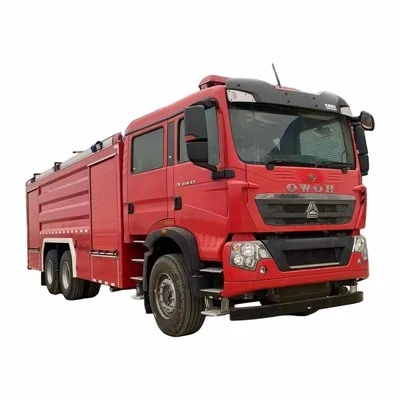


Hey there, folks! As a supplier of generator trucks, I've gotten tons of questions about how these bad boys perform at high altitudes. So, I thought I'd sit down and share what I've learned over the years.
The Basics of High - Altitude Impact
First off, let's talk about what happens to the air at high altitudes. As you go up, the air gets thinner. That means there's less oxygen in a given volume of air. For a generator truck, this is a big deal because the engine needs oxygen to burn fuel efficiently.
You see, in a normal situation, the engine takes in air, mixes it with fuel, and that mixture burns to create power. But at high altitudes, since there's less oxygen, the engine can't burn the fuel as effectively. This leads to a drop in power output.
Let me give you an example. Suppose you've got a generator truck that can put out 100 kW of power at sea level. When you take it up to a high - altitude area, say 3000 meters above sea level, you might find that it can only manage around 80 - 85 kW. That's a significant drop!
Engine Performance
The engine is the heart of the generator truck, and high altitudes can really mess with it. One of the main issues is the combustion process. With less oxygen, the fuel doesn't burn completely. This can cause a bunch of problems.
For starters, the engine might run rough. You'll notice it shaking more than usual, and it might even make some strange noises. The incomplete combustion also leads to more carbon deposits in the engine. Over time, these deposits can build up and cause damage to the engine components.
Another aspect is the turbocharger, if the generator truck is turbocharged. Turbochargers work by compressing the air going into the engine, which helps to get more oxygen in. But at high altitudes, the turbocharger has to work harder because the air is already thin. This can lead to increased wear and tear on the turbocharger, and it might even reduce its lifespan.


Cooling System Challenges
The cooling system of a generator truck also faces challenges at high altitudes. The thin air at high altitudes is less effective at carrying away heat. The radiator, which is responsible for cooling the engine coolant, relies on air passing through its fins to dissipate heat.
When the air is thin, less heat is transferred from the coolant to the air. As a result, the engine can overheat more easily. This is a serious problem because overheating can cause engine damage, such as warping of the cylinder head or damage to the pistons.
To combat this, some generator trucks are equipped with larger radiators or more powerful cooling fans when they're designed for high - altitude use. But even with these upgrades, the cooling system still has a harder job to do.
Electrical System Effects
The electrical system of the generator truck can also be affected. The alternator, which is responsible for generating electricity, is driven by the engine. Since the engine's performance drops at high altitudes, the alternator might not be able to produce as much power as it does at sea level.
This can be a problem if you're relying on the generator truck to power critical equipment. For example, in a remote construction site at high altitude, if the power output of the alternator drops, it could cause electrical tools to work less efficiently or even stop working altogether.
Our Generator Trucks and High - Altitude Performance
At our company, we understand these challenges. That's why we've designed our generator trucks to perform as well as possible even at high altitudes.
Take the JMC 50KW Power Generator Truck. We've made some adjustments to its engine and fuel injection system to ensure that it can still deliver a relatively stable power output at high altitudes. The engine management system is calibrated to adapt to the changes in air density, so it can adjust the fuel - air mixture for better combustion.
The Dongfeng 300KW Mobile Generator Emergency Power Truck is another great option. It has a heavy - duty cooling system that's designed to work efficiently even in thin air. The radiator is larger, and the cooling fan has a higher capacity to ensure that the engine stays within the optimal temperature range.
The Iveco 4x2 Mobile Generator Truck comes with a turbocharger that's optimized for high - altitude operation. It can still provide sufficient air compression to help the engine burn fuel effectively, even when the air is thin.
Our ISUZU 100KW 200KW Mobile Generator Truck has advanced electrical components that are more resilient to the power fluctuations that can occur at high altitudes. The alternator is designed to maintain a relatively stable output even when the engine performance drops.
And if you need a really high - power generator truck, the Dongfeng 4 Axle 1000KW Mobile Generator Truck is a top - notch choice. It's built to handle the toughest conditions at high altitudes, with a robust engine and a reliable cooling and electrical system.
Tips for Using Generator Trucks at High Altitudes
If you're planning to use a generator truck at high altitudes, here are some tips to keep in mind. First, make sure to do a thorough pre - use inspection. Check the engine oil, coolant levels, and the air filter. A clean air filter is especially important at high altitudes because it helps the engine take in as much air as possible.
Second, monitor the engine temperature closely. Use the temperature gauge on the dashboard, and if you notice the engine starting to overheat, stop the generator truck immediately and let it cool down.
Third, have a maintenance schedule in place. High - altitude operation puts more stress on the generator truck, so regular maintenance is crucial to keep it in good working condition.
Conclusion and Call to Action
In conclusion, high altitudes can definitely have an impact on the performance of a generator truck. But with the right design and proper maintenance, you can minimize these effects.
If you're in the market for a generator truck, whether for use at high altitudes or in other environments, we've got you covered. Our range of generator trucks is designed to meet your power needs and perform reliably. Don't hesitate to reach out if you want to discuss your specific requirements. We're here to help you find the perfect generator truck for your project.
References
- Johnson, R. (2021). "High - Altitude Engine Performance: A Comprehensive Guide". Engine Mechanics Journal
- Smith, T. (2022). "Impact of Altitude on Mobile Power Systems". Power Generation Review