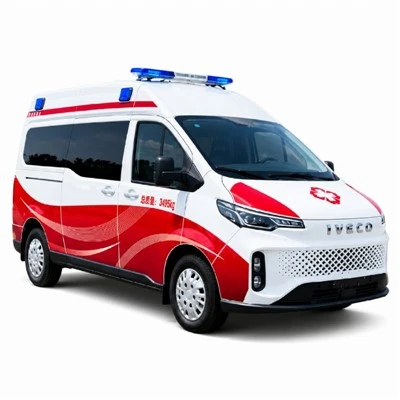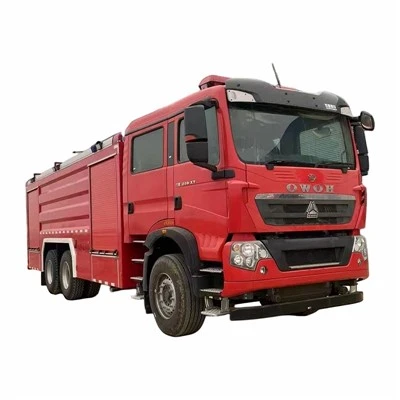


As a foam fire truck supplier, I’ve spent years working closely with firefighters, fleet managers, and emergency response trainers to understand what makes these special vehicles both effective and safe. Few roles on a fire team are as critical as the foam fire truck driver: this person is responsible for navigating a heavy, specialized vehicle through chaotic, high-stakes scenes while ensuring they can react instantly to changing conditions. One of the most non-negotiable parts of that role is visibility—something that’s not just a comfort, but a life-safety requirement. Over the years, I’ve seen firsthand how failing to prioritize driver visibility can lead to avoidable accidents, delayed responses, and even worse outcomes at fire scenes. That’s why we build every foam fire truck our team designs with visibility at the core of its engineering, not as an afterthought.


Visibility requirements for foam fire truck drivers are not arbitrary. They’re rooted in decades of fire service experience, crash data, and standards set by organizations like the National Fire Protection Association (NFPA), which publishes strict guidelines for emergency vehicle design. Unlike standard fire trucks, foam trucks carry specialized tanks, pumps, and equipment that bulk out their frame, so it’s easy for bulky components to block the driver’s view of pedestrians, curbs, other vehicles, or even small obstacles that could cause a rollover or collision. Let’s break down the key visibility requirements that every foam fire truck driver must meet, and how our range of vehicles—from compact models to heavy-duty units—are built to satisfy these rules.
First, there’s forward visibility. A driver needs an unobstructed view of the road ahead, at minimum 180 degrees horizontally and 15 degrees above and below the horizontal plane, according to NFPA 1901, the standard for automotive fire apparatus. For foam trucks, this is trickier because of the large foam tanks that sit behind the cab, but also because some pump systems are mounted low to the frame. For example, our HOWO 8 Ton Fire Truck Foam is designed with a sloped, streamlined foam tank that tapers toward the cab, so the driver’s line of sight isn’t blocked by the tank’s upper edge. We also avoid placing the pump control panel in the driver’s direct forward view; instead, we mount it on the side of the cab where it’s easy to reach without creating a blind spot. This is critical because at fire scenes, drivers often need to glance at pump pressure or foam concentration readings while moving, and we don’t want those controls to pull their attention away from the road ahead.
Side visibility is another make-or-break requirement. Emergency scenes are crowded: firefighters running between trucks, bystanders, utility poles, and smaller response vehicles all surround the area. A driver needs to see objects within three feet of the side of the truck, because in tight spaces, a three-foot gap can mean the difference between a safe turn and a collision. Many older foam trucks have large, thick door posts or bulky storage compartments that block side views, so we’ve redesigned our cabs to use slim, reinforced door frames and replace solid storage bins with open, recessed compartments that sit flush against the cab’s sides. Our Dongfeng 4 Ton Foam Fire Truck, a compact model perfect for narrow urban streets or industrial yards, has extended side mirrors with convex attachments that eliminate blind spots along the entire length of the vehicle. We test these mirrors in actual fire ground conditions, where dust, smoke, and rain can reduce their effectiveness, to ensure the driver can still spot a firefighter moving alongside the truck even in low-visibility scenarios.
Rear visibility is often overlooked, but it’s non-negotiable for foam fire trucks, which can weigh anywhere from 8 tons to 25 tons. A fully loaded foam truck has a long wheelbase, so its turning radius is wider than standard vehicles, and backing up in a fire scene—where there are no designated parking spots, only hot, active areas—can be extremely dangerous. NFPA 1901 requires emergency vehicles to have a rearview system that provides a clear view of at least 10 feet behind the vehicle, and many departments now mandate a 360-degree camera system for high-risk foam trucks. Our HOWO 18 Ton Foam Water Fire Truck, a mid-sized model ideal for municipal fire departments, comes with a 360-degree camera array, as well as audible proximity sensors that beep faster as an object gets closer. This is a game-changer for drivers, who often have to back up in areas where a single mistake could injure a firefighter or damage critical equipment. We also add wide-angle rear windows to our cabs, so drivers can rely on both cameras and their own eyes to confirm clear space before moving backward.
Then there’s the visibility specific to the driver themselves: their own field of vision while seated. The height of the driver’s seat, the angle of the windshield, and the thickness of the cab’s glass all play a role here. For example, if a driver is too low, they might not see small objects like curbs or fire hoses on the road, and if the seat is too high, they might not have a clear view of the side mirrors. We design our driver’s seats with adjustable height, lumbar support, and telescoping steering wheels, so every driver can find a position that maximizes their line of sight. The windshield on all our foam fire trucks is made of tempered, shatter-resistant glass that’s not too dark—even at night or in heavy smoke, it provides enough clarity without causing glare. We also avoid adding too many interior components on the dashboard that block the driver’s view of the lower part of the windshield, where obstacles like fire hoses or debris might be hard to spot at a quick glance.
Another critical point is visibility for pedestrians and other road users. Foam fire trucks are large, so other drivers often don’t realize how close they are to the truck, especially when it’s responding to an emergency with lights and sirens. But the driver needs to be able to see other vehicles and people, not just the other way around. We add additional marker lights along the sides and front of our trucks, but also ensure that the driver’s view isn’t blocked by these lights. For example, the HOWO 16 Ton Foam Fire Truck has bright LED marker lights that are positioned high on the cab and low on the frame, so they’re visible to other drivers, but they don’t sit in the driver’s line of sight. We also make sure that the truck’s front bumper is low enough that the driver can see it—this helps when navigating tight spaces, where a low bumper could catch on a concrete barrier or a parked car.
Over the years, we’ve worked with fire departments that have old foam trucks where visibility is a major complaint. One municipal fire department told us that their 10-year-old foam truck had such a large tank that the driver couldn’t see the side of the truck when turning right, leading to a few close calls with parked cars. When they switched to our HOWO 25 Ton Heavy Foam Fire Truck, which has a tapered tank and expanded mirrors, that issue was resolved. Another industrial client, which needs foam trucks to navigate narrow factory aisles, chose our Dongfeng 4 Ton Foam Fire Truck because its compact size and improved side visibility allowed their drivers to move quickly through tight spaces without risking collisions.
It’s important to note that visibility requirements aren’t just about design—they’re also about training. Even the most well-designed foam truck can have safety issues if the driver doesn’t know how to properly adjust their mirrors, or how to use the camera system in low light. That’s why we don’t just sell trucks—we provide training sessions for fire departments, teaching drivers how to maximize their visibility on every trip. We walk them through adjusting their seats, setting up their mirrors to eliminate blind spots, and using the camera and sensor systems effectively during both response and transport.
At the end of the day, foam fire trucks are specialized vehicles for high-stakes situations, and the driver’s ability to see clearly is a key part of keeping everyone safe: the driver, the firefighters, the bystanders, and the people whose properties the truck is there to protect. We’ve made visibility a priority across our entire line of foam fire trucks, from the compact Dongfeng 4 Ton Foam Fire Truck to the heavy-duty HOWO 25 Ton Heavy Foam Fire Truck, because we know that when a driver can see their path, they can focus on what matters most: responding to emergencies and saving lives.
If you’re looking for a foam fire truck that meets all the strict visibility requirements for drivers, or if you have questions about how our vehicles can fit your department’s needs, we invite you to reach out to our team to discuss your requirements. We work closely with fire departments and industrial facilities to build customized solutions that balance visibility, functionality, and reliability, so you can have confidence in your vehicle when every second counts.
References
National Fire Protection Association. (2020). Standard for Automotive Fire Apparatus (NFPA 1901). Quincy, MA: NFPA.
U.S. Department of Transportation, National Highway Traffic Safety Administration. (2019). Emergency Vehicle Visibility and Crash Prevention Report. Washington, DC: NHTSA.
International Association of Fire Chiefs. (2021). Best Practices for Emergency Vehicle Driver Training and Visibility. Washington, DC: IAFC.