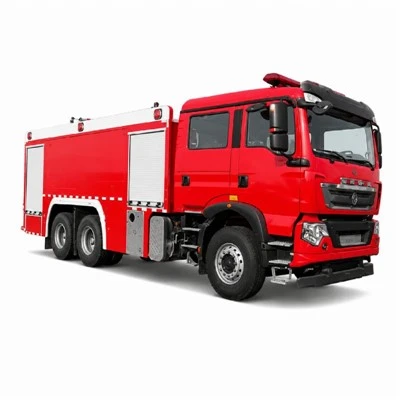

The performance of a fire truck is primarily manifested in three key areas: firefighting capability, maneuverability, and comprehensive operational capacity; these serve as critical indicators for assessing its overall level of emergency response and rescue proficiency.
Firefighting Performance
A fire truck's firefighting performance is typically defined by the water supply pressure and flow rate generated by its fire pump, as well as the projection distance of its extinguishing agents. Superior performance in these aspects signifies the vehicle's ability to execute effective firefighting operations at a fire scene more rapidly and from a greater distance.
Maneuverability
Fire trucks require excellent power output, terrain adaptability, and stability to navigate a diverse range of environments-including urban streets, highways, and complex disaster sites. Specific metrics such as acceleration capability, braking distance, turning radius, and gradeability directly influence the vehicle's rapid response capabilities and operational safety.
Comprehensive Operational Performance
Modern fire trucks also place a strong emphasis on multifunctional synergy-specifically, the integrated efficiency of various onboard systems, including water supply, foam firefighting, forcible entry and rescue tools, and lighting support. Furthermore, some fire trucks are equipped with intelligent control systems and remote monitoring devices; these technologies enable more precise and efficient operation, thereby enhancing the vehicle's overall emergency response capacity and mission completion efficiency.