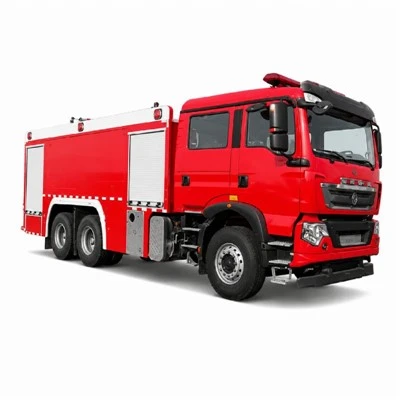

The production of fire trucks typically begins with a specialized vehicle chassis, which undergoes systematic modification and integrated assembly to form a complete emergency rescue vehicle. This process primarily encompasses stages such as design conceptualization, chassis selection, superstructure manufacturing, system integration, and final vehicle commissioning. During the design and chassis selection phases, a technical scheme is formulated based on the specific intended use of the fire truck-such as water tankers, foam tenders, or aerial apparatus-and a commercial chassis with appropriate load-bearing capacity and power performance is selected. Subsequently, the process moves to the superstructure manufacturing stage, where the tank, frame, and compartment structures are fabricated and shaped. These components are typically constructed using high-strength steel or aluminum alloys, and undergo welding, anti-corrosion, and sealing treatments to enhance their structural integrity and durability.
In the system integration phase, components such as the fire pump, piping system, hydraulic mechanisms, electrical control systems, and specialized firefighting equipment are installed and interconnected, thereby unifying the various subsystems into a cohesive whole. Finally, through comprehensive vehicle commissioning and performance testing, critical parameters-including water supply pressure, discharge range, leak-tightness, stability, and safety mechanisms-are rigorously verified. Only after ensuring that the vehicle fully complies with relevant national standards and possesses full operational readiness for emergency response is it cleared for deployment.