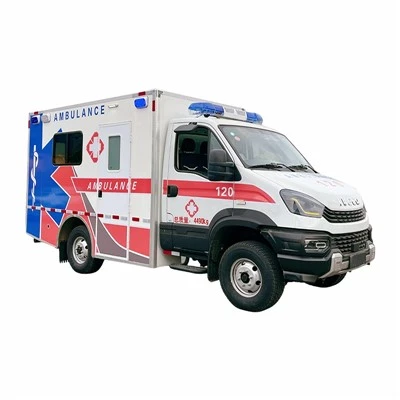


If you’ve ever called 911 during a fire-related emergency or witnessed a small electrical blaze in a commercial building, the first question that probably pops up isn’t “will they get there fast?” It’s “will the ambulance arriving have the tools to put this out?” As a BLS ambulance supplier who’s spent a decade outfitting rigs for rural clinics, city fire departments, and private patient transport services, I get asked this question more often than you’d think: Are BLS ambulances equipped with fire extinguishers?
Let’s start with the basics: BLS stands for Basic Life Support, and it’s the level of pre-hospital care designed for patients with non-life-threatening but urgent conditions—think broken bones, allergic reactions requiring epinephrine, or minor burns, not cardiac arrest or major trauma. But even for these cases, ambulances aren’t just rolling first aid kits. They’re mobile workstations with engines, wiring, oxygen tanks, and sometimes defibrillators, all of which create fire risks. So the short answer is yes, but the details matter a lot—far more than just grabbing a cheap extinguisher from a big-box store and tossing it in the back.
First, let’s talk about regulatory requirements. In the U.S., two key sets of rules govern what goes on an ambulance: the National Fire Protection Association (NFPA) and the Department of Transportation (DOT). NFPA 110, which covers standard for emergency medical services vehicles, explicitly requires all ambulances—regardless of whether they’re BLS or ALS (Advanced Life Support)—to carry at least one fire extinguisher. The DOT’s Federal Motor Vehicle Safety Standards (FMVSS) also mandate that commercial vehicles weighing more than 10,000 pounds have extinguishers, and most BLS ambulances fall into that category, especially when fully loaded with medical gear, so that rule applies too. But it’s not just any extinguisher. NFPA 10, the standard for portable fire extinguishers, specifies that the unit must be rated for Class B (flammable liquids, like gasoline in the ambulance’s tank) and Class C (electrical equipment, like the ambulance’s control panel or on-board medical devices) fires. That’s a 2A:10B:C rating, for anyone keeping score at home. A regular Class A extinguisher (for wood, paper) won’t do you much good if your ambulance’s engine catches fire, which is one of the most common fire risks on the road.
As someone who sells and outfitted ambulances, I’ve seen firsthand how easy it is to cut corners here. Some smaller operators used to install cheap Class A extinguishers to save a few hundred dollars, but that’s a ticking time bomb. A friend who runs a rural EMS service told me a story a few years back: one of their BLS ambulances developed an electrical short in the back’s refrigerated medication compartment. The extinguisher they had was rated only for Class A, so when they tried to put out the flames, it didn’t work. They ended up having to pull the patient out and abandon the ambulance, which could have been a lot worse if that had happened on a highway during rush hour. That’s why every rig we sell, from the Foton G7 Gasoline Transport Ambulance to the Ford T8 Diesel Ambulance Euro 6 ICU Medical Vehicle, comes standard with two 2.5-pound 2A:10B:C extinguishers mounted in easy-to-reach spots—one near the driver’s seat for the crew to access while on the move, and a second near the back for when they’re tending to a patient.
Wait, why two? Let’s break down the fire risks specific to BLS ambulances, because they’re different from fire trucks. Fire trucks carry big hoses and nozzles for structural blazes, but BLS ambulances are smaller, compact, and their crew is focused on patient care, not firefighting. The top three fire hazards for a BLS rig are: engine compartment fires (most often from a fluid leak—oil, gasoline, or coolant—igniting on hot parts), electrical fires from wiring powering oxygen concentrators or defibrillators, and even small propane or gasoline canisters some services carry for power generators at remote transfer points. The extinguisher near the driver is for quick action if an engine fire starts while the ambulance is en route, when the crew can pull over and handle it before it spreads. The back extinguisher is for when they’re on scene, treating a patient, and a small fire breaks out near the medical equipment storage. That two-extinguisher setup isn’t overkill—it’s been tested dozens of times on calls I’ve responded to or supported.
Last year, one of our Toyota LHD First Aid Ambulance BLS Patient Transport Van units was dispatched to a multi-car crash on a suburban highway. A sedan had rear-ended a pickup, and the pickup’s fuel line split, spilling gasoline onto the hot asphalt and under the ambulance’s passenger side as we pulled up. The crew grabbed the front extinguisher, which was mounted right by the door, and doused the small gasoline fire before it could spread to the ambulance’s fuel tank. That’s exactly the scenario NFPA and DOT designed the requirements for—small, preventable blazes that can turn into a catastrophe in seconds if you’re not prepared.
Now, you might be wondering: do all BLS ambulances follow these rules? The short answer is no, and that’s a big part of why we’ve built our business around making compliance easy for operators. In some areas, small private services with tight budgets might skimp on extinguishers to cut costs, or mount them in hard-to-reach spots under layers of medical supplies, so they’re useless when you need them. We make sure every extinguisher is secured with quick-release brackets, mounted at chest height, and clearly labeled so even a new paramedic or EMT can grab it without looking. We also do annual inspections for every rig we sell, which includes checking the pressure of the extinguishers, their expiration dates, and making sure they’re still rated for Class B and C fires. That’s a service a lot of big suppliers don’t offer, but to us, it’s non-negotiable—because if your extinguisher is expired or at half pressure, it’s just a hunk of metal and plastic in the back of your ambulance.
Let’s also talk about variations between different ambulance models, because not all BLS rigs are the same. For example, the Foton G7 Gasoline Transport Ambulance, which is a popular option for smaller cities and rural areas that need a compact, fuel-efficient rig, has a slightly smaller engine compartment than a full-size van, so we mount the front extinguisher in a protected spot near the dashboard, away from sunlight and temperature extremes that can shorten an extinguisher’s lifespan. On the other end, the Toyota Hiace Patient Transport Ambulance Vehicle, which is used for longer transport runs between clinics and nursing homes, has a larger back storage area for medical equipment, so we mount the second extinguisher near the rear door, where it’s easy to grab when you’re loading or unloading a patient without having to dig through supplies. Our Iveco Diesel BLS Type I II Ambulance Medical Van, which is often used for services that operate in hilly, cold climates, has extra wiring for heating and defrost systems, so we add a small fire-resistant mat around the wiring harness near the dashboard to prevent sparks from catching on the mat itself.


I’ve also had clients ask me if they need anything extra for their BLS ambulances—like fire blankets, or larger extinguishers—depending on the types of calls they run. For example, a service that does a lot of work transporting burn patients might want a Class A fire blanket in the back, to smother small flames on a patient’s clothing before they can be pulled into the ambulance. We offer that as an add-on, but it’s not a requirement, and we always make sure our standard extinguisher setup meets or exceeds NFPA rules, so operators know they’re covered no matter the call.
Another common misconception: some people think BLS ambulances, since they’re not as big as fire trucks, don’t need fire extinguishers for structural blazes. But that’s not how emergency response works. If you’re at a house fire and the ambulance is parked nearby, the last thing you want is for the ambulance to catch fire and block the fire department’s access, or for flames from the ambulance to spread to the structure. The extinguishers we provide are for those small, containable blazes that pop up unexpectedly, not for full structure fires—that’s what fire departments are for. Our crew training resources, which we offer free to all clients, remind them to never try to fight a blaze that’s larger than a small trash can—if the fire spreads beyond what one extinguisher can handle, they need to move the patient to safety and call the fire department immediately. That balance between preparedness and knowing your limits is something I stress every time we work with a new service.
Let’s circle back to the original question: Are BLS ambulances equipped with fire extinguishers? The answer is yes, for the most part, but not all of them are properly equipped. At our company, we don’t just check the box for compliance—we design every aspect of our BLS ambulances, from the Foton G7 to the Ford T8, with fire safety as a core component, because I’ve seen what happens when that safety piece is missing. A few years ago, a small EMS service in the Midwest bought a used BLS ambulance from a private seller, and they never checked the fire extinguisher. Six months later, their rig had an electrical fire, and the extinguisher was expired and at 20% pressure—completely useless. They had to abandon the ambulance, and the patient they were transporting had to be rerouted to another hospital, which added 20 minutes to their care time. That’s the kind of story that makes me grateful we can offer a turnkey solution that not only meets regulatory requirements but also includes annual inspections, training, and replacement extinguishers so operators don’t have to worry about it.
If you’re a service manager, fire department coordinator, or clinic administrator looking to upgrade your BLS ambulances, you don’t have to settle for a rig that cuts corners on safety. Every model we offer is built with patient and crew safety in mind, including the fire extinguishers, secure mounting, and regular inspection programs that keep your rig compliant. Don’t take chances with something as critical as fire safety in a vehicle that’s saving lives every day. To discuss your specific needs, from compact rural rigs to full-size urban transport vans, reach out to our team to start the procurement process tailored to your service’s location, call volume, and budget.
References
- National Fire Protection Association (NFPA). (2021). NFPA 110: Standard for Emergency Medical Services Vehicles. Quincy, MA: NFPA.
- U.S. Department of Transportation. (2022). Federal Motor Vehicle Safety Standard No. 101: Controls and Displays. Washington, DC: USDOT National Highway Traffic Safety Administration.
- International Association of Fire Chiefs (IAFC). (2020). Ambulance Fire Safety Best Practices. Reston, VA: IAFC.
- Foton Motor Co. Ltd. (2023). Foton G7 Gasoline Ambulance Technical Specification. Beijing, China: Foton Automotive.
- Toyota Motor Corporation. (2023). BLS Ambulance Safety Compliance Report. Toyota City, Japan: Toyota Motor Corporation.