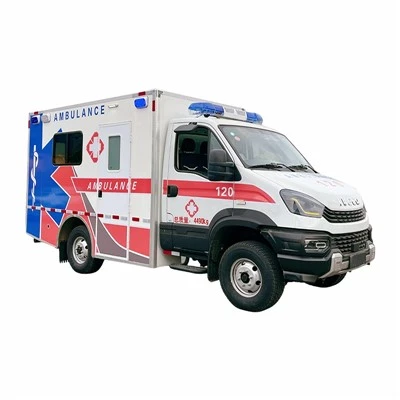


If you’ve ever wondered how we keep mobile surgical vehicles safe, sterile, and ready to cut through medical logistics chaos, you’re in the right spot. I’m Jake, one of the lead engineers here who spends most days tinkering with the systems that make our vehicles work. After dozens of calls from clinics and hospitals asking “how does that ventilation even work in a truck that’s basically a moving operating room?”, I figured it was time to break it down—no boring jargon, just the real deal behind what keeps patients, docs, and staff safe on the go.


First off, let’s set the scene: a mobile surgical vehicle isn’t just a truck with a table jammed in the back. It’s a fully functional OR on wheels, and ventilation is non-negotiable here. We’re talking about three main, non-negotiable jobs: keeping sterile air where it needs to be, getting rid of nasty stuff like surgical smoke and CO2, and making sure the air pressure inside never lets dirty outside air sneak in. Mess any of those up, and you’ve got a recipe for infections—bad news for everyone.
Let’s start with the basics of how we actually circulate air inside. Unlike a regular delivery truck where you just roll down a window, our systems use two separate, tightly controlled zones. Zone one is the operating suite itself—where the surgery happens, and it needs to be 100% sterile. Zone two is the adjacent prep area, where patients wake up, instruments get cleaned, and that’s where non-sterile staff move in and out. We never mix these two zones, and the ventilation makes that impossible.
Here’s the cool part: the system uses “directional airflow” to keep the sterile zone clean. We pull in fresh, filtered air from outside the vehicle (we never reuse air here—COVID taught us a lot, and we didn’t skip a beat on that). That fresh air gets sent straight to the operating suite’s ceiling, where we blow it down toward the floor. Why down? Because any microscopic contaminants (like bacteria, dust, or even stray skin cells) are heavier than air, so they sink. Then, we pull that used air out through vents low on the walls of the OR, near the floor, so it never has a chance to float back up into the sterile space.
Now, pressure control. This is a huge one most folks don’t realize. The sterile OR zone is set to “positive pressure” compared to the prep area and outside. Wait, what does that mean? It means we blow more clean air into the OR than we pull out, so air only flows out of the OR—not into it. So if someone opens a door between the OR and the prep area, air pushes outward, not inward, keeping dirty prep air from creeping into the surgery space. The prep area, in turn, is set to slightly positive pressure compared to outside, so when the entry door opens, air pushes out instead of letting exhaust fumes or street air sneak in. This isn’t a random setting—we calibrate every single one of our vehicles before they hit the road, whether it’s a Mobile Aesthetic Surgery Clinic Truck or a Mobile Eye Surgery Unit, to nail these pressure numbers to within a tiny margin. No guesswork here.
Next up: filtering the air. Fresh outside air doesn’t just get pumped in raw. We use two layers of filters, and they’re not your average home HVAC filters. First, a pre-filter catches big stuff like bugs, leaves, and road dust—stuff that would clog the next filter fast. Then, a HEPA (High-Efficiency Particulate Air) filter, the same ones used in hospital ORs and clean rooms, grabs 99.97% of particles 0.3 microns or larger. That includes bacteria, viruses, and even tiny surgical smoke particles. We replace HEPA filters every 6 months or 500 hours of use, whichever comes first—no exceptions.
Now, what about the stuff that’s made inside the OR? Surgical smoke. That’s the fumes from cutting tissue, cauterizing, or laser procedures, and it’s full of nasty stuff: dead cells, viruses, and toxins that can make staff sick if they breathe it in. We don’t let that hang around. The low vents we mentioned earlier (the ones pulling air out of the OR) don’t just send it to the outside—we run it through a second set of filters, sometimes even activated carbon filters for extra odor and toxin removal, before expelling it. That way, when we park the vehicle outside a clinic, we’re not pumping gross fumes into the parking lot.
Let’s talk about how this works across our different vehicle models, because not every surgical vehicle does the same thing. For example, a Mobile Eye Surgery Unit might have a slightly smaller OR (eye procedures don’t need as much space as a general surgery OR), so the ventilation system is adjusted to move less air but keep that tight, precise control. Eye surgeries are super sensitive, so the sterile zone pressure is set a little higher than in a general OR, just to be extra safe.
Then there’s a Mobile Operation Room Rapid Truck—these are built for disaster zones or emergency deployments where we need to set up fast. Their ventilation systems are designed to be easy to hook up and start, no fancy calibration needed for on-site teams, but they still keep all the safety features: separate zones, positive pressure, HEPA filtration. We’ve deployed a few of these during hurricane season, and the ventilation worked flawlessly even in dusty, humid environments.
Our flagship, the Mobile Surgical Operating Room Truck, is the big one with a full-sized OR that can handle major procedures. Its ventilation system has a backup battery—because if the truck’s engine dies (say, we’re parked somewhere with no power), the ventilation keeps running for 2 hours. That’s non-negotiable—we can’t stop mid-surgery if the power cuts out, even for ventilation.
I get it, a lot of people ask why not just use a regular air conditioner? The short answer: regular ACs just cool and recirculate air, they don’t control pressure or filter for sterile environments. If we did that, we’d have a way higher risk of surgical site infections (SSIs), which are the last thing anyone wants after surgery. Our ventilation system isn’t just for comfort—it’s a core safety tool.
One thing most clinics don’t realize is that we test every single ventilation system before delivery. We bring in a particle counter to measure how many contaminants are in the OR before and after the system runs, and we use manometers (pressure gauges) to make sure the pressure differences are exactly where they need to be. If it’s off by even a tiny bit, we tweak the fan speeds until it’s right. No vehicle leaves our lot until that test passes.
Another common question: what about temperature and humidity? Ventilation does affect that, but we tie it to a separate HVAC system that works with the ventilation. The sterile OR is kept around 68-70 degrees Fahrenheit, which is comfortable for surgeons in scrubs, and the humidity is set to 40-50%—low enough to prevent bacterial growth, high enough to keep patients from getting chilled. The ventilation system helps maintain that by bringing in just the right amount of fresh air to balance the temperature and humidity, without messing with sterile air quality.
We also train all the staff that use our vehicles on how to maintain the ventilation. It’s not just a “set it and forget it” thing. They need to check the pre-filter every week and clean or replace it if it’s dirty, because a clogged pre-filter will make the whole system work harder, and that can throw pressure control off. Every 6 months, they need to log the filter changes and pressure readings, so we can track if the system is working as it should.
I’ve been working in medical vehicle tech for 8 years, and I’ve seen how a good ventilation system can make or break a mobile surgical unit. A year ago, a clinic in a rural area rented one of our Mobile Aesthetic Surgery Clinic Trucks, and they told us later that they’d tried a different vehicle before ours, and the ventilation was so bad they had to stop halfway through a procedure to fix fume buildup. Ours worked perfectly, and they’ve been a repeat customer ever since.
If you’re a hospital administrator, clinic director, or procurement officer looking to get a mobile surgical vehicle, the ventilation system is something you shouldn’t cut corners on. It’s not just a box to check—it’s what keeps your team safe, your patients safe, and your procedures running without hiccups.
If you want to see more about how our different models work, or to chat about what you need for your facility, don’t hesitate to reach out. We’re here to make mobile surgery as safe and reliable as it can be.
References:
- Centers for Disease Control and Prevention. (2022). Guidelines for Environmental Infection Control in Health-Care Facilities.
- National Fire Protection Association. (2021). Standard for Mobile Health Care Facilities.
- World Health Organization. (2020). Infection Prevention and Control for Mobile Surgical Units.
- Occupational Safety and Health Administration. (2019). Ventilation and Occupational Exposures in Surgical Settings.